With more than 10‑year industry experience, Shandong Headpowder delivers full‑service pneumatic‑conveying systems and blowers, undertaking nationwide turn‑key powder‑handling projects.
Starch is a widely used raw material in various industries, including food processing, pharmaceuticals, and chemical manufacturing. The efficient and reliable transportation of starch from storage to processing units is crucial for maintaining production efficiency and product quality. Pneumatic conveying systems have emerged as a preferred solution for handling starch due to their ability to transport powders in a closed, dust-free environment. This article provides an overview of starch pneumatic conveying systems, detailing their working principles and the key factors that influence their performance.

Pneumatic conveying systems use air or other gases to transport bulk materials like starch through a network of pipes. The system typically consists of a material feed hopper, a conveying line, and a receiver or discharge point. The operation can be categorized into two main types: dilute phase and dense phase. Dilute phase systems rely on high-velocity air to suspend the material particles, while dense phase systems use lower air velocities to create a slurry-like flow, reducing particle degradation and wear on equipment.
In a typical starch pneumatic conveying setup, the process begins with the material being fed from a storage silo or hopper into a feed device, such as a rotary valve or a star feeder. The feed device controls the flow rate of starch into the conveying line. Simultaneously, a fan or blower generates the necessary air pressure and flow rate. The air and starch mixture is then propelled through the pipeline to the destination, where it is separated from the air and collected in a receiver. The separation is achieved through a cyclone or a filter, ensuring that the starch is delivered in a clean and dry state.
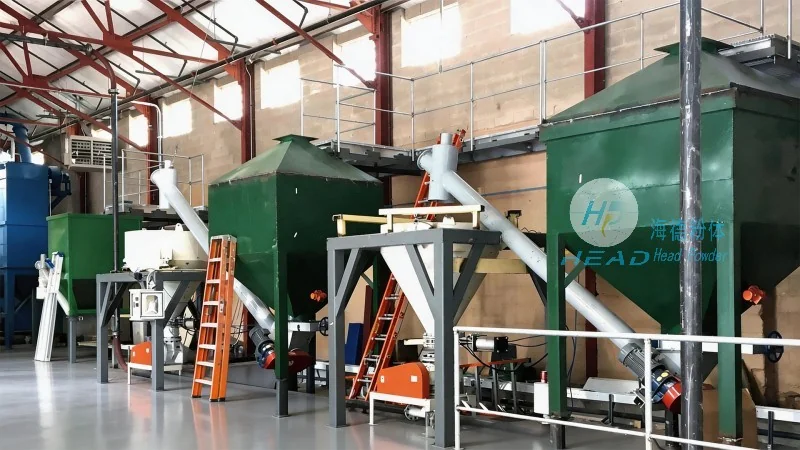
Several critical components contribute to the effective operation of a starch pneumatic conveying system. The feed hopper stores the starch and provides a consistent supply to the feed device. The rotary valve or star feeder regulates the material flow, preventing blockages and ensuring a steady feed rate. The fan or blower is responsible for generating the air pressure required to move the starch through the pipeline. The conveying line, usually made of stainless steel or other corrosion-resistant materials, is designed to withstand the pressure and abrasion from the starch particles. The receiver or discharge hopper collects the conveyed starch and may include a dust collection system to maintain a clean environment. Additionally, a filter or cyclone is used to separate the starch from the air, preventing dust contamination and ensuring the material is delivered in a high-quality state.
Compared to traditional mechanical conveying methods, pneumatic conveying offers several advantages for starch handling. Firstly, it provides a dust-free and enclosed environment, which is essential for maintaining product purity and safety standards, especially in food and pharmaceutical applications. Secondly, the system can handle a wide range of starch types and particle sizes without causing degradation or segregation. Thirdly, pneumatic conveying systems are flexible and can be easily integrated into existing production lines, allowing for adjustments in flow rates and destination points as needed. Finally, the closed system reduces the risk of contamination from external sources and minimizes the need for manual handling, improving overall operational safety and efficiency.
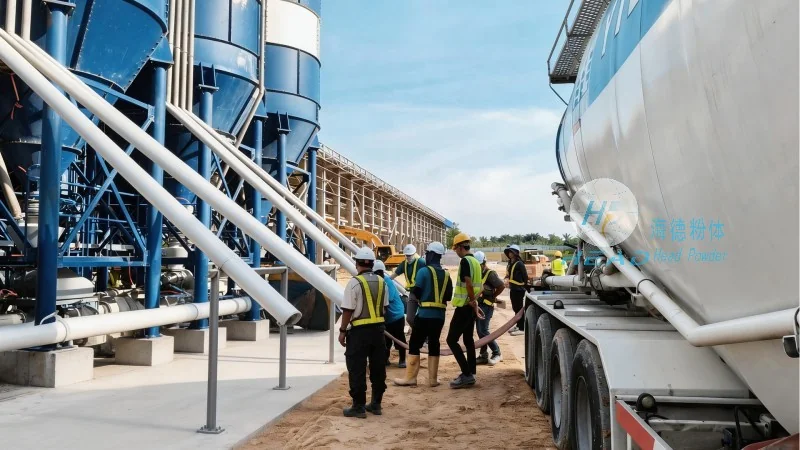
The performance of a starch pneumatic conveying system is influenced by several factors, including the starch's physical properties, the system's design, and operational parameters. The particle size, density, and moisture content of the starch affect the air velocity required for effective transport. Larger or denser particles may require higher air velocities or a denser phase system to ensure reliable conveying. The pipeline length and diameter also impact the system's efficiency, as longer or narrower pipes increase pressure drop and may require more powerful fans. Additionally, the system's operating pressure and air flow rate must be optimized to balance conveying efficiency with energy consumption. Proper maintenance of the components, such as regular cleaning of filters and checking for wear on the conveying line, is also crucial for maintaining optimal performance and extending the system's lifespan.
Shandong HeadPowder Engineering Co., Ltd., commonly known as HeadPowder, is a leading manufacturer and supplier of pneumatic conveying systems and related equipment for the starch industry. With a strong focus on innovation and quality, HeadPowder specializes in designing and manufacturing customized solutions tailored to the specific needs of starch processing facilities. The company's products are engineered to meet the highest standards of efficiency, reliability, and safety, ensuring that starch is transported in a clean, dust-free manner while minimizing operational costs. HeadPowder's commitment to customer satisfaction and technical excellence has made it a trusted partner for starch producers worldwide. The company's headquarters is located in Shandong, China, where it operates a state-of-the-art manufacturing facility and a dedicated research and development center.

 Shandong Headpowder Engineering Co., Ltd.
 156-6277-7102(Manager Zhang)
  0531-83386006
  Zhangqiu District, Jinan City, Shandong Province, China
telephone
WeChatconsult
top