With more than 10‑year industry experience, Shandong Headpowder delivers full‑service pneumatic‑conveying systems and blowers, undertaking nationwide turn‑key powder‑handling projects.
Glass bead pneumatic conveying is a critical method for transporting fine powders and granular materials, including glass beads, in industrial applications. This technology involves the use of air or gas to move particles through a pipeline system, offering advantages such as dust-free operation, reduced material degradation, and improved safety compared to traditional mechanical conveying methods. For industries dealing with glass beads, selecting the appropriate pneumatic conveying mode is essential to optimize efficiency, minimize operational costs, and ensure consistent material handling performance. The two primary modes—positive pressure and negative pressure systems—each present distinct characteristics and applications that influence the choice for specific operational needs.
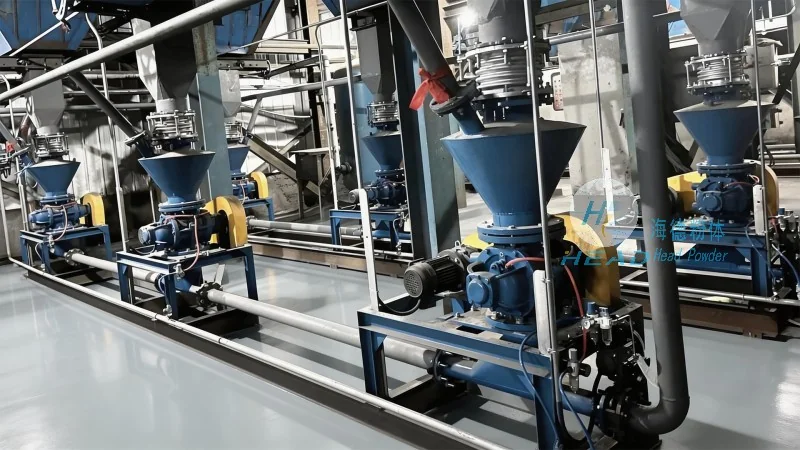
Headpowder, a leading provider of specialized engineering solutions, specializes in the design, manufacturing, and implementation of advanced pneumatic conveying systems. With a strong presence in China, particularly in Shandong province, the company has established itself as a trusted partner for industries requiring reliable and efficient material handling solutions. Headpowder's expertise lies in tailoring pneumatic conveying systems to meet the unique demands of clients, ensuring that glass bead transportation processes are optimized for performance, durability, and cost-effectiveness. The company's commitment to quality and innovation has positioned it as a key player in the field of pneumatic conveying technology.
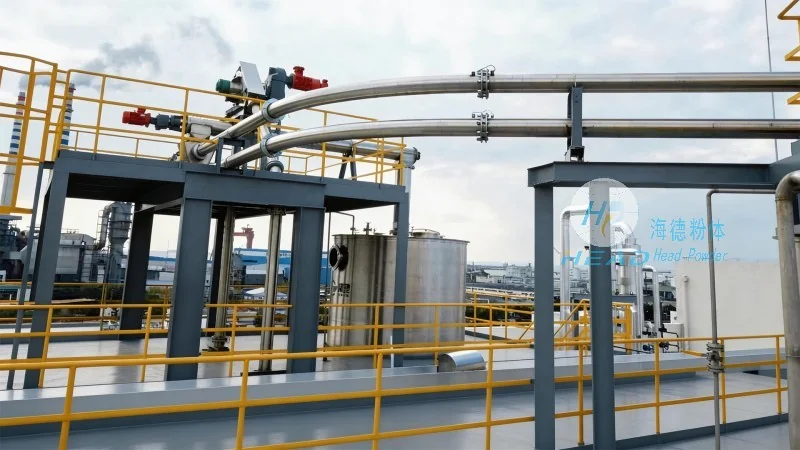
Positive pressure systems operate by generating a higher pressure within the conveying line compared to the surrounding environment. This approach involves a blower or compressor that supplies compressed air to push the glass beads through the pipeline. The primary advantage of positive pressure systems is their ability to handle long distances and multiple transfers, as the high pressure maintains the flow of material. Additionally, these systems are effective for transporting abrasive materials like glass beads, as the continuous air flow prevents material buildup and reduces wear on components. For instance, in the production of glass beads for coatings or plastics, positive pressure systems can efficiently convey large volumes of material over several hundred meters, ensuring consistent quality and minimizing downtime. However, positive pressure systems may require more robust equipment and higher energy consumption, which can impact operational costs. The design typically includes a hopper, a rotary valve, and a pipeline with appropriate fittings, ensuring that the glass beads are conveyed efficiently and safely. Headpowder's expertise in positive pressure system design allows for customization to meet specific industrial requirements, such as handling varying bead sizes and maintaining low material degradation rates.
Negative pressure systems, also known as vacuum systems, create a lower pressure inside the conveying line compared to the external environment. A vacuum pump draws air and glass beads from the source, moving them through the pipeline towards a collection point. This mode is particularly suitable for applications where the material needs to be transported from a high or difficult-to-access location, as the vacuum pulls the material into the system. Negative pressure systems are often preferred for handling fine or dusty glass beads, as the sealed pipeline prevents emissions and maintains a clean environment. For example, in small-scale glass bead production or laboratory settings, negative pressure systems can effectively transport glass beads from a hopper to a processing unit without generating dust or requiring extensive ventilation. However, they may have limitations in terms of conveying distance and material capacity, as the lower pressure can lead to reduced flow rates and potential blockages. The system typically includes a hopper, a rotary valve, and a vacuum pump, with the pipeline designed to minimize pressure drop and ensure consistent material transport. Headpowder's negative pressure system designs prioritize efficiency and safety, ensuring that even fine glass beads are handled without compromising environmental standards.

When selecting between positive and negative pressure pneumatic conveying systems for glass bead transportation, several factors must be considered. The choice depends on the specific application requirements, such as the distance of the conveying line, the volume of material to be handled, and the environmental constraints. Positive pressure systems excel in long-distance and high-volume applications, offering reliable performance and the ability to handle abrasive materials effectively. In contrast, negative pressure systems are better suited for short-distance or localized transport, particularly when dealing with fine or dusty glass beads that require a sealed environment. Energy consumption is another critical factor: positive pressure systems generally consume more power due to the need for compressed air, while negative pressure systems may have lower energy costs but can be less efficient over longer distances. Maintenance considerations also play a role, as positive pressure systems may require more frequent component replacement due to the higher pressure and abrasive nature of glass beads, whereas negative pressure systems might have simpler vacuum pump maintenance requirements. Additionally, the initial investment cost differs, with positive pressure systems often requiring more expensive blower units, while negative pressure systems may use more affordable vacuum pumps. Headpowder's expertise allows for a comprehensive evaluation of these factors, helping clients choose the most suitable mode based on their operational goals and budget. The optimal mode is determined by balancing operational efficiency, cost-effectiveness, and the specific operational environment of the glass bead handling process, ensuring that the chosen system maximizes productivity and minimizes downtime.

 Shandong Headpowder Engineering Co., Ltd.
 156-6277-7102(Manager Zhang)
  0531-83386006
  Zhangqiu District, Jinan City, Shandong Province, China
telephone
WeChatconsult
top