With more than 10‑year industry experience, Shandong Headpowder delivers full‑service pneumatic‑conveying systems and blowers, undertaking nationwide turn‑key powder‑handling projects.
Titanium dioxide (TiO₂) powder is a critical raw material in various industries, including pigments, coatings, and cosmetics. The efficient and reliable transportation of this fine powder is essential for maintaining production efficiency and product quality. Pneumatic conveying systems have emerged as a preferred method for handling TiO₂ powder due to their ability to transport materials in a closed system, minimizing contamination and dust emissions. This article provides a detailed analysis of the two primary pneumatic conveying modes—positive pressure and negative pressure—used for TiO₂ powder transport, highlighting their operational principles, advantages, and practical considerations.
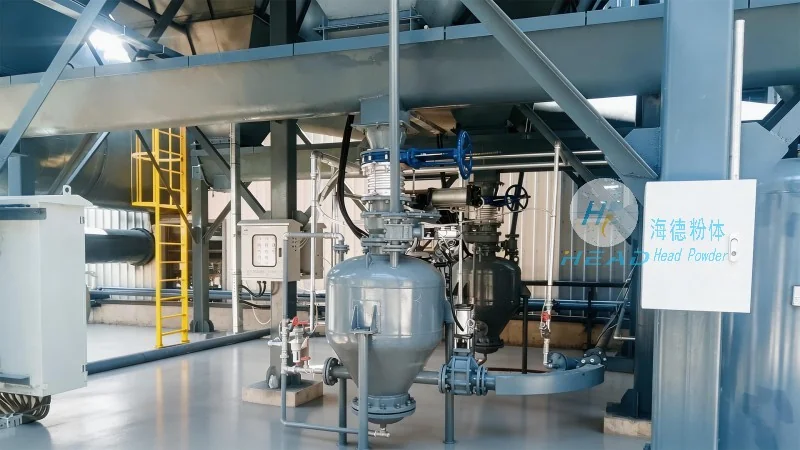
Pneumatic conveying systems utilize air or gas to move particulate materials through a pipeline. The two main modes are positive pressure (or pressure) systems and negative pressure (or vacuum) systems. Each mode has distinct characteristics that make it suitable for different applications and operational scenarios.
Positive pressure systems operate by blowing air or gas into the conveying line, creating a pressure higher than the ambient air pressure. This method is commonly used for short to medium-distance transport of TiO₂ powder. The system typically includes a blower or compressor at the inlet, which generates the necessary pressure to push the powder through the pipeline. Key components of a positive pressure system include the material feed hopper, rotary valve, conveying line, and discharge device.
One of the primary advantages of positive pressure systems is their ability to handle high concentrations of powder, often operating at bulk densities of 20-30 kg/m³. This high capacity makes them ideal for applications where large volumes of TiO₂ powder need to be transported quickly. Additionally, positive pressure systems are generally more straightforward to install and maintain compared to negative pressure systems, as they do not require complex vacuum equipment.
However, positive pressure systems may face challenges in handling abrasive or corrosive TiO₂ powders, as the high-pressure air can accelerate wear on the conveying line and components. Moreover, they are less effective for long-distance transport due to pressure drop and energy consumption issues. For TiO₂ powder, which is often fine and prone to caking, positive pressure systems may require additional measures, such as anti-caking agents or vibration, to prevent blockages.
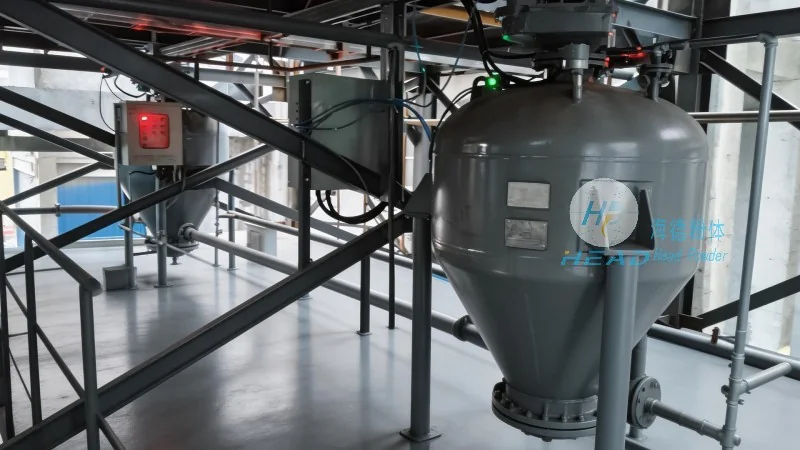
Negative pressure systems, also known as vacuum systems, operate by creating a vacuum in the conveying line, drawing the TiO₂ powder into the pipeline using a vacuum pump. This mode is typically used for longer distances or when the material needs to be transported from multiple sources to a central collection point. The system includes a vacuum pump at the discharge end, a material feed hopper with a rotary valve, and the conveying line.
A key advantage of negative pressure systems is their ability to handle fine powders without the need for high-pressure air, reducing the risk of particle degradation. The vacuum environment also helps in maintaining a cleaner system, as it prevents dust from escaping into the ambient air. Negative pressure systems are particularly suitable for applications where the TiO₂ powder is sensitive to pressure or where the transport distance is long, as the vacuum pump can maintain the necessary suction over extended lengths.
Despite these benefits, negative pressure systems have limitations. They are generally less efficient for high-volume transport, as the vacuum pump may struggle to maintain sufficient suction at high bulk densities. Additionally, the system is more prone to clogging due to the lower air velocity and the tendency of fine powders to settle in the pipeline. Regular maintenance and cleaning are essential to prevent blockages, which can be costly and time-consuming.
When selecting between positive and negative pressure pneumatic conveying systems for TiO₂ powder, several factors must be considered. The most critical factors include the distance of transport, the volume of powder to be moved, the characteristics of the TiO₂ powder (such as fineness, moisture content, and abrasiveness), and the available space and infrastructure.
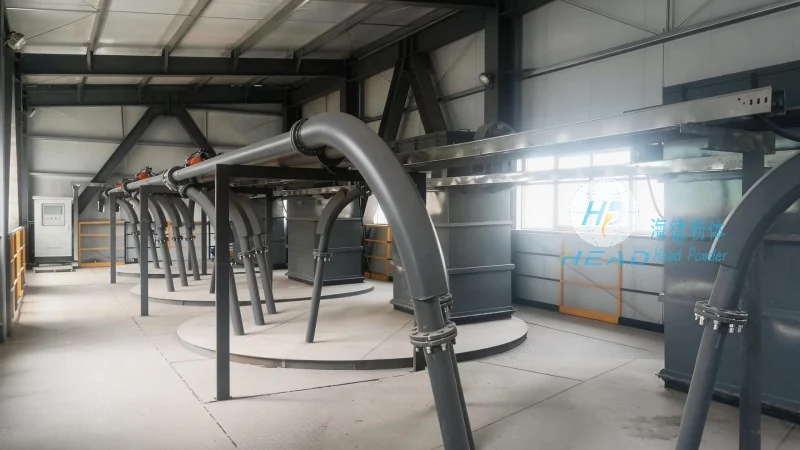
For short-distance transport of large volumes of TiO₂ powder, a positive pressure system is often the preferred choice due to its high capacity and simplicity. Conversely, for long-distance or multi-point collection, a negative pressure system may offer better performance and reduced risk of particle degradation. The choice also depends on the environmental regulations in the area, as negative pressure systems generally produce less dust emissions, making them more suitable for applications in sensitive environments.
Another important consideration is the cost and energy efficiency of the system. Positive pressure systems typically have lower initial costs and are more energy-efficient for short distances, while negative pressure systems may require more energy due to the vacuum pump but can be more cost-effective for long-distance transport. Maintenance costs also vary, with positive pressure systems generally having lower maintenance requirements compared to the more complex vacuum equipment in negative pressure systems.
Real-world applications of pneumatic conveying systems for TiO₂ powder illustrate the effectiveness of both positive and negative pressure modes. For instance, in a pigment manufacturing plant, a positive pressure system was used to transport TiO₂ powder from storage silos to a mixing unit over a distance of 50 meters. The system operated at a bulk density of 25 kg/m³, achieving a throughput of 10 tons per hour with minimal clogging. The plant reported a 15% increase in production efficiency compared to traditional bucket elevators.
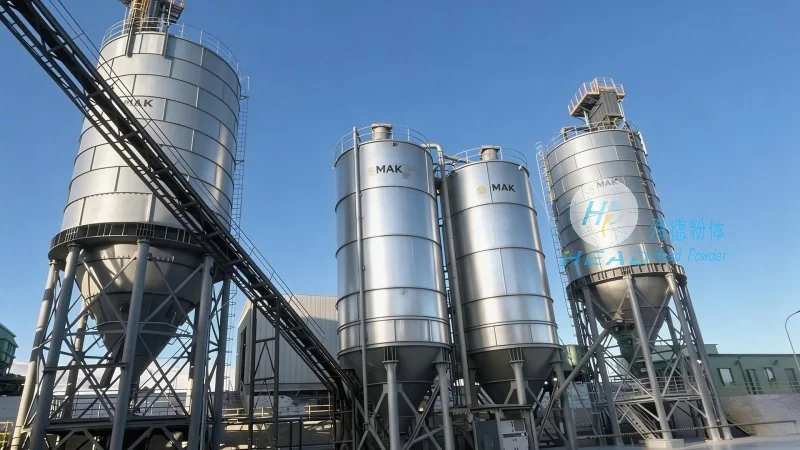
In another case, a negative pressure system was implemented in a cosmetics manufacturing facility to transport fine TiO₂ powder from multiple production lines to a central blending tank over a distance of 200 meters. The vacuum system maintained a low particle size distribution, ensuring consistent product quality. The facility noted a reduction in dust emissions by 80% compared to open conveyance methods, meeting stringent environmental regulations.
Both positive and negative pressure pneumatic conveying systems offer viable solutions for the transportation of titanium dioxide powder, each with its own set of advantages and limitations. The choice between the two modes should be based on a thorough analysis of the specific operational requirements, including distance, volume, and material characteristics. For high-volume, short-distance transport of TiO₂ powder, a positive pressure system is generally recommended due to its efficiency and simplicity. For long-distance or multi-point collection, a negative pressure system may be more suitable, especially when the powder is fine and sensitive to pressure.
When implementing a pneumatic conveying system for TiO₂ powder, it is crucial to consider factors such as material feed consistency, pipeline design, and maintenance protocols to ensure optimal performance and longevity. Regular monitoring of system parameters, such as pressure, flow rate, and temperature, can help identify potential issues early and prevent downtime.
Shandong HeadPowder Engineering Co., Ltd., a leading provider of pneumatic conveying solutions, specializes in designing and manufacturing customized systems tailored to the unique needs of TiO₂ powder handling. With years of experience in the industry, the company offers expert consultation and support to help clients select the most appropriate conveying mode and system configuration for their applications. Whether you require a positive or negative pressure system, HeadPowder Engineering provides reliable, efficient, and cost-effective solutions to enhance your TiO₂ powder transportation processes.

 Shandong Headpowder Engineering Co., Ltd.
 156-6277-7102(Manager Zhang)
  0531-83386006
  Zhangqiu District, Jinan City, Shandong Province, China
telephone
WeChatconsult
top