With more than 10‑year industry experience, Shandong Headpowder delivers full‑service pneumatic‑conveying systems and blowers, undertaking nationwide turn‑key powder‑handling projects.
Fluorspar powder, a vital raw material in industries such as chemical manufacturing, metallurgy, and ceramics, demands efficient and reliable transport solutions to ensure seamless production workflows. Pneumatic conveying, a technology that utilizes air or gas to move bulk materials like powders, is widely adopted for handling fluorspar powder. This article provides a technical analysis of pneumatic conveying systems for fluorspar powder, focusing on the comparison between positive pressure and negative pressure modes. By examining the operational principles, advantages, and limitations of each mode, readers can gain insights into selecting the most suitable conveying solution for their specific fluorspar powder handling needs.
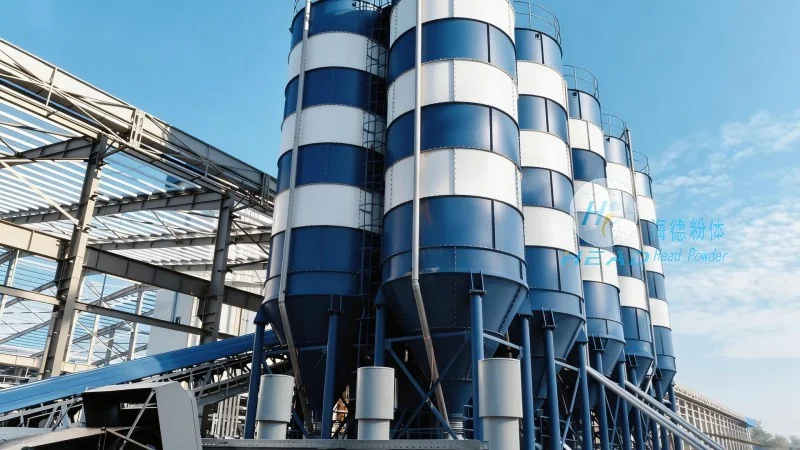
Pneumatic conveying systems are engineered to transport dry bulk materials, including fluorspar powder, through pipelines using air or gas as the conveying medium. Compared to traditional methods like belt conveyors or bucket elevators, pneumatic conveying offers advantages such as reduced dust generation, lower maintenance requirements, and the ability to handle materials in a closed system, minimizing environmental impact. For fluorspar powder, which is often fine and prone to dust, pneumatic conveying is particularly beneficial as it can maintain material integrity and prevent contamination during transport.
Positive pressure pneumatic conveying systems operate by blowing air or gas into the conveying line, creating a pressure higher than ambient air pressure. The material is then drawn into the pipeline and transported to the destination. This mode is commonly used for short to medium distance conveying and for materials with lower abrasiveness or dust generation rates. The primary advantage of positive pressure systems is their ability to handle a wide range of materials, including those with high moisture content or sticky properties, as the high pressure helps maintain material flow and prevent blockages. However, they may require more energy input compared to negative pressure systems and can be more complex to install, especially for long-distance applications.
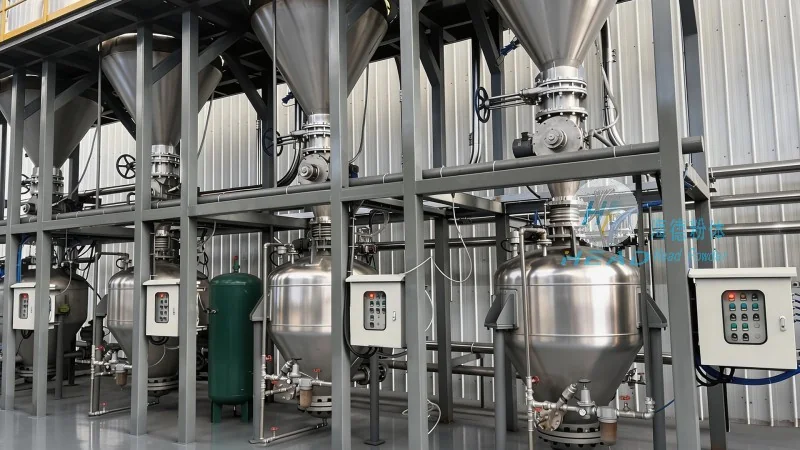
Negative pressure pneumatic conveying, also known as vacuum conveying, operates by creating a vacuum in the conveying line, which draws the material from the source into the pipeline. This mode is typically used for longer distance conveying and for materials that are more abrasive or have higher dust generation rates. The main advantage of negative pressure systems is their lower energy consumption and simpler design, as they do not require high-pressure blowers. However, they may be less effective for handling materials with high moisture content or sticky properties, as the vacuum may not provide sufficient force to maintain material flow. Additionally, negative pressure systems can generate more dust at the source, requiring additional dust control measures.
When choosing between positive and negative pressure pneumatic conveying for fluorspar powder, several factors must be considered to ensure optimal performance and efficiency. The first factor is the distance between the source and the destination. Positive pressure systems are generally more suitable for shorter distances, typically up to 100 meters, while negative pressure systems can handle longer distances, up to several hundred meters. The second factor is the material characteristics, including particle size, density, and moisture content. Fine fluorspar powders with high moisture content may require positive pressure systems to maintain flow, whereas coarser or less abrasive powders may be suitable for negative pressure systems. The third factor is the environmental considerations, such as dust control and noise levels. Positive pressure systems are better at containing dust within the system, while negative pressure systems may require additional filtration and dust collection equipment. The fourth factor is the energy consumption and operational costs. Negative pressure systems are generally more energy-efficient, but positive pressure systems may have lower maintenance costs due to simpler components.
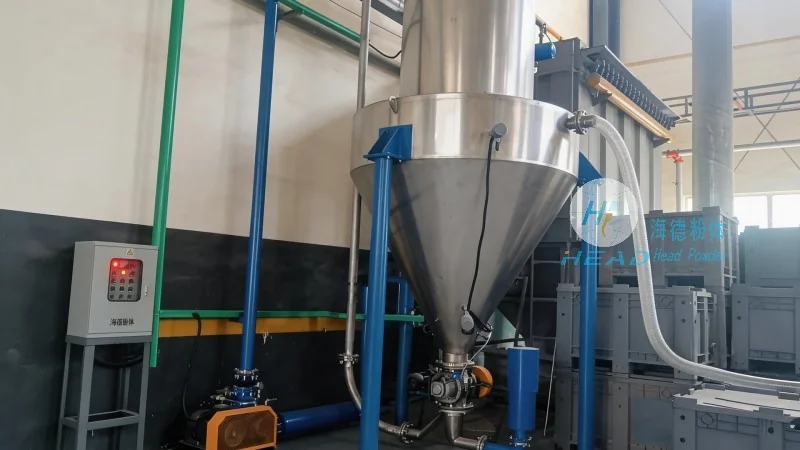
Pneumatic conveying is widely used in the processing of fluorspar powder, from raw material handling to final product packaging. In the mining and crushing stage, positive pressure systems are often used to transport crushed fluorspar from the crusher to storage silos or grinding mills. The high pressure helps move material efficiently and prevent blockages in pipelines. In the grinding and classification stage, negative pressure systems are commonly employed to transport fine fluorspar powder from grinding mills to classifiers or storage tanks. The vacuum helps maintain material flow and prevent dust accumulation in equipment. In the packaging stage, both positive and negative pressure systems can be used to transport the final product from storage tanks to packaging machines. The choice of system depends on specific stage requirements, such as distance, material characteristics, and environmental regulations.
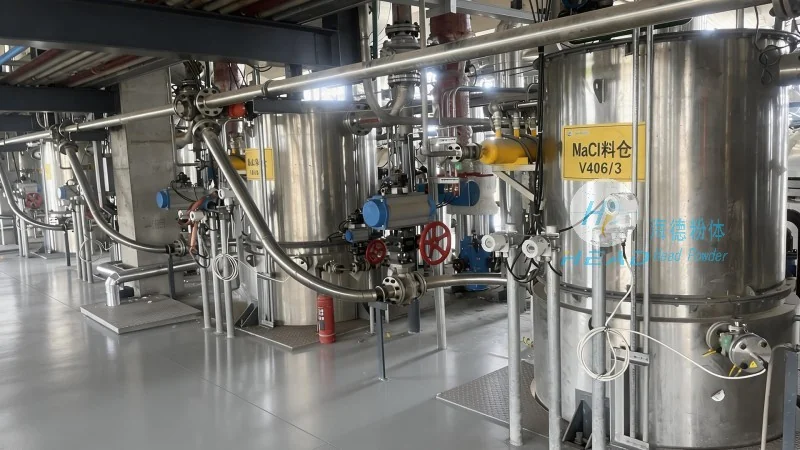
Both positive and negative pressure pneumatic conveying systems offer advantages for fluorspar powder handling. Positive pressure systems provide high conveying rates, reliable material flow, and better dust control, making them suitable for applications where material integrity and environmental compliance are critical. However, they may have higher energy consumption and require more complex equipment, increasing initial investment costs. Negative pressure systems, on the other hand, offer lower energy consumption, simpler design, and lower maintenance costs, making them more cost-effective for long-distance conveying. However, they may have lower conveying rates, be less effective for handling sticky or high-moisture materials, and generate more dust at the source, requiring additional dust control measures.
In conclusion, pneumatic conveying is an essential technology for the efficient and reliable handling of fluorspar powder. The choice between positive and negative pressure modes depends on factors like distance, material characteristics, environmental considerations, and operational costs. By understanding the operational principles, advantages, and limitations of each mode, industries can select the most suitable pneumatic conveying system to meet their specific fluorspar powder handling needs. As a leading provider of engineering solutions for bulk material handling, Shandong HeadPowder Engineering Co., Ltd. specializes in designing and manufacturing customized pneumatic conveying systems tailored to the unique requirements of fluorspar powder processing. With years of experience and expertise in the field, HeadPowder offers innovative solutions that enhance productivity, reduce costs, and ensure environmental compliance in fluorspar powder handling operations.

 Shandong Headpowder Engineering Co., Ltd.
 156-6277-7102(Manager Zhang)
  0531-83386006
  Zhangqiu District, Jinan City, Shandong Province, China
telephone
WeChatconsult
top