With more than 10‑year industry experience, Shandong Headpowder delivers full‑service pneumatic‑conveying systems and blowers, undertaking nationwide turn‑key powder‑handling projects.
HeadPowder, a leading engineering company based in Shandong, China, specializes in advanced material handling solutions, particularly in the field of pneumatic conveying systems for gypsum and fly ash. This article provides an in-depth analysis of the technical aspects of gypsum fly ash pneumatic conveying, focusing on the comparison between positive and negative pressure modes to help industry professionals understand the operational principles and practical applications of these systems.
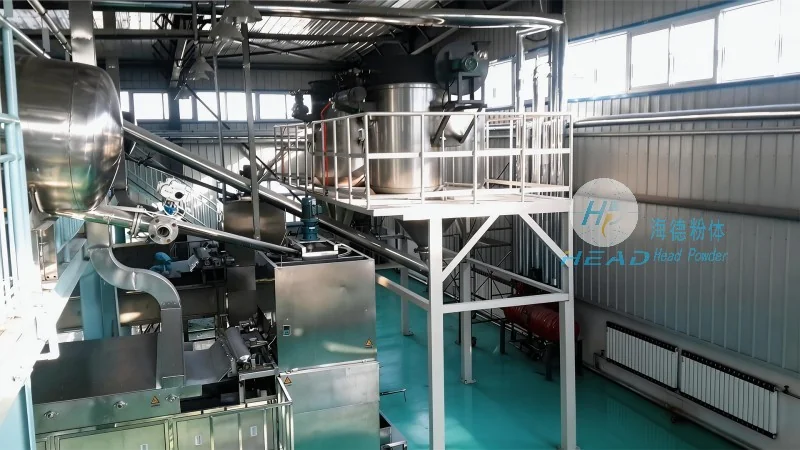
HeadPowder Engineering Co., Ltd. is a professional manufacturer and supplier of pneumatic conveying equipment. With a strong presence in the Chinese market, the company is committed to delivering high-quality solutions tailored to the specific needs of clients in the construction and industrial sectors. HeadPowder's headquarters is located in Shandong, China, where the company leverages its local expertise and resources to support global clients. The company's mission is to enhance material handling efficiency and safety through innovative engineering and reliable product design.
Gypsum fly ash is a byproduct of the combustion process in power plants, combining gypsum and fly ash particles. This material is often used in construction applications, such as wallboard production and cement manufacturing. Handling gypsum fly ash poses unique challenges due to its fine particle size, moisture content, and abrasive nature. Traditional bulk material handling methods, like belt conveyors or bucket elevators, may not be suitable for such delicate materials, as they can cause particle degradation, increased wear on equipment, and inefficient transport. Pneumatic conveying offers a more effective solution by transporting materials in a closed system using air pressure, minimizing environmental contamination and ensuring consistent material quality.
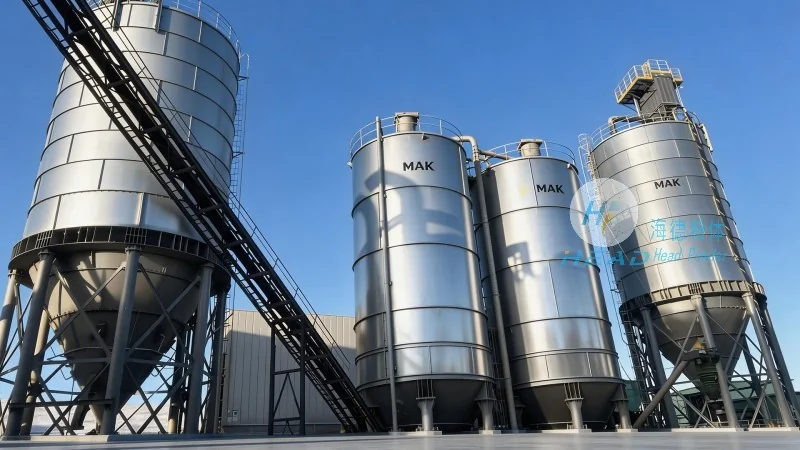
Positive pressure pneumatic conveying systems operate by generating air pressure within the conveying line, pushing the material forward. This mode is commonly used for short to medium distance transport and is particularly effective for handling materials that are prone to dust generation or require a closed system to prevent environmental contamination. The system typically consists of a blower, a hopper for material storage, a conveying line, and a receiver for the discharged material. The blower creates a positive pressure in the line, which draws material from the hopper and transports it to the receiver. Key advantages of positive pressure systems include their ability to handle abrasive materials, maintain consistent flow rates, and provide a sealed environment that reduces dust emissions. However, they may require more energy compared to negative pressure systems and can be more complex to install, especially for long-distance applications.
Negative pressure pneumatic conveying systems, also known as vacuum systems, operate by creating a vacuum in the conveying line, pulling material from the source. This mode is ideal for long-distance transport and is commonly used in applications where the material source is located at a higher elevation or requires a more flexible system. The system includes a vacuum pump, a hopper, a conveying line, and a receiver. The vacuum pump creates a negative pressure in the line, which draws material from the hopper and transports it to the receiver. Negative pressure systems are generally more energy-efficient for long distances and can handle larger volumes of material compared to positive pressure systems. However, they may be more susceptible to clogging due to the lower air velocity and can require more maintenance to prevent dust accumulation in the system.
When selecting a pneumatic conveying system for gypsum fly ash, it is essential to evaluate the operational requirements and constraints of the application. Positive pressure systems are better suited for short to medium distances, high material flow rates, and applications where dust control is a top priority. They are also more effective in handling abrasive materials and maintaining consistent particle size distribution. Negative pressure systems, on the other hand, are ideal for long-distance transport, large material volumes, and applications where energy efficiency is a key consideration. The choice between the two modes depends on factors such as the distance between the source and destination, the material characteristics, the required flow rate, and the available space for equipment installation. HeadPowder offers customized solutions that can integrate both positive and negative pressure components to optimize performance for specific applications.
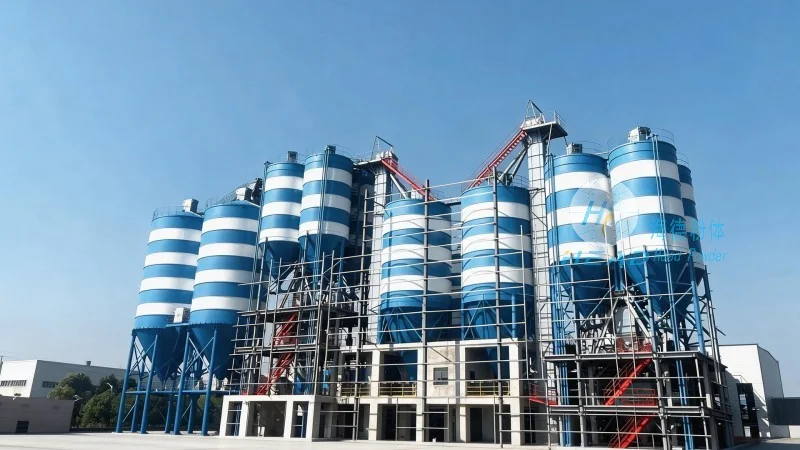
Implementing an effective pneumatic conveying system for gypsum fly ash requires careful consideration of several technical and operational factors. First, the material's properties, such as particle size distribution, moisture content, and abrasiveness, must be thoroughly analyzed to determine the appropriate system design. For example, fine particles may require higher air velocities to prevent clogging, while abrasive materials may necessitate the use of wear-resistant components in the conveying line and equipment. Second, the system's capacity and flow rate must be matched to the production requirements to ensure smooth operation and avoid bottlenecks. Third, dust control measures are critical to comply with environmental regulations and maintain a safe working environment. HeadPowder's engineering team provides comprehensive consultation services to assess these factors and design a system that meets the specific needs of each client.
Gypsum fly ash pneumatic conveying technology plays a vital role in the efficient handling of this important construction material. By understanding the differences between positive and negative pressure modes, industry professionals can select the most suitable system for their applications, optimizing performance, reducing operational costs, and enhancing safety. HeadPowder Engineering, with its expertise in pneumatic conveying systems, continues to provide innovative solutions that address the unique challenges of handling gypsum fly ash, contributing to the advancement of material handling technology in the industry.

 Shandong Headpowder Engineering Co., Ltd.
 156-6277-7102(Manager Zhang)
  0531-83386006
  Zhangqiu District, Jinan City, Shandong Province, China
telephone
WeChatconsult
top