With more than 10‑year industry experience, Shandong Headpowder delivers full‑service pneumatic‑conveying systems and blowers, undertaking nationwide turn‑key powder‑handling projects.
HeadPowder, a leading engineering firm based in Shandong, China, specializes in advanced material handling solutions. This article delves into the technical aspects of pneumatic conveying systems specifically designed for rice, focusing on the comparison between positive and negative pressure modes. Understanding these modes is crucial for optimizing efficiency, minimizing operational costs, and ensuring the quality of rice during transportation.
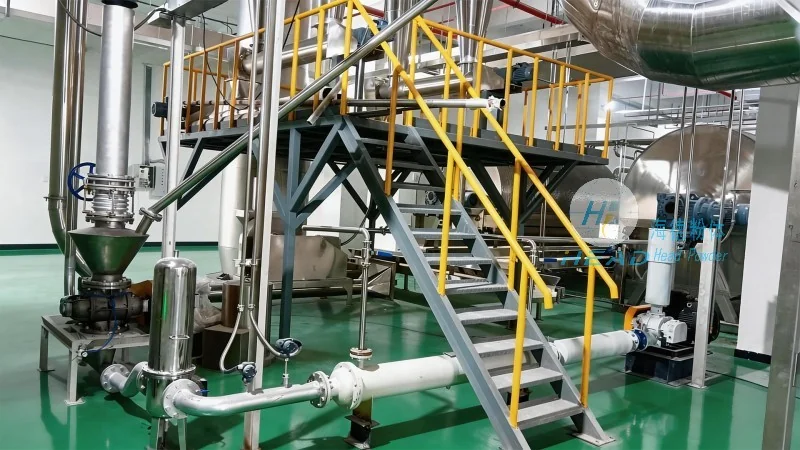
Pneumatic conveying is a method used to transport bulk materials like rice through a pipeline using air or gas as the conveying medium. It offers several advantages over traditional mechanical conveying, including reduced equipment wear, lower maintenance requirements, and the ability to handle materials in a dust-free environment. The system typically consists of a hopper, a conveyor line, a control system, and a dust collection unit. For rice, which is a delicate agricultural product, the choice of pressure mode significantly impacts the integrity and quality of the grain.
Positive pressure conveying operates by blowing air or gas into the pipeline, creating a pressure higher than the ambient air pressure. This mode is often referred to as "blow" or "pressure" conveying. In the context of rice handling, positive pressure systems are commonly used for short to medium distance transport, typically up to several hundred meters. The primary advantage of this mode is its ability to handle materials with higher moisture content and larger particle sizes without causing excessive breakage. The high pressure air stream ensures that the rice flows smoothly through the pipeline, reducing the risk of blockages. However, one of the main drawbacks is the higher energy consumption compared to negative pressure systems, as more power is required to generate the pressure differential.
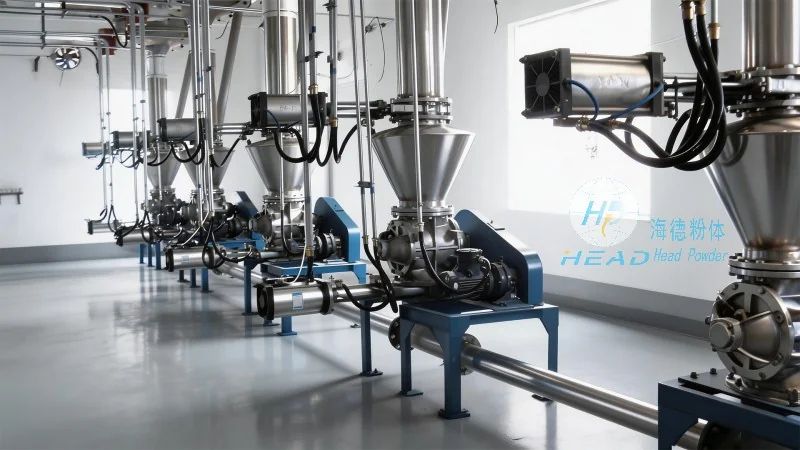
Negative pressure conveying, also known as "suction" or "vacuum" conveying, works by creating a vacuum in the pipeline, drawing the rice material from the source into the system. This mode is particularly suitable for longer distances, often exceeding 500 meters, and for handling materials that are more prone to dust generation. The vacuum created by the system pulls the rice particles into the pipeline, ensuring a consistent flow. One of the key benefits of negative pressure is its lower energy consumption, as it relies on the suction force rather than high-pressure air. Additionally, it is more effective at capturing fine particles and preventing dust from escaping into the environment. However, negative pressure systems may be more susceptible to blockages if the material contains high levels of moisture or foreign objects, as the suction force can be insufficient to move the material through the pipeline.
The selection between positive and negative pressure modes for rice pneumatic conveying depends on several critical factors. Distance is a primary consideration; positive pressure is generally preferred for shorter distances due to its higher efficiency over short runs, while negative pressure is more suitable for longer distances. Material characteristics, such as moisture content, particle size, and dust generation, also play a significant role. For rice with higher moisture content or larger particles, positive pressure may be more effective in preventing breakage and maintaining quality. Conversely, if the rice is prone to generating dust or needs to be transported over longer distances, negative pressure is often the better choice. Additionally, the system's energy consumption and operational costs are important factors. Positive pressure systems typically have higher energy costs due to the need for high-pressure air, whereas negative pressure systems are more energy-efficient but may require more maintenance to prevent blockages and ensure consistent suction.
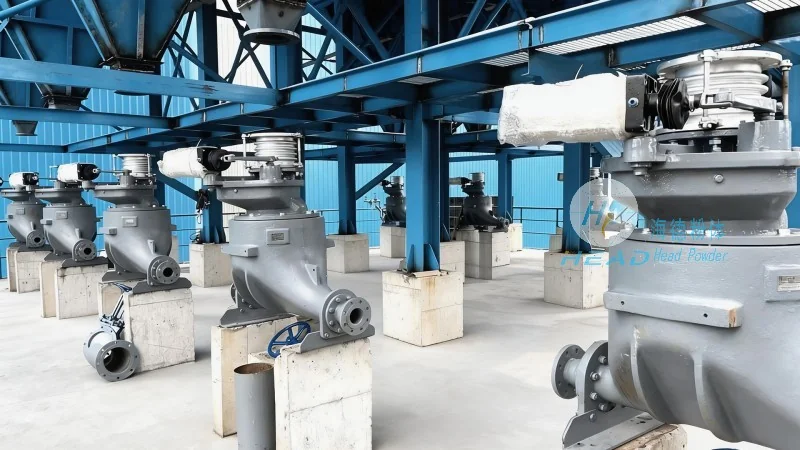
Shandong HeadPowder Engineering Co., Ltd. leverages decades of experience in designing and manufacturing customized pneumatic conveying solutions for rice processing facilities. The company's engineers work closely with clients to assess their specific operational needs, including the distance of transport, the characteristics of the rice (e.g., moisture level, particle size), and the desired level of material integrity. By analyzing these factors, HeadPowder can recommend the most appropriate pressure mode and system configuration to optimize performance and minimize costs. The company's solutions are designed to meet the highest standards of efficiency and reliability, ensuring that rice is transported safely and effectively from the field to the processing plant or storage facility.
In conclusion, the choice between positive and negative pressure pneumatic conveying modes for rice handling is a critical decision that impacts operational efficiency, energy consumption, and material quality. Positive pressure systems are ideal for shorter distances and handling materials with higher moisture content or larger particles, while negative pressure systems are better suited for longer distances and materials prone to dust generation. By understanding the technical differences and considering the specific requirements of the rice handling process, facilities can select the most appropriate conveying system. HeadPowder, with its expertise in engineering and material handling, provides tailored solutions that enhance the efficiency and reliability of rice pneumatic conveying operations.

 Shandong Headpowder Engineering Co., Ltd.
 156-6277-7102(Manager Zhang)
  0531-83386006
  Zhangqiu District, Jinan City, Shandong Province, China
telephone
WeChatconsult
top