With more than 10‑year industry experience, Shandong Headpowder delivers full‑service pneumatic‑conveying systems and blowers, undertaking nationwide turn‑key powder‑handling projects.
Phosphoric hydrogen calcium (PHC) is a vital material in the fertilizer and chemical sectors, often requiring efficient bulk material handling solutions. Among the available methods, pneumatic conveying stands out as a preferred choice for transporting PHC due to its ability to handle bulk materials with minimal contamination and reduced labor costs. However, the decision between positive pressure and negative pressure systems in PHC pneumatic conveying is a common consideration for many operations. Understanding the distinctions between these two approaches is essential for selecting the most suitable system for specific applications.
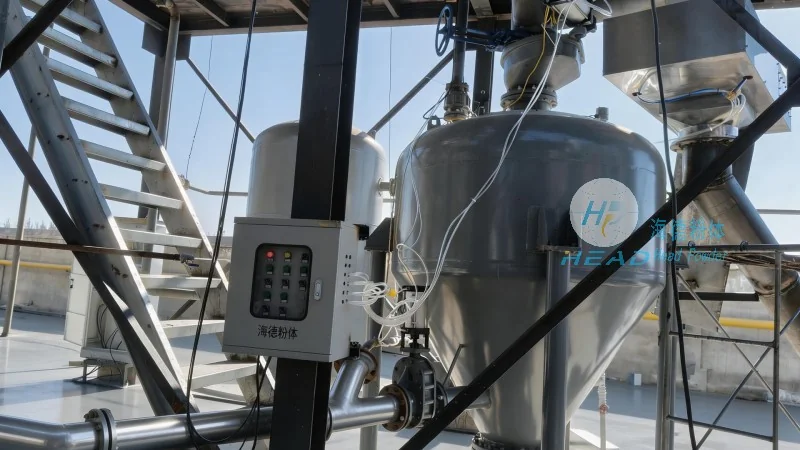
Pneumatic conveying systems utilize air or gas as the conveying medium to transport bulk materials through pipelines. The two primary types are positive pressure and negative pressure systems, each with distinct operational principles and characteristics. Positive pressure systems generate air pressure within the conveying line to move materials, while negative pressure systems create a vacuum to draw material into the system.
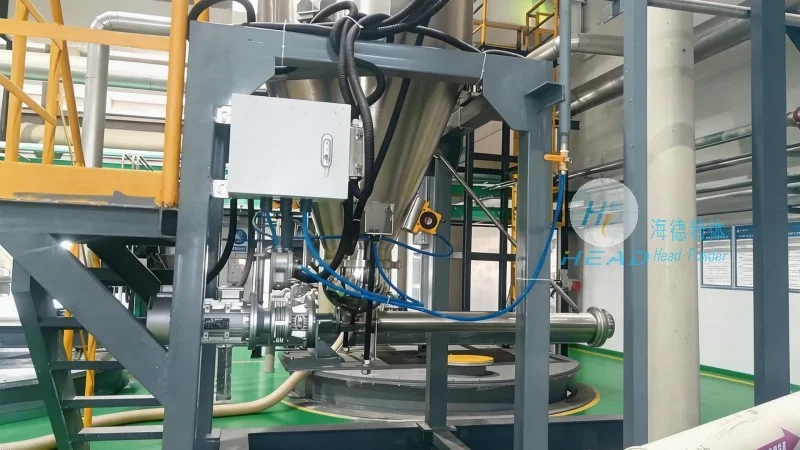
Positive pressure conveying, also known as pressure pneumatic conveying, pushes material through the pipeline using compressed air. This method is typically used for short to medium-distance transport and is suitable for non-abrasive or low-dust materials. The system includes a blower, hopper, conveying line, and receiver. The blower supplies compressed air, which pushes the material. A key advantage is its ability to handle longer distances compared to negative pressure systems, as pressure can be maintained effectively over longer runs. Additionally, positive pressure systems are simpler to install and maintain, with less complex equipment. However, they may be less suitable for highly abrasive or dusty materials, as high-pressure air can accelerate wear and increase leakage risks.
Negative pressure conveying, or vacuum pneumatic conveying, draws material into the system using a vacuum pump. This method is ideal for short-distance transport (typically up to 100 meters) and fine, dusty materials like PHC. The system consists of a vacuum pump, hopper, conveying line, and receiver. The vacuum pump creates a low-pressure environment, pulling material into the pipeline. A primary advantage is handling fine powders without excessive component wear, as material is drawn rather than pushed. This makes it particularly suitable for PHC's fine particle size and high dust generation. However, negative pressure systems are more complex to install and maintain, requiring robust vacuum pumps and careful sealing to prevent air leakage. The maximum conveying distance is shorter than positive pressure systems, as vacuum pressure drops more rapidly over longer distances.
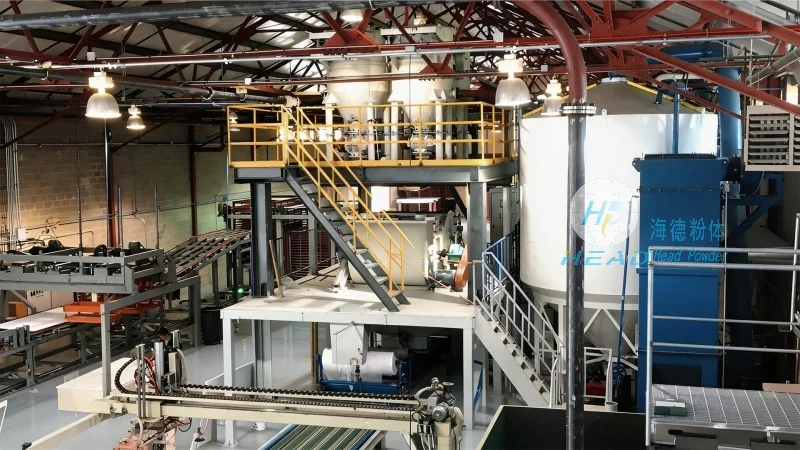
When selecting between positive and negative pressure pneumatic conveying for PHC, several factors must be evaluated. The first is the distance between the source and destination. Positive pressure systems are preferred for longer distances, while negative pressure systems are better for shorter runs. The second is material characteristics: fine, dusty PHC is better suited to negative pressure systems to reduce wear and leakage. The third is system complexity and maintenance: positive pressure systems are simpler and cheaper to maintain, while negative pressure systems require more sophisticated equipment. The fourth is cost: positive pressure systems have lower initial costs but may incur higher long-term maintenance for abrasive materials; negative pressure systems are more economical for fine powders over time. Finally, environmental and safety considerations: both systems can be designed with dust containment, but negative pressure systems may need additional filtration to prevent dust release.

 Shandong Headpowder Engineering Co., Ltd.
 156-6277-7102(Manager Zhang)
  0531-83386006
  Zhangqiu District, Jinan City, Shandong Province, China
telephone
WeChatconsult
top