With more than 10‑year industry experience, Shandong Headpowder delivers full‑service pneumatic‑conveying systems and blowers, undertaking nationwide turn‑key powder‑handling projects.
When it comes to dust air conveying systems, selecting the right type of system—whether positive pressure or negative pressure—is crucial for efficient material handling and operational success. This article will explore the key differences between these two methods, helping you make an informed decision based on your specific needs. We'll also introduce the expertise of Shandong HeadPowder Engineering Co., Ltd., a leading provider of air conveying solutions based in Shandong, China.
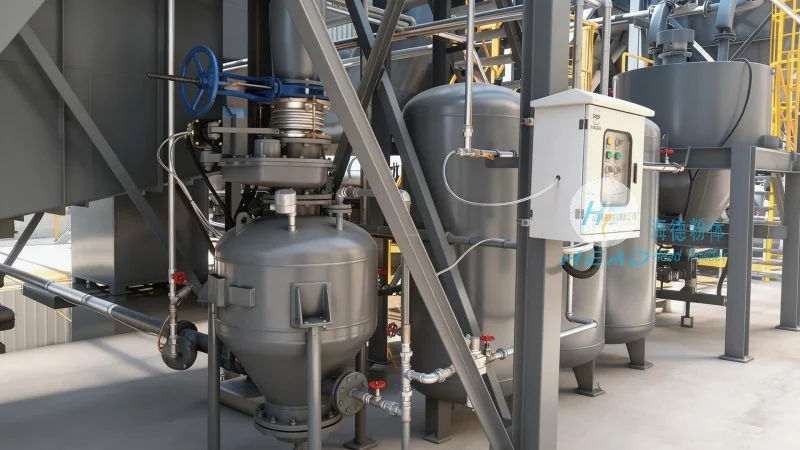
Dust air conveying, also known as pneumatic conveying, is a method used to transport bulk materials like powders, granules, and fine particles through a pipeline using air or gas as the conveying medium. The choice between positive pressure and negative pressure systems depends on factors such as material properties, system layout, and operational requirements. Both methods have their own advantages and limitations, which we will delve into below.
Positive pressure conveying systems operate by blowing air or gas into the pipeline, creating a pressure higher than the ambient air pressure. This method is commonly used for conveying materials over longer distances or with higher material loads. The primary advantage of positive pressure systems is their ability to handle abrasive or corrosive materials without causing wear on the system components. Additionally, they are generally more suitable for systems where the material source is located at a higher elevation than the destination, as the positive pressure helps to push the material upward.
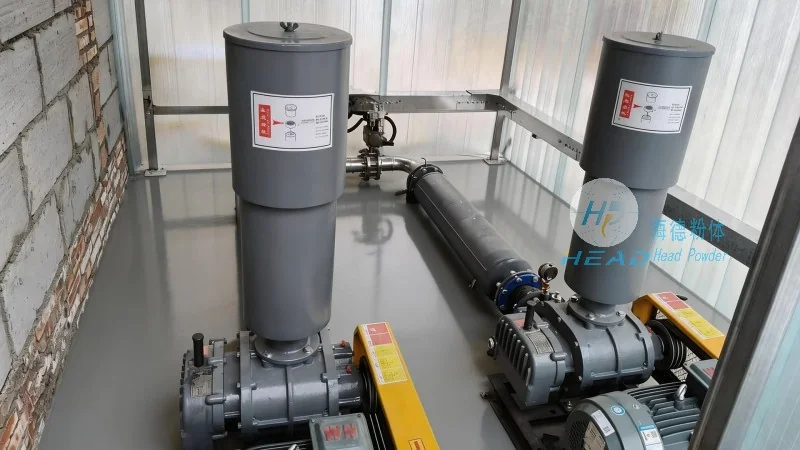
In a positive pressure system, the material is introduced into the pipeline at the start point, and the air flow carries it to the end point. The system typically includes a blower or compressor at the inlet, which supplies the necessary pressure to move the material. This method is effective for applications where the material is dry and free-flowing, and where the pipeline layout allows for a relatively straightforward design.
Negative pressure conveying systems, also known as vacuum systems, work by creating a vacuum in the pipeline, which draws the material from the source into the system. The ambient air pressure outside the pipeline is higher than the pressure inside, causing the material to be pulled into the pipeline. This method is often preferred for applications where the material source is at a lower elevation than the destination, or where the material is sensitive to pressure changes. Negative pressure systems are also useful for conveying materials that are dusty or have a tendency to create dust clouds, as the vacuum helps to contain the material and reduce emissions.
A negative pressure system typically includes a vacuum pump or fan at the end point, which creates the suction force needed to draw the material into the pipeline. The material is introduced at the end point, and the air flow carries it back to the source. This method is effective for applications where the material is fine or has a tendency to clog the pipeline, as the vacuum helps to keep the material moving and prevent blockages.
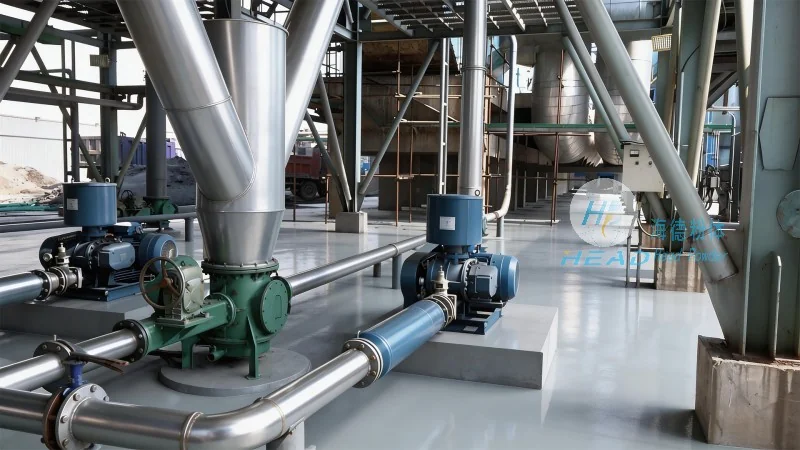
There are several key factors to consider when distinguishing between positive and negative pressure systems. The first is the direction of material flow: positive pressure systems push material from the inlet to the outlet, while negative pressure systems pull material from the outlet to the inlet. The second is the pressure differential: positive pressure systems operate at a pressure higher than ambient, while negative pressure systems operate at a pressure lower than ambient. The third is the material properties: positive pressure systems are better suited for abrasive or corrosive materials, while negative pressure systems are better suited for fine or dusty materials.
Another important factor is the system layout and distance. Positive pressure systems are generally more suitable for longer distances or when the material source is at a higher elevation than the destination, as the positive pressure helps to overcome gravity and push the material upward. Negative pressure systems are better for shorter distances or when the material source is at a lower elevation, as the vacuum helps to pull the material downward. The choice of system also depends on the specific application and the type of material being conveyed. For example, if the material is a fine powder that is prone to clogging, a negative pressure system may be more appropriate, as the vacuum helps to keep the material moving and prevent blockages.
When deciding between positive and negative pressure dust air conveying systems, several factors should be taken into account. The first is the material properties, including its density, particle size, and flowability. The second is the system layout, including the distance between the source and destination, and the elevation difference. The third is the operational requirements, such as the required conveying capacity and the need for dust control. The fourth is the cost and maintenance considerations, as both systems have different capital and operational costs.
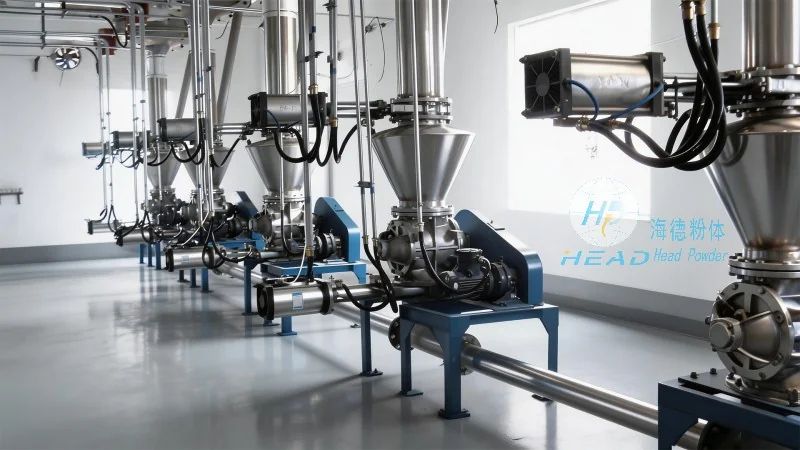
For example, if the material is a coarse granule with high density and good flowability, a positive pressure system may be more suitable, as it can handle higher material loads and longer distances. If the material is a fine powder with low density and poor flowability, a negative pressure system may be more appropriate, as it can handle the fine particles and prevent clogging. The system layout is also important, as a positive pressure system may be more suitable for a system where the material source is at a higher elevation than the destination, while a negative pressure system may be more suitable for a system where the material source is at a lower elevation.
Choosing between positive and negative pressure dust air conveying systems requires careful consideration of the material properties, system layout, and operational requirements. Both methods have their own advantages and limitations, and the right choice depends on the specific application. Shandong HeadPowder Engineering Co., Ltd. offers a range of air conveying solutions tailored to meet the needs of various industries, including food, pharmaceutical, and chemical processing. With their expertise in positive and negative pressure systems, they can help you select the most suitable system for your material handling needs.

 Shandong Headpowder Engineering Co., Ltd.
 156-6277-7102(Manager Zhang)
  0531-83386006
  Zhangqiu District, Jinan City, Shandong Province, China
telephone
WeChatconsult
top