With more than 10‑year industry experience, Shandong Headpowder delivers full‑service pneumatic‑conveying systems and blowers, undertaking nationwide turn‑key powder‑handling projects.
Winery slurry, a byproduct of wine production, requires efficient and reliable handling for processing and disposal. Pneumatic conveying systems offer a solution by transporting slurry through pipelines using air pressure, eliminating the need for mechanical components like pumps or conveyors. This article provides a technical analysis of two primary pneumatic conveying modes—positive pressure and negative pressure—used in winery slurry handling, with a focus on their operational principles, advantages, and practical applications.
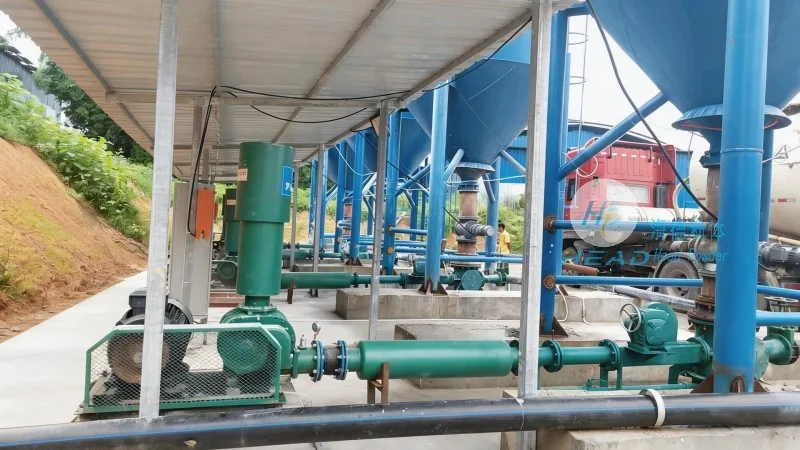
HeadPowder Engineering, a leading provider of industrial conveying solutions, specializes in designing and manufacturing customized pneumatic conveying systems for various industries, including winemaking. With a strong commitment to innovation and quality, the company has established itself as a trusted partner for clients seeking efficient and sustainable slurry handling solutions. HeadPowder's systems are engineered to meet the unique demands of winery operations, ensuring optimal performance and minimal downtime.
Positive pressure conveying operates by generating air pressure at the inlet of the conveying line, pushing the slurry through the pipeline. This mode typically uses a positive displacement blower or a high-pressure compressor to create the necessary pressure differential. The primary advantage of positive pressure systems is their ability to handle abrasive and high-density materials like winery slurry, as the high air pressure ensures thorough mixing and transport. Additionally, positive pressure systems are less susceptible to blockages caused by air leakage, making them suitable for long-distance conveying applications. However, they may require more robust equipment and higher energy consumption compared to negative pressure systems.
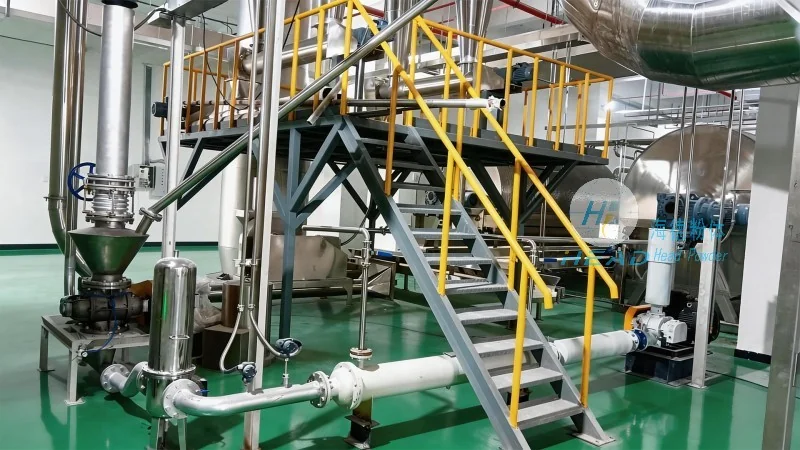
Negative pressure conveying, also known as suction conveying, works by creating a vacuum at the inlet of the conveying line, drawing the slurry into the pipeline. This mode utilizes a vacuum pump or a fan to generate the negative pressure. The key advantage of negative pressure systems is their lower energy consumption and reduced equipment complexity, as they do not require high-pressure blowers. They are particularly effective for short-distance conveying and handling fine or low-density materials. However, negative pressure systems are more prone to blockages due to air leakage and may not be suitable for abrasive or high-density slurry, as the vacuum can cause material separation and clogging.
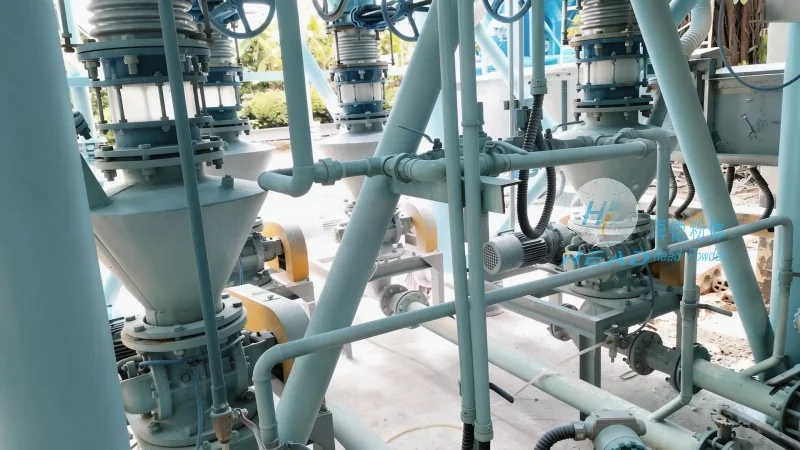
When selecting a pneumatic conveying system for winery slurry, it is essential to compare the characteristics of positive and negative pressure modes based on specific operational requirements. Positive pressure systems excel in long-distance conveying, high-density material handling, and applications where minimal air leakage is critical. They are ideal for wineries with large-scale slurry processing needs and require reliable, high-capacity transport. On the other hand, negative pressure systems are better suited for short-distance conveying, low-energy applications, and handling fine or low-density slurry. They are often preferred in wineries with limited space or where energy efficiency is a top priority.
Choosing the right pneumatic conveying mode involves evaluating several factors, including the slurry's properties (e.g., density, viscosity, particle size), conveying distance, and available space. Positive pressure systems are generally recommended for high-volume, long-distance transport, while negative pressure systems are suitable for low-volume, short-distance applications. Additionally, the system's maintenance requirements and operational costs should be considered. Wineries should also assess the impact of air leakage on system efficiency, as both modes can be affected by improper sealing or equipment wear.

 Shandong Headpowder Engineering Co., Ltd.
 156-6277-7102(Manager Zhang)
  0531-83386006
  Zhangqiu District, Jinan City, Shandong Province, China
telephone
WeChatconsult
top