With more than 10‑year industry experience, Shandong Headpowder delivers full‑service pneumatic‑conveying systems and blowers, undertaking nationwide turn‑key powder‑handling projects.
Shandong HeadPowder Engineering Co., Ltd., headquartered in Shandong, China, specializes in the design, manufacturing, and implementation of advanced pneumatic conveying systems. With a focus on precision and efficiency, the company has established itself as a leader in providing tailored solutions for material handling challenges, particularly in the processing of delicate materials like feathers.
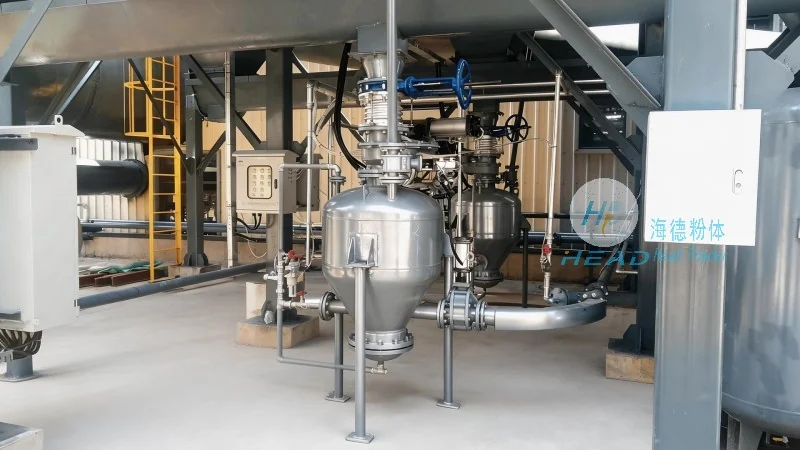
Feather pneumatic conveying systems are specialized equipment designed to transport feathers and similar lightweight, low-density materials through a pressurized or vacuum environment. These systems are critical in industries such as poultry processing, where feathers need to be efficiently moved from collection points to processing or storage facilities. The core of these systems lies in the choice of conveying mode—positive pressure or negative pressure—each with distinct advantages and applications.
Positive pressure conveying, also known as pressure pneumatic conveying, operates by blowing air or a carrier gas into the conveying line to move material. This method is particularly effective for transporting feathers over long distances or through complex piping networks. The high-pressure air creates a consistent flow, ensuring that even delicate feathers are moved without damage. A key advantage of positive pressure systems is their ability to handle abrasive or sticky materials, though for feathers, the primary benefits include high throughput and the ability to maintain material integrity. Shandong HeadPowder Engineering Co., Ltd. has developed advanced positive pressure systems that incorporate features like adjustable pressure control, which allows operators to optimize the conveying process based on material characteristics and system requirements.
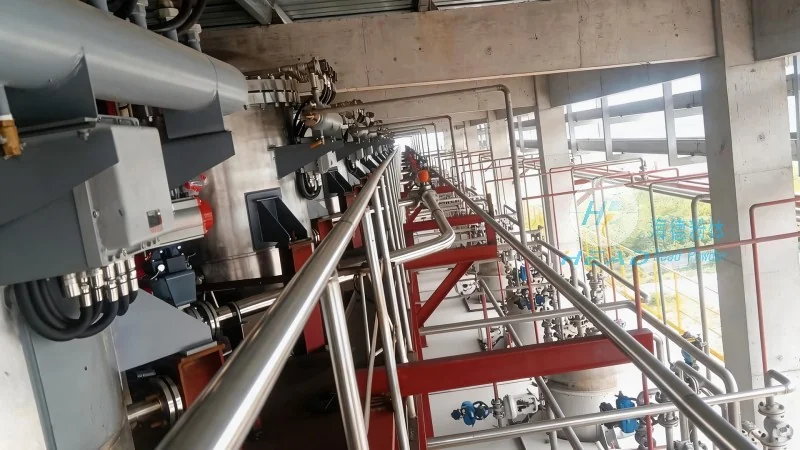
Negative pressure conveying, or vacuum pneumatic conveying, works by creating a vacuum in the conveying line to draw material into the system. This method is often preferred for shorter distances or when the material needs to be collected from multiple points. The vacuum environment helps in maintaining the cleanliness of the system and is particularly useful in environments where dust control is a priority. For feathers, negative pressure systems can be effective in capturing loose material from collection areas without the need for high-pressure air. However, they may have lower throughput compared to positive pressure systems and can be more susceptible to clogging if the material is too fine or moist. The company’s negative pressure solutions include advanced filtration and air purification systems to ensure that the conveying process remains clean and efficient.
When selecting between positive and negative pressure conveying modes for feather handling, several factors must be considered. The distance between the source and destination is a primary determinant—longer distances typically favor positive pressure due to its higher efficiency and ability to maintain material flow. The nature of the material also plays a role; feathers are lightweight and can be easily transported by both modes, but positive pressure may be preferred for large-scale operations where throughput is critical. Cost is another factor: positive pressure systems generally require more robust components and higher energy consumption, while negative pressure systems may have lower initial costs but higher maintenance due to the need for efficient vacuum pumps. Shandong HeadPowder Engineering Co., Ltd. provides comprehensive technical support to help clients evaluate these factors and choose the most suitable conveying mode for their specific needs.
The design of a feather pneumatic conveying system involves several critical components, each tailored to the chosen conveying mode. For positive pressure systems, the key components include a blower, conveying line, material feed hopper, and control valves. The blower provides the necessary pressure, while the conveying line is typically made of corrosion-resistant materials to handle the feathers and air mixture. The feed hopper ensures a consistent material flow, preventing blockages and maintaining system efficiency. For negative pressure systems, the primary components are a vacuum pump, filtration system, and collection hopper. The vacuum pump creates the required suction, and the filtration system captures any fine particles to prevent contamination. The company’s engineers consider factors such as material density, moisture content, and particle size to design systems that maximize performance and minimize downtime.
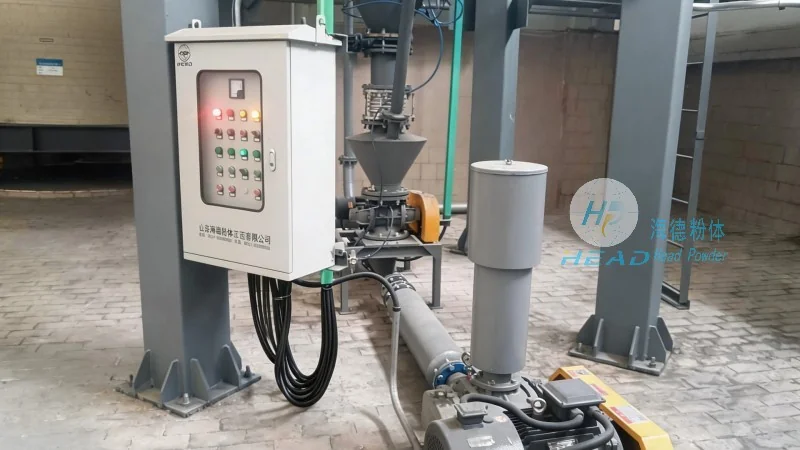
Shandong HeadPowder Engineering Co., Ltd. has successfully implemented feather pneumatic conveying systems in various poultry processing facilities across China. These systems have demonstrated high efficiency in moving feathers from collection bins to processing lines, with minimal material loss and damage. For example, a client in Shandong Province reported a 20% increase in throughput after upgrading to a positive pressure system designed by the company. The system’s adjustable pressure control allowed the client to optimize the conveying process for different feather types, resulting in consistent performance. In another case, a negative pressure system was installed in a facility where dust control was a major concern. The system’s filtration and vacuum pump design ensured that the conveying process remained clean, meeting environmental regulations and maintaining worker safety.
Feather pneumatic conveying systems, whether using positive or negative pressure modes, offer efficient and reliable solutions for material handling in the poultry industry. Shandong HeadPowder Engineering Co., Ltd. continues to innovate in this field, developing advanced systems that address the unique challenges of feather processing. By focusing on technical excellence and customer needs, the company provides tailored solutions that enhance operational efficiency and reduce costs. As the demand for efficient material handling increases, the company is committed to delivering high-quality pneumatic conveying systems that meet the evolving needs of the industry.

 Shandong Headpowder Engineering Co., Ltd.
 156-6277-7102(Manager Zhang)
  0531-83386006
  Zhangqiu District, Jinan City, Shandong Province, China
telephone
WeChatconsult
top