With more than 10‑year industry experience, Shandong Headpowder delivers full‑service pneumatic‑conveying systems and blowers, undertaking nationwide turn‑key powder‑handling projects.
When it comes to transporting corn feed in agricultural and industrial settings, selecting the right type of conveyor system is crucial for efficiency, cost-effectiveness, and operational safety. Two primary methods dominate the market: positive pressure conveying and negative pressure conveying. Understanding the differences between these two systems is essential for making an informed decision that aligns with specific operational needs. This article will explore the key distinctions between positive and negative pressure corn feed conveyors, helping you determine which option is best suited for your application.
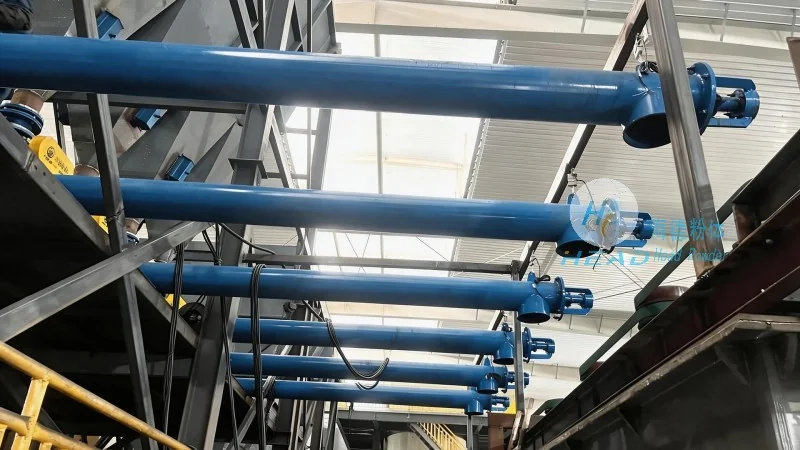
Corn feed, a staple in animal nutrition, requires reliable and efficient transportation from storage to processing or feeding areas. Conveyor systems are designed to handle the bulk material, ensuring smooth and continuous flow. The choice between positive and negative pressure systems depends on factors such as material characteristics, distance, and the desired level of control over the conveying process.
Positive pressure conveying systems operate by blowing air or gas into the conveyor line, creating a pressure higher than the ambient air. This method propels the corn feed forward through the system. The primary components include a blower, a hopper or feed inlet, and a discharge outlet. The air flow is directed through the entire length of the conveyor, ensuring that the material is continuously moved. This approach is particularly effective for materials that are prone to bridging or clogging, as the positive pressure helps break up clumps and maintain a consistent flow.
Conversely, negative pressure conveying systems work by creating a vacuum or lower pressure within the conveyor line compared to the ambient environment. The air is drawn into the system, pulling the corn feed along with it. This method is often referred to as suction conveying. The key components include a fan or vacuum pump, a collection hopper, and a discharge point. The vacuum is maintained throughout the conveyor, ensuring that the material is drawn from the source and transported to the destination. Negative pressure systems are typically used for shorter distances and when the material is relatively dry and free-flowing.
The most significant difference between positive and negative pressure systems lies in the direction of air flow and the resulting pressure differential. Positive pressure systems push material forward by increasing pressure, while negative pressure systems pull material by creating a vacuum. This fundamental difference impacts several operational aspects:

Positive pressure systems are generally better suited for handling materials that are sticky, moist, or prone to bridging. The increased air pressure helps break up agglomerates and maintain a uniform flow. Negative pressure systems, on the other hand, are more effective for dry, free-flowing materials that do not require additional pressure to move. The vacuum created helps draw the material without causing excessive friction or wear on the system components.
Energy consumption is a critical factor in conveyor system selection. Positive pressure systems typically consume more energy because they require a blower to generate higher pressure. The higher the pressure, the more energy is needed to move the material over longer distances. Negative pressure systems, while often more energy-efficient for shorter distances, may require more maintenance due to the continuous operation of the vacuum pump. The choice between the two depends on the specific distance and material characteristics, as well as the overall energy costs for the operation.
Positive pressure systems are generally more complex due to the need for a robust blower and higher pressure components. These systems may require more frequent maintenance to ensure that the air flow remains consistent and that no blockages occur. Negative pressure systems, while simpler in design, may experience more wear on the vacuum pump and ductwork due to the continuous suction. The maintenance requirements vary based on the system design and the material being conveyed.

The distance over which the corn feed needs to be transported is a key consideration. Positive pressure systems are typically used for longer distances, as the higher pressure can overcome greater resistance and maintain material flow over extended lengths. Negative pressure systems are more suitable for shorter distances, as the vacuum may not be sufficient to convey material over long distances without excessive energy consumption or system degradation. The airflow rate and pressure levels must be carefully matched to the distance and material properties to ensure optimal performance.
When deciding between positive and negative pressure corn feed conveyors, it is essential to evaluate several factors. First, consider the physical characteristics of the corn feed, such as moisture content, particle size, and tendency to clump. Materials that are sticky or prone to bridging may benefit from the higher pressure of a positive system. Dry, free-flowing materials may perform better with a negative pressure system. Second, assess the distance between the source and destination. Longer distances often require positive pressure systems due to their ability to maintain flow over extended lengths. Shorter distances may allow for the use of negative pressure systems, which are more energy-efficient for these applications.
Third, evaluate the operational costs, including energy consumption and maintenance requirements. Positive pressure systems may have higher energy costs but lower maintenance for shorter distances, while negative pressure systems may be more energy-efficient for shorter distances but require more maintenance. Finally, consider the overall system complexity and the availability of spare parts. Positive pressure systems may require specialized components and more maintenance, while negative pressure systems are generally simpler and easier to maintain.
Selecting between positive and negative pressure corn feed conveyors is a critical decision that impacts operational efficiency and cost. By understanding the fundamental differences in how each system operates and the factors that influence performance, you can make an informed choice that meets your specific needs. Whether you opt for a positive pressure system to handle challenging materials or a negative pressure system for shorter, more energy-efficient conveying, the key is to match the system to the application. With the right choice, you can ensure reliable and efficient corn feed transportation, supporting your agricultural or industrial operations effectively.

 Shandong Headpowder Engineering Co., Ltd.
 156-6277-7102(Manager Zhang)
  0531-83386006
  Zhangqiu District, Jinan City, Shandong Province, China
telephone
WeChatconsult
top