With more than 10‑year industry experience, Shandong Headpowder delivers full‑service pneumatic‑conveying systems and blowers, undertaking nationwide turn‑key powder‑handling projects.
Phosphorus pentachloride (PCl₅) is a highly reactive and corrosive chemical widely used in the production of pharmaceuticals, agrochemicals, and other industrial applications. Conveying PCl₅ via pneumatic systems presents unique challenges due to its tendency to agglomerate, stick to pipe walls, and cause blockages. Effective design of the pneumatic conveying system is crucial to ensure smooth operation and minimize downtime. This article explores key design parameters that prevent pipeline blockages in PCl₅ conveying and highlights the expertise of Shandong HeadPowder Engineering Co., Ltd. (HeadPowder) in implementing robust solutions.
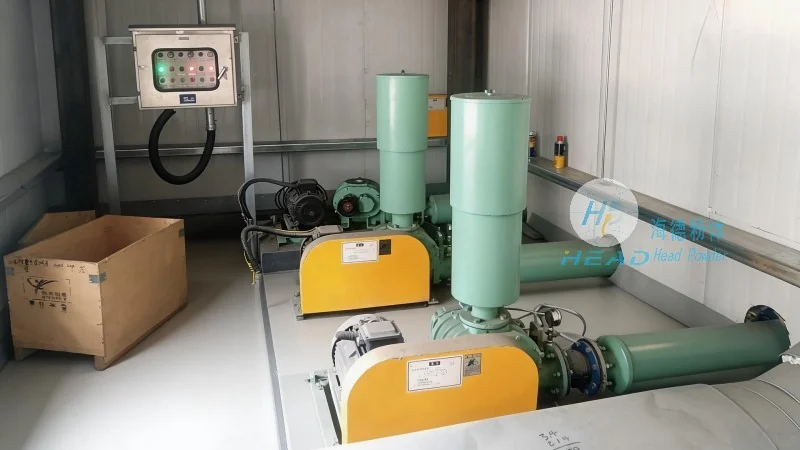
Phosphorus pentachloride is hygroscopic and prone to forming solid lumps when exposed to moisture or temperature fluctuations. These lumps can quickly accumulate on pipe walls, reducing the cross-sectional area and leading to blockages. Traditional bulk material handling methods, such as screw conveyors or belt conveyors, are unsuitable for PCl₅ due to its corrosive nature and the risk of material degradation. Pneumatic conveying, which uses air or gas to transport solids, offers a non-contact method that minimizes material degradation and allows for precise control over flow rates.
The success of a pneumatic conveying system in transporting PCl₅ without blockages depends on several critical design parameters. These parameters are tailored to the physical and chemical properties of PCl₅ and the operational requirements of the plant. HeadPowder, a leading engineering firm based in Shandong, China, specializes in designing customized pneumatic systems that address these challenges effectively.
One of the most significant factors in preventing blockages is the selection of the appropriate pipeline diameter. A larger diameter reduces the risk of material buildup by providing more space for the solid particles to move freely. However, an excessively large diameter may increase energy consumption. For PCl₅, HeadPowder typically recommends a pipeline diameter ranging from 50 mm to 150 mm, depending on the flow rate and particle size. The material of the pipeline is equally important. PCl₅ is highly corrosive, so materials such as stainless steel (e.g., 316L) or specialized corrosion-resistant alloys are used to prevent degradation and maintain system integrity.
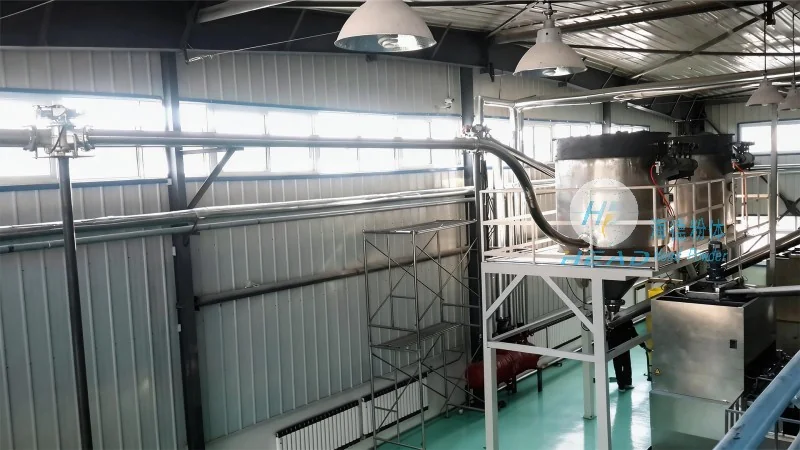
Gas velocity, or the speed of the air or gas flowing through the pipeline, is a critical parameter that influences the conveying performance. Insufficient velocity can cause the PCl₅ particles to settle and stick to the pipe walls, leading to blockages. Conversely, excessive velocity may cause erosion of the pipeline and increase energy costs. The optimal gas velocity for PCl₅ is typically between 20-30 m/s, depending on the particle size and density. The air-solid ratio, which is the ratio of the volume of air to the volume of solid material, must also be carefully controlled. A higher air-solid ratio increases the risk of dust generation and reduces the efficiency of the system. HeadPowder engineers use advanced computational fluid dynamics (CFD) simulations to determine the ideal air-solid ratio for each application, ensuring efficient and blockage-free operation.
The pressure of the pneumatic system and the pressure drop along the pipeline are essential design considerations. The system pressure must be sufficient to overcome the resistance caused by the PCl₅ particles and the pipeline friction. HeadPowder designs systems with pressure ratings ranging from 0.5 to 2.0 MPa, depending on the pipeline length and elevation changes. The pressure drop across the system is a key indicator of the system's efficiency. Excessive pressure drop indicates that the system is working harder to move the material, which can lead to energy inefficiency and potential blockages. By optimizing the pipeline diameter, gas velocity, and air-solid ratio, HeadPowder minimizes pressure drop and ensures smooth conveying.
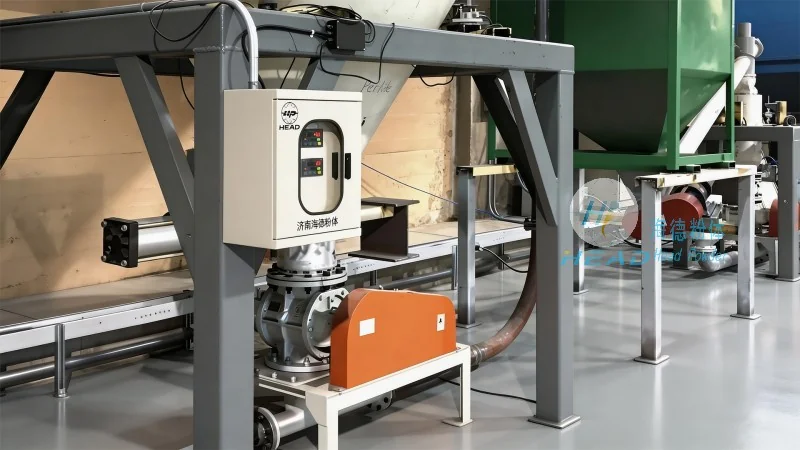
The design of pipe bends and elbows is another critical factor in preventing blockages. Sharp bends can cause the PCl₅ particles to impact the pipe walls at high velocity, leading to material buildup and erosion. HeadPowder recommends using large-radius bends (with a radius of at least 5 times the pipe diameter) and smooth transitions to minimize the risk of blockages. Additionally, the use of wear-resistant liners on the inner surface of the bends can extend the system's lifespan and reduce maintenance costs.
Advanced control systems play a vital role in preventing blockages by monitoring the system's performance in real-time. HeadPowder integrates sensors and control devices that track pressure, flow rate, and temperature. These systems can detect abnormal conditions, such as a sudden increase in pressure drop or a decrease in flow rate, and trigger alarms or automated responses to prevent blockages. For example, if a blockage is detected, the system can automatically adjust the air pressure or increase the gas velocity to clear the obstruction. This proactive approach minimizes downtime and ensures continuous operation.
Preventing pipeline blockages in the pneumatic conveying of phosphorus pentachloride requires a comprehensive approach that considers the chemical properties of PCl₅ and the operational requirements of the plant. Key design parameters, including pipeline diameter, material selection, gas velocity, air-solid ratio, system pressure, and pipe bends, are critical to ensuring smooth and efficient operation. Shandong HeadPowder Engineering Co., Ltd. leverages its expertise in pneumatic system design to provide customized solutions that address these challenges effectively. By adhering to these design principles, industries can minimize downtime, reduce maintenance costs, and ensure the safe and reliable transportation of PCl₅.

 Shandong Headpowder Engineering Co., Ltd.
 156-6277-7102(Manager Zhang)
  0531-83386006
  Zhangqiu District, Jinan City, Shandong Province, China
telephone
WeChatconsult
top