With more than 10‑year industry experience, Shandong Headpowder delivers full‑service pneumatic‑conveying systems and blowers, undertaking nationwide turn‑key powder‑handling projects.
Understanding the pneumatic conveying of ceramic particles is crucial for industries that handle fine or abrasive materials. This article provides an in-depth look at the working principles, classifications, and practical applications of ceramic particle pneumatic conveying systems, presented by Shandong HeadPowder Engineering Co., Ltd., a leading provider based in Shandong, China.
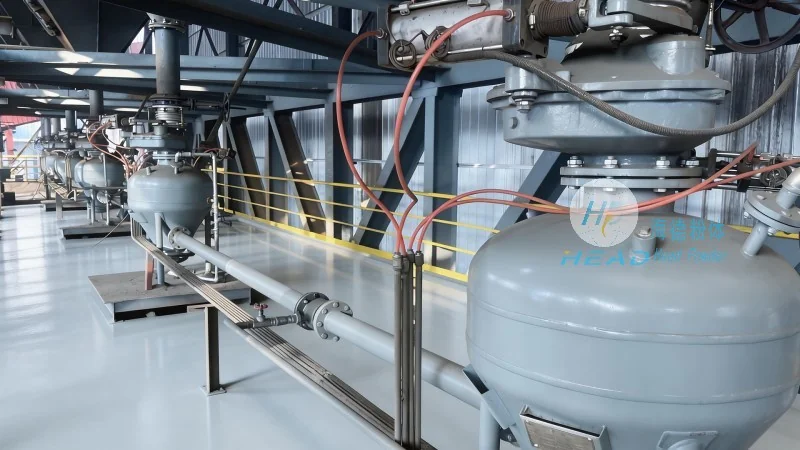
Pneumatic conveying is a method of transporting bulk materials, such as ceramic powders or granules, through a pipeline using compressed air or other gas. For ceramic particles, which often have unique properties like high hardness, low moisture content, or specific particle sizes, specialized systems are required to ensure efficient and safe transport. The technology has become essential in various sectors, including ceramics manufacturing, pharmaceuticals, and food processing, where precise material handling is vital.
The core principle of pneumatic conveying involves creating a pressure differential within a pipeline. Compressed air is introduced at one end of the system, generating a flow that pulls or pushes the ceramic particles along the pipe. The system typically consists of a hopper for material storage, a feeder to control the flow rate, a conveying line, and a receiver to collect the material at the destination. The choice between positive pressure, negative pressure, or a combination depends on the material characteristics and system requirements. For ceramic particles, which may be abrasive or have low bulk density, positive pressure systems are often preferred as they offer better control and reduce particle degradation.
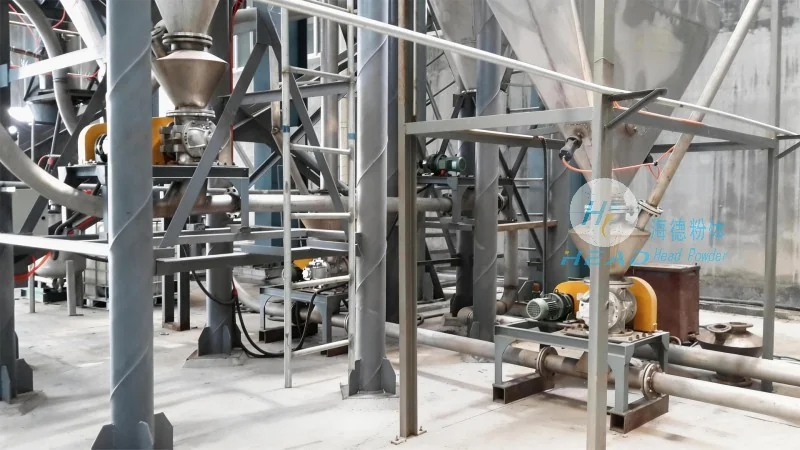
Pneumatic conveying systems for ceramic particles are broadly classified into two main categories: dilute phase and dense phase. Dilute phase systems operate at low solid-to-gas ratios, where particles are suspended in the air stream and travel at high velocities. This type is suitable for fine powders with low abrasiveness and requires less energy but may have limitations in long-distance transport or for handling large particles. Dense phase systems, on the other hand, transport particles in a slurry-like state at lower velocities, using higher air pressures to maintain particle contact and reduce wear on the system components. This method is ideal for abrasive or high-value ceramic materials, as it minimizes particle breakage and ensures consistent flow.
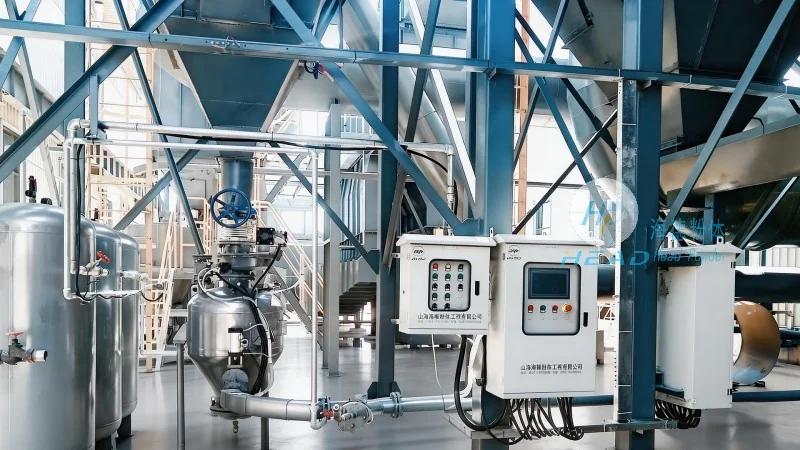
Ceramic particle pneumatic conveying finds applications in multiple industrial processes. In the ceramics industry, it is used for transporting raw materials like clay, feldspar, and quartz from storage silos to processing lines, ensuring a continuous and dust-free operation. The system can also handle finished ceramic products, such as tiles or sanitaryware, during packaging and distribution. In pharmaceutical manufacturing, similar systems are employed to convey ceramic-based excipients or inert fillers, maintaining strict contamination control. Additionally, in food processing, ceramic particles used as filtration media or additives are efficiently moved using pneumatic conveying, ensuring hygiene and product quality. Each application leverages the system's ability to handle fine, abrasive materials while minimizing human exposure and environmental impact.
Shandong HeadPowder Engineering Co., Ltd. is a professional manufacturer and supplier specializing in pneumatic conveying solutions tailored for ceramic particles. Based in Shandong, China, the company has extensive experience in designing, manufacturing, and installing customized systems that meet the specific needs of clients. With a focus on quality and innovation, HeadPowder provides comprehensive services, including system design, material testing, and after-sales support. The company's expertise in handling abrasive and high-value materials has earned it a reputation for reliability and efficiency in the industry. By adhering to strict quality standards and leveraging advanced technology, HeadPowder ensures that its pneumatic conveying systems deliver optimal performance and longevity for ceramic particle transport applications.

 Shandong Headpowder Engineering Co., Ltd.
 156-6277-7102(Manager Zhang)
  0531-83386006
  Zhangqiu District, Jinan City, Shandong Province, China
telephone
WeChatconsult
top