With more than 10‑year industry experience, Shandong Headpowder delivers full‑service pneumatic‑conveying systems and blowers, undertaking nationwide turn‑key powder‑handling projects.
This article provides an overview of the working principles and classification applications of pneumatic conveying systems specifically for titanium dioxide powder. Pneumatic conveying is a critical technology in the handling and transportation of fine powders, including titanium dioxide, which is widely used in various industries such as coatings, plastics, and paper. The process involves transporting powder materials through a pipeline using a gas stream, typically air, to move the material from one location to another without the need for mechanical components like belts or buckets.
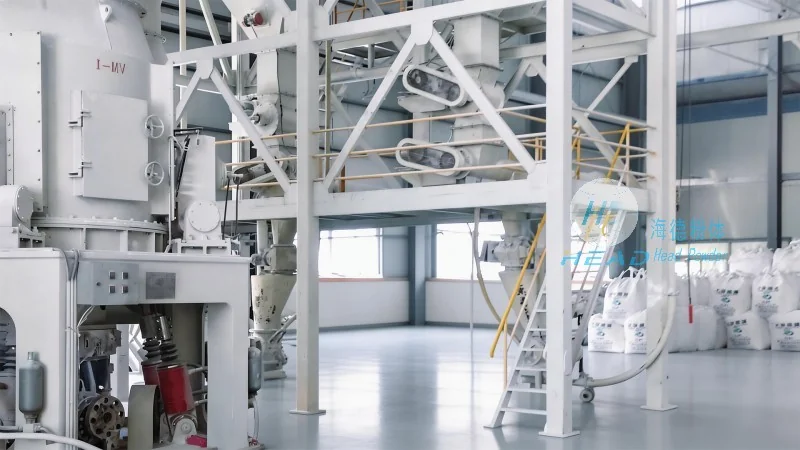
The fundamental principle of pneumatic conveying for titanium dioxide powder is based on the interaction between the powder particles and the air flow within a closed pipeline system. The system typically consists of a hopper for material storage, a blower or compressor to generate the air pressure, and a pipeline network that transports the powder. The operation can be categorized into two main types: dilute-phase and dense-phase conveying, each with distinct characteristics and applications.
Dilute-phase conveying is characterized by a low concentration of powder in the air stream, typically with a powder-to-air ratio of less than 10%. This method is suitable for long-distance transportation and high-speed delivery of titanium dioxide powder. The system operates by creating a high-velocity air flow that suspends the powder particles, allowing them to be carried through the pipeline. Key advantages include lower energy consumption compared to dense-phase systems and the ability to handle large volumes of material over extended distances. However, dilute-phase conveying may require larger pipelines and higher air velocities to maintain particle suspension, especially for fine powders like titanium dioxide.
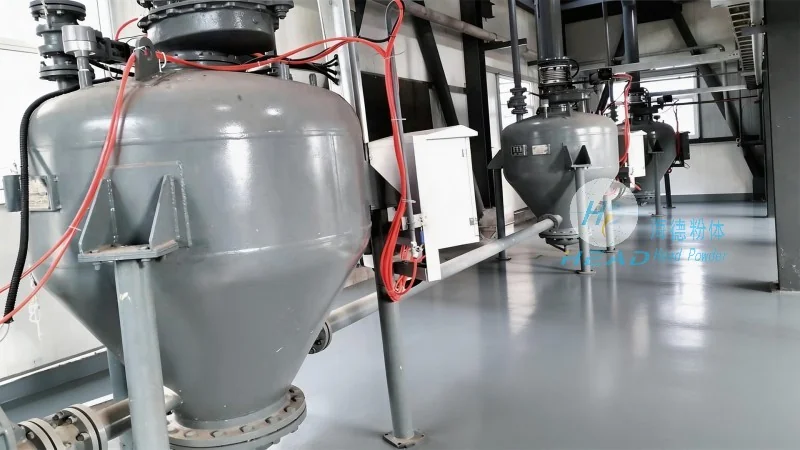
Dense-phase conveying, also known as low-velocity conveying, operates with a higher powder concentration in the air stream, typically ranging from 10% to 50% by volume. This method is ideal for transporting titanium dioxide powder over shorter distances or when the material needs to be delivered gently to avoid degradation or agglomeration. The system uses lower air velocities to push the powder through the pipeline, often with the assistance of positive displacement blowers or compressors. Dense-phase conveying offers advantages such as reduced wear on equipment, lower pressure drops, and the ability to handle abrasive or sensitive powders without causing damage. It is commonly used in applications where the powder's quality must be preserved, such as in pharmaceutical or food industries, though it may require more energy per unit of material compared to dilute-phase systems.
Pneumatic conveying systems for titanium dioxide powder can be classified based on several factors, including the type of air flow, the conveying method, and the system configuration. The primary classifications include positive pressure, negative pressure, and hybrid systems. Positive pressure systems use a blower or compressor to push the air and powder mixture through the pipeline, starting from the material source. Negative pressure systems, on the other hand, use a vacuum pump to draw the powder into the pipeline from the material source and then transport it to the destination. Hybrid systems combine elements of both positive and negative pressure, offering flexibility in handling different material characteristics and system layouts.
The application of pneumatic conveying in titanium dioxide processing is crucial for ensuring efficient and reliable material handling. In the production of titanium dioxide, the powder is often processed in large quantities and needs to be transported between various stages, such as from storage silos to grinding mills, or from mixing tanks to packaging units. Pneumatic conveying systems enable seamless integration of these processes, reducing downtime and improving overall production efficiency. For example, in the coating industry, titanium dioxide powder is used as a pigment, and pneumatic conveying ensures that the powder is delivered to the coating line in a controlled manner, maintaining consistent quality and color. In the plastics industry, the powder is added to polymer compounds, and the conveying system helps in achieving uniform mixing and distribution of the pigment. Additionally, in the paper industry, titanium dioxide is used as a filler or coating, and pneumatic conveying facilitates the precise application of the powder to the paper surface, enhancing the paper's brightness and opacity.
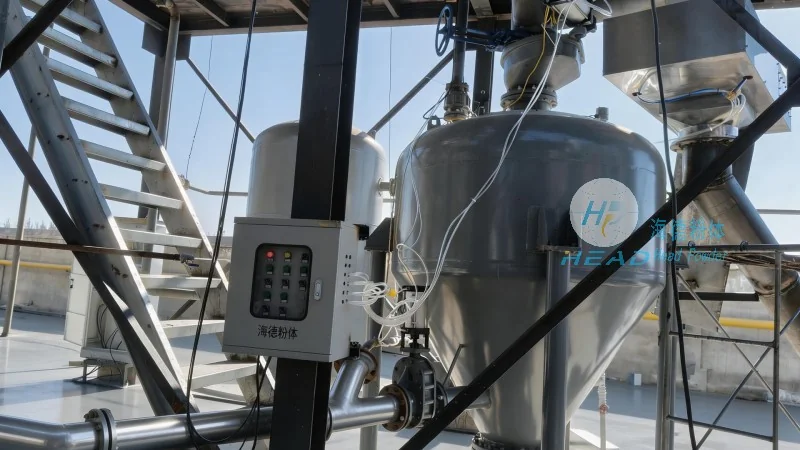
When implementing pneumatic conveying systems for titanium dioxide powder, several key considerations must be addressed to ensure optimal performance and longevity of the equipment. First, the particle size and density of the titanium dioxide powder are critical factors, as they affect the air velocity required for suspension and the pressure drop in the pipeline. Fine powders like titanium dioxide have a high surface area, which can lead to issues such as caking or agglomeration, especially if the powder is exposed to moisture or air. Therefore, proper drying and conditioning of the powder before conveying are essential to maintain its flowability and prevent blockages in the system. Second, the material of construction for the pipeline and equipment must be selected carefully to resist corrosion and abrasion from the titanium dioxide powder. Titanium dioxide is a relatively abrasive material, and using materials like stainless steel or special alloys can extend the service life of the conveying system. Third, the system design must account for the dust control and environmental regulations, as titanium dioxide is a fine powder that can create dust hazards if not properly contained. Effective dust collection and filtration systems are necessary to comply with safety and environmental standards.
Pneumatic conveying is a vital technology for the efficient handling and transportation of titanium dioxide powder, offering advantages such as flexibility, low maintenance, and the ability to handle fine powders. By understanding the working principles and classification of pneumatic conveying systems, industries can select the most appropriate method for their specific applications, ensuring optimal performance and cost-effectiveness. As a leading provider in the field, Shandong HeadPowder Engineering Co., Ltd. specializes in designing and manufacturing customized pneumatic conveying solutions tailored to the unique needs of titanium dioxide processing, helping clients achieve reliable and efficient material handling in their operations.

 Shandong Headpowder Engineering Co., Ltd.
 156-6277-7102(Manager Zhang)
  0531-83386006
  Zhangqiu District, Jinan City, Shandong Province, China
telephone
WeChatconsult
top