With more than 10‑year industry experience, Shandong Headpowder delivers full‑service pneumatic‑conveying systems and blowers, undertaking nationwide turn‑key powder‑handling projects.
Understanding the classification and components of dry limestone pneumatic conveying systems is crucial for selecting the right equipment for industrial applications. These systems are designed to transport dry limestone efficiently and safely, ensuring minimal dust generation and optimal material handling performance.
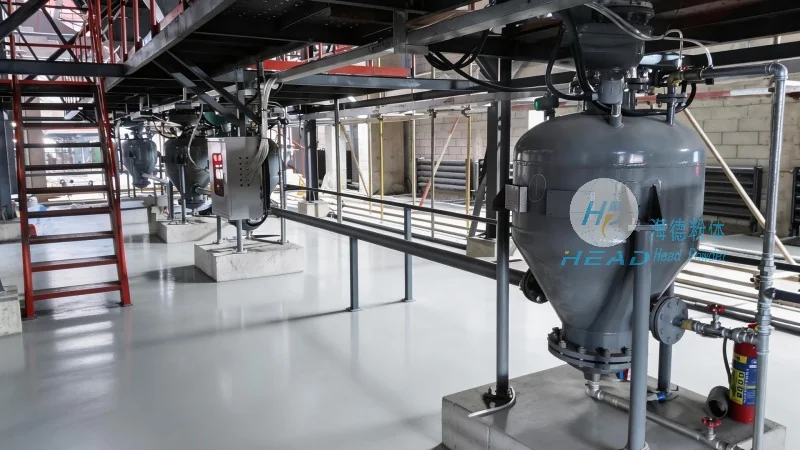
Dry limestone pneumatic conveying systems can be broadly classified into two main categories based on the pressure within the system: positive pressure systems and negative pressure systems. Each type has distinct characteristics and is suitable for different operational requirements.
Positive pressure systems operate by blowing air or gas into the system, creating a pressure higher than the ambient air pressure. This method is ideal for applications where the material needs to be transported over long distances or through complex piping networks. The system typically includes a blower or compressor that supplies the necessary air pressure to move the limestone particles. Positive pressure systems are often preferred in industries where dust control is critical, as the sealed system prevents dust from escaping into the environment.
Negative pressure systems, also known as suction systems, operate by creating a vacuum in the system, drawing the limestone material into the pipeline. This approach is suitable for short-distance transport or when the material is to be collected from a source and moved to a destination. Negative pressure systems are generally less expensive to install and maintain compared to positive pressure systems, but they may require more careful management of dust and air filtration.
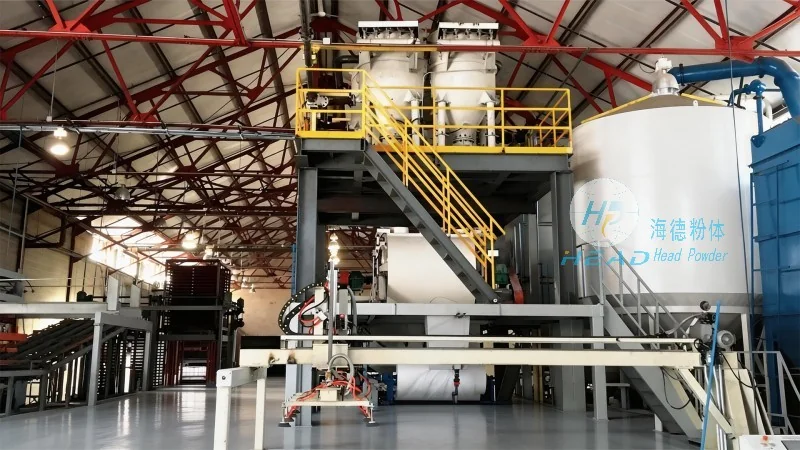
The dry limestone pneumatic conveying system consists of several essential components that work together to ensure efficient material transport. These components include the material feed system, the conveying pipeline, the air or gas supply unit, the separation and filtration system, and the control and monitoring equipment.
The material feed system is responsible for introducing the dry limestone into the conveying pipeline. This component typically includes a hopper or bin that holds the limestone, a feeder (such as a rotary valve or screw feeder) that controls the flow rate, and a feeder inlet that connects to the pipeline. The feeder ensures a consistent and controlled flow of limestone, preventing blockages and maintaining system efficiency.
The conveying pipeline is the main component that transports the limestone particles through the system. It is usually made of stainless steel or other corrosion-resistant materials to withstand the abrasive nature of limestone and the effects of air or gas flow. The pipeline design, including the diameter and length, is critical for determining the system's capacity and efficiency. Proper pipeline layout and support are essential to minimize pressure losses and ensure smooth material flow.
The air or gas supply unit provides the necessary pressure or vacuum to move the limestone through the pipeline. In positive pressure systems, a blower or compressor generates the required air pressure, while in negative pressure systems, a vacuum pump creates the suction. The selection of the air or gas supply unit depends on the system's capacity, the material's properties, and the distance to be covered. The unit must be capable of delivering sufficient airflow to maintain the material's suspension and prevent particle settling.
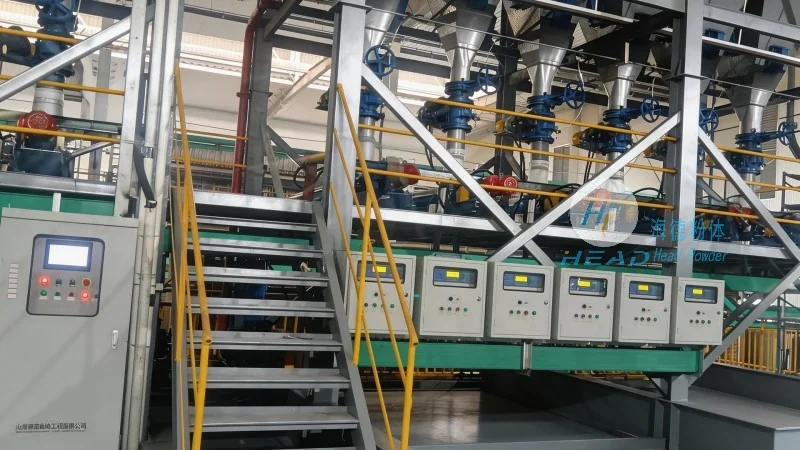
The separation and filtration system is crucial for removing the limestone particles from the air or gas stream and collecting them at the destination. This component typically includes a cyclone separator, a bag filter, or a combination of both. The cyclone separator uses centrifugal force to separate larger particles from the air, while the bag filter captures fine dust particles. The collected limestone is then discharged into a storage bin or hopper. The filtration system ensures that the air released from the system is clean and meets environmental regulations.
The control and monitoring equipment is responsible for managing the operation of the pneumatic conveying system. This includes sensors and controls that monitor pressure, flow rate, and material level. The system may also include automated controls that adjust the feeder speed or air supply based on real-time conditions. Proper monitoring and control help maintain system efficiency, prevent equipment damage, and ensure safe operation.
Shandong HeadPowder Engineering Co., Ltd., operating under the brand name headpowder, is a leading manufacturer and supplier of dry limestone pneumatic conveying systems. With a focus on innovation and quality, the company has developed advanced solutions tailored to the specific needs of the limestone industry. Headpowder's systems are designed to enhance material handling efficiency, reduce operational costs, and improve environmental performance. The company's commitment to customer satisfaction and technical excellence has made it a trusted partner for businesses in the limestone processing sector.

 Shandong Headpowder Engineering Co., Ltd.
 156-6277-7102(Manager Zhang)
  0531-83386006
  Zhangqiu District, Jinan City, Shandong Province, China
telephone
WeChatconsult
top