

Classification and Composition of Yellow Sand Pneumatic Conveying Systems
Yellow sand, a critical raw material in diverse industrial applications, demands efficient and reliable transportation solutions to maintain smooth production workflows. Pneumatic conveying systems have become the preferred method for handling yellow sand due to their ability to transport materials in a dust-free environment, enhance operational safety, and improve overall process efficiency. This article provides an in-depth examination of the classification and essential components of yellow sand pneumatic conveying systems, highlighting technical aspects and practical applications that make them indispensable in modern industrial settings. The systems are engineered and manufactured by Shandong HeadPowder Engineering Co., Ltd., commonly known as headpowder, a leading provider of industrial conveying solutions headquartered in Shandong, China.
Introduction to Yellow Sand Pneumatic Conveying Systems
Pneumatic conveying systems utilize air or gas to transport bulk materials like yellow sand through a network of pipes and equipment. Unlike traditional mechanical conveying methods, which often involve high maintenance and potential for material contamination, pneumatic systems offer a more controlled and hygienic approach. The primary advantage of these systems lies in their ability to handle fine powders and granular materials without the need for additional equipment such as conveyors or elevators. This makes them particularly suitable for yellow sand, which is widely used in industries like construction, glass manufacturing, and chemical processing.
Classification of Yellow Sand Pneumatic Conveying Systems
Yellow sand pneumatic conveying systems can be broadly categorized into two main types based on material flow direction and air pressure: dilute-phase and dense-phase systems. Each type has distinct operational characteristics and is optimized for different transport requirements.
Dilute-Phase Pneumatic Conveying Systems
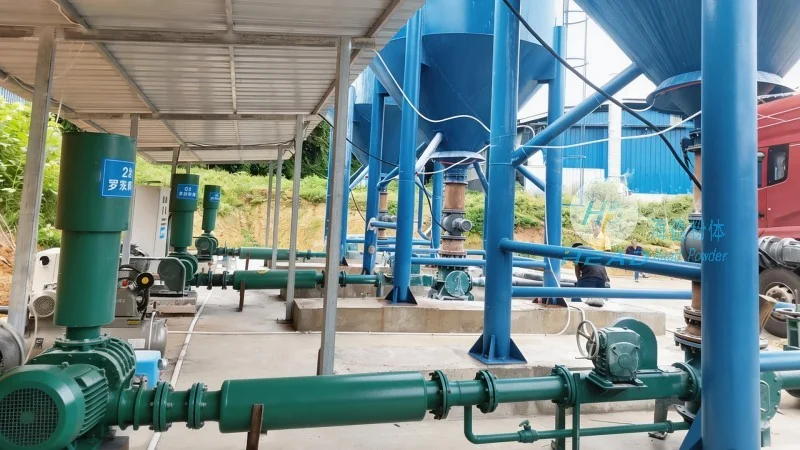
Dilute-phase systems operate at low to moderate air velocities, typically ranging from 20 to 30 meters per second. In this system, the material is suspended in the air stream and transported through the pipeline. This method is ideal for short to medium-distance transport and is commonly used for yellow sand with relatively low moisture content. The core components of a dilute-phase system include a feeding device, a blower or compressor, a pipeline network, and a discharge device. The feeding device ensures consistent material introduction without blockages or air leakage. The blower provides the necessary air pressure to move the material, while the pipeline network transports it to the destination. The discharge device then collects the material from the pipeline, ensuring a clean and efficient transfer.
Dense-Phase Pneumatic Conveying Systems
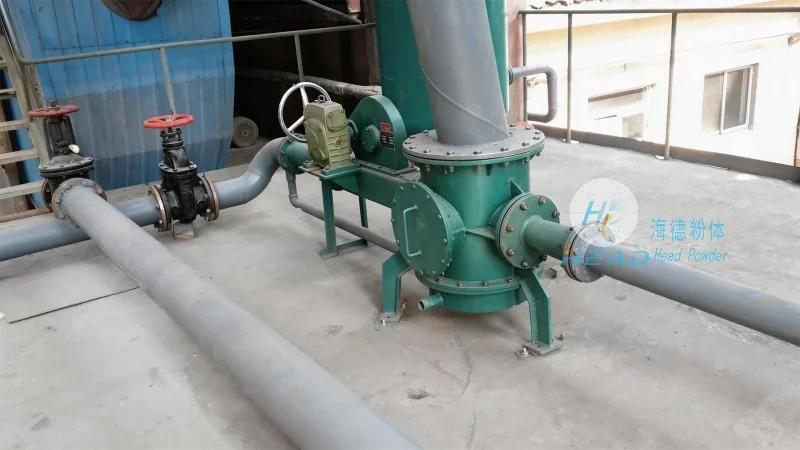
Dense-phase systems operate at higher air velocities and pressures, typically around 10 to 15 meters per second. In this system, the material is transported in a more concentrated form, with a higher material-to-air ratio compared to dilute-phase systems. This method is suitable for longer distances and for materials more prone to segregation or degradation. The dense-phase system uses a high-pressure blower or compressor to push the material through the pipeline, often with the assistance of a positive displacement pump. Key components include a feeder, a high-pressure blower, a larger-diameter pipeline, and a receiver. The feeder ensures consistent material flow, while the high-pressure blower provides the force for long-distance transport. The pipeline is designed to withstand higher pressures, and the receiver collects the material at the end of the transport.
Key Components of Yellow Sand Pneumatic Conveying Systems
Regardless of classification, yellow sand pneumatic conveying systems consist of several critical components that work in unison to ensure efficient operation. These components are tailored to handle the specific characteristics of yellow sand, such as particle size, moisture content, and flow properties.
Feeding Device
The feeding device is the first component in the system, responsible for introducing yellow sand into the system. It must ensure consistent flow rates and prevent blockages or air leakage. Common feeding devices include rotary valves, star feeders, and screw feeders. Rotary valves are widely used due to their versatility and ability to handle various materials. Star feeders are suitable for materials with higher moisture content or those prone to caking. Screw feeders provide gentle handling for materials requiring careful processing. The choice depends on the yellow sand's characteristics and operational needs.
Blower or Compressor
The blower or compressor is the system's heart, providing the necessary air pressure and volume to transport yellow sand. Selection depends on the system type (dilute-phase or dense-phase) and transport distance/volume. Dilute-phase systems typically use centrifugal blowers for high air volumes at moderate pressures. Dense-phase systems require positive displacement blowers or high-pressure compressors to generate the higher pressures needed for long distances. The equipment must handle air volume and pressure requirements efficiently while maintaining energy efficiency. Proper maintenance is crucial for consistent performance and minimizing downtime.
Pipeline Network
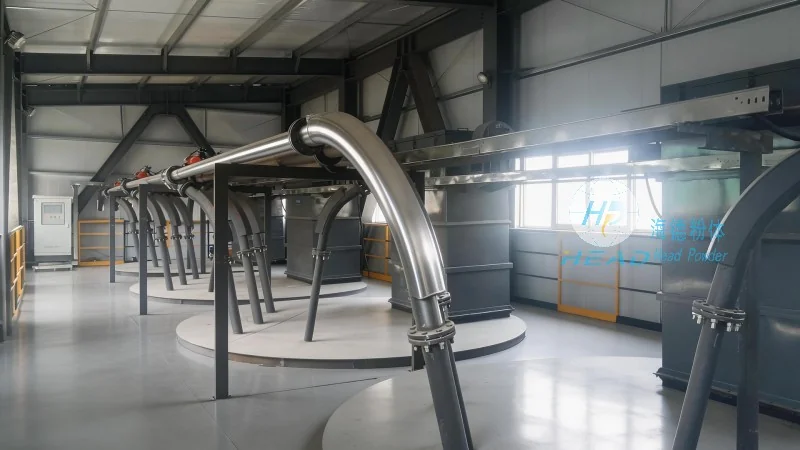
The pipeline network transports yellow sand from the feeding point to the discharge point. Design depends on distance and layout, with single pipelines for short distances and networks of varying diameters for longer routes. The pipeline is usually made of stainless steel or other corrosion-resistant materials to handle yellow sand and prevent contamination. Proper support and maintenance are essential to avoid blockages or leaks. Pipeline diameter is sized based on material flow rate and required air velocity, ensuring efficient transport and energy efficiency.
Discharge Device
The discharge device collects yellow sand from the pipeline, ensuring controlled discharge without dust or air leakage. Common devices include rotary valves, baghouses, and cyclones. Rotary valves are versatile and provide controlled discharge rates. Baghouses collect dust or particles from the air stream, ensuring clean material discharge. Cyclones separate material from the air stream, allowing collection in containers and air return to the system. The choice depends on yellow sand characteristics and operational requirements.
Applications and Benefits of Yellow Sand Pneumatic Conveying Systems
Yellow sand pneumatic conveying systems are widely used across industries due to their efficiency and safety advantages. Benefits include improved operational efficiency, reduced maintenance costs, and enhanced safety. The systems are particularly suited for industries requiring fine powder and granular material transport.