With more than 10‑year industry experience, Shandong Headpowder delivers full‑service pneumatic‑conveying systems and blowers, undertaking nationwide turn‑key powder‑handling projects.
Understanding the dry flue gas desulfurization (FGD) ash powder conveying system is crucial for optimizing industrial processes in power generation and environmental protection sectors. This article provides an overview of the system's structural principles and operational mechanisms, highlighting the key components and their functional roles in efficiently handling FGD ash powder.
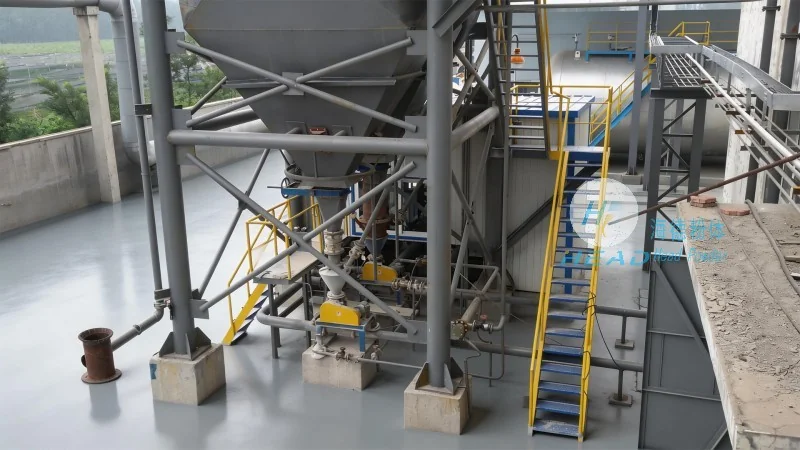
Dry flue gas desulfurization ash, also known as FGD gypsum or desulfurization byproduct, is a fine powder generated during the removal of sulfur dioxide from flue gases in thermal power plants. The efficient transportation of this ash is essential for subsequent processing, storage, or disposal. The conveying system designed for dry FGD ash typically involves a combination of mechanical and pneumatic components, tailored to handle the specific characteristics of the powder—such as its fine particle size, moisture content, and potential reactivity.
The core of the dry FGD ash powder conveying system lies in its integrated design, which ensures reliable and low-maintenance operation. Key structural components include: 1. Material Hopper and Feeder, which stores and feeds the ash powder to the conveying line; 2. Conveying Pipeline, often made of corrosion-resistant materials like stainless steel or polyethylene, to transport the ash; 3. Air Compressor and Blower Unit, which generates the necessary air pressure for pneumatic conveying; and 4. Control and Monitoring System, which regulates the flow rate and pressure to maintain system stability.
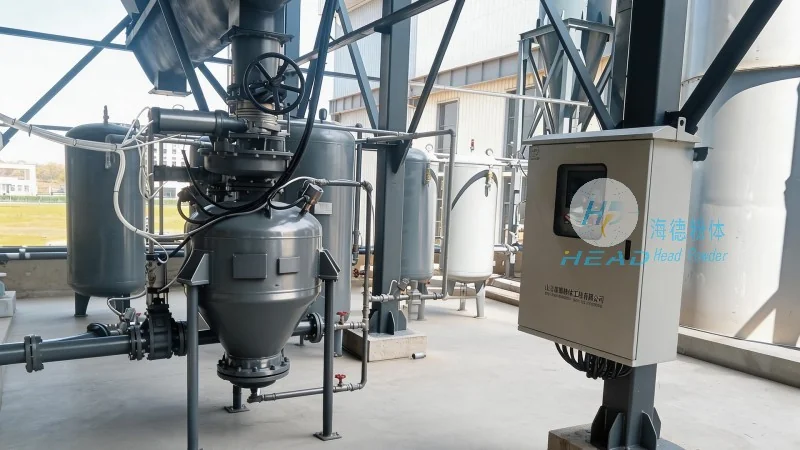
Each component is engineered to address the unique challenges of dry FGD ash, such as its tendency to agglomerate or clog in traditional conveying systems. For instance, the material hopper may incorporate vibration or agitation mechanisms to prevent blockages, while the pipeline is designed with smooth internal surfaces to minimize friction and particle attrition. The air compressor unit is selected based on the required airflow rate and pressure, ensuring sufficient force to overcome the resistance of the ash particles in the pipeline.
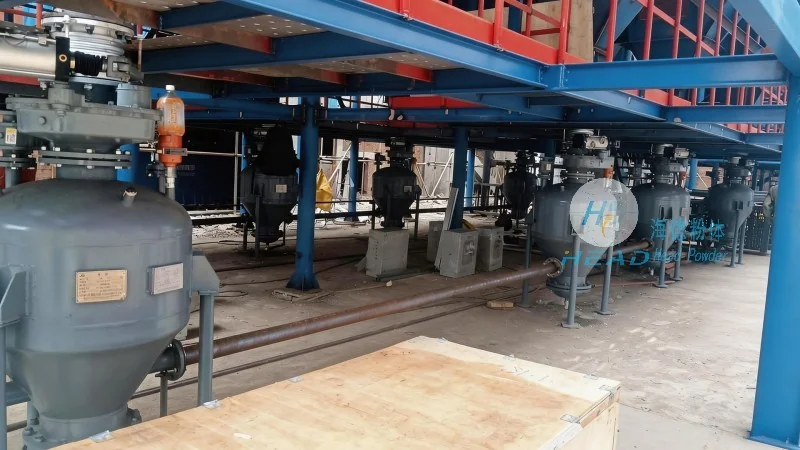
The conveying process typically operates on a pneumatic principle, where compressed air is used to transport the ash powder through the pipeline. The air velocity is carefully controlled to maintain a consistent flow rate, preventing both under-conveying (which can lead to system blockages) and over-conveying (which may cause excessive energy consumption). The system may also incorporate features like air separation and ash collection units at the discharge end, ensuring that the ash is deposited in the designated storage or processing area without air leakage or contamination.

Efficiency in dry FGD ash conveying is further enhanced by the system's ability to handle varying ash characteristics. For example, the feeder mechanism can adjust the feed rate in response to changes in ash moisture content or particle size, maintaining optimal conveying conditions. Additionally, the use of advanced materials and design reduces maintenance requirements, minimizing downtime and operational costs for power plant operators.
Shandong HeadPowder Engineering Co., Ltd., commonly known as headpowder, is a specialized engineering company based in Shandong, China. With a focus on providing innovative solutions for powder handling and conveying systems, the company has extensive experience in designing and manufacturing equipment for industrial applications, including dry FGD ash powder conveying systems. HeadPowder's expertise lies in integrating advanced technologies with practical engineering solutions to meet the diverse needs of clients in the power generation and environmental sectors.

 Shandong Headpowder Engineering Co., Ltd.
 156-6277-7102(Manager Zhang)
  0531-83386006
  Zhangqiu District, Jinan City, Shandong Province, China
telephone
WeChatconsult
top