With more than 10‑year industry experience, Shandong Headpowder delivers full‑service pneumatic‑conveying systems and blowers, undertaking nationwide turn‑key powder‑handling projects.
HeadPowder, a leading manufacturer based in Shandong, China, specializes in the design and production of advanced pneumatic conveying systems tailored for the battery material industry. These systems are crucial for efficiently transporting bulk materials such as lithium compounds, graphite, and other raw materials used in the production of lithium-ion batteries. The primary goal of these systems is to ensure a smooth, reliable, and safe material handling process, which is essential for maintaining high production efficiency and product quality in battery manufacturing facilities.
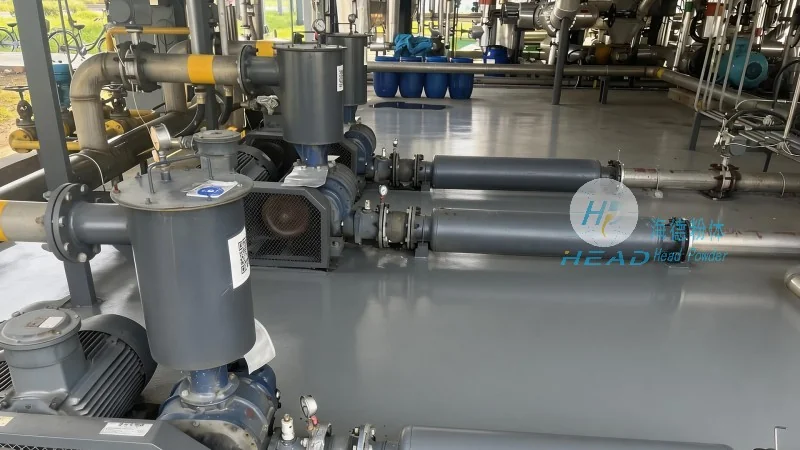
The pneumatic conveying system for battery materials typically consists of several core components that work in tandem to achieve effective material transport. The main parts include the material feeding unit, the conveying pipeline, the air supply system, and the material discharge unit. The feeding unit is responsible for introducing the bulk material into the system, often using a hopper or a rotary valve to control the flow rate. The conveying pipeline, usually made of stainless steel or other corrosion-resistant materials, transports the material through the system under pressure. The air supply system, which may include a blower or a compressor, generates the necessary airflow to move the material particles. Finally, the discharge unit, such as a rotary valve or a hopper, releases the material at the destination point.
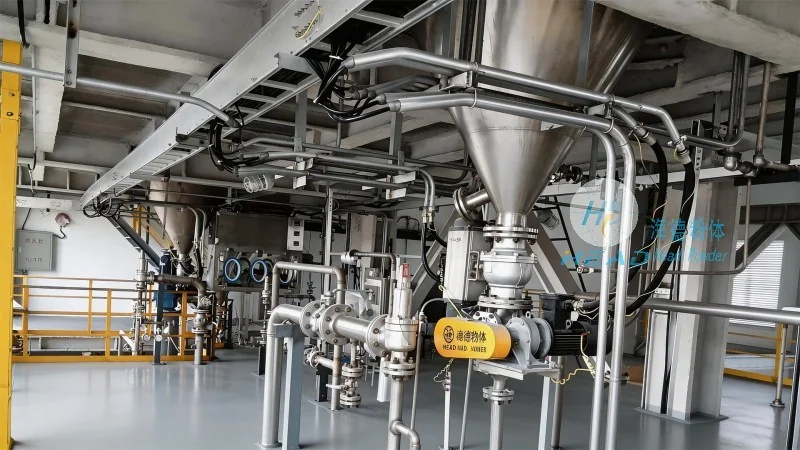
The operation of a pneumatic conveying system for battery materials relies on the principle of air flow to transport solid particles. There are two main types of pneumatic conveying systems: pressure and vacuum systems. In a pressure system, the material is fed into a pressurized pipeline where the air and material are mixed and transported to the discharge point. The pressure is maintained by a blower or compressor, ensuring consistent material flow. In a vacuum system, the material is drawn into a pipeline using a vacuum pump, which creates a negative pressure to pull the material along. Both systems are designed to handle different material characteristics and operational requirements, providing flexibility for various battery material processing needs.
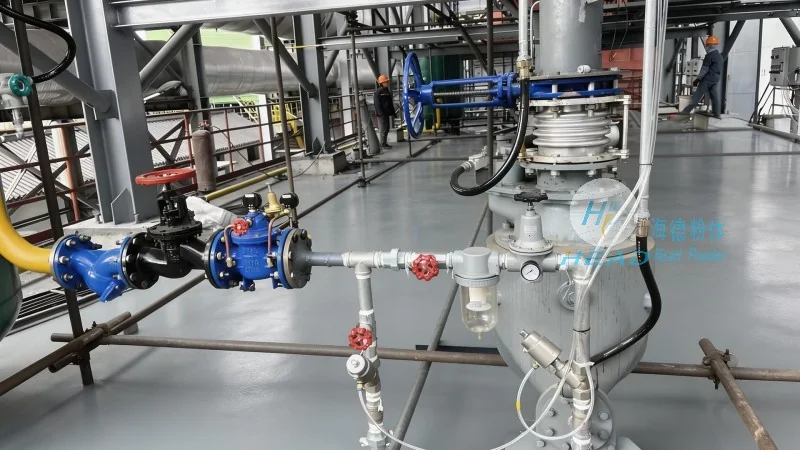
Implementing pneumatic conveying systems in battery material processing offers several significant advantages. First, these systems provide a closed-loop operation, which helps to prevent dust contamination and environmental pollution, a critical concern in the battery industry where material purity is paramount. Second, they offer high efficiency in material transport, reducing downtime and increasing overall production throughput. Third, the systems are relatively compact and can be integrated into existing production lines without major modifications. Additionally, pneumatic conveying systems are suitable for handling a wide range of materials, from fine powders to larger granules, making them versatile for different stages of battery material processing.
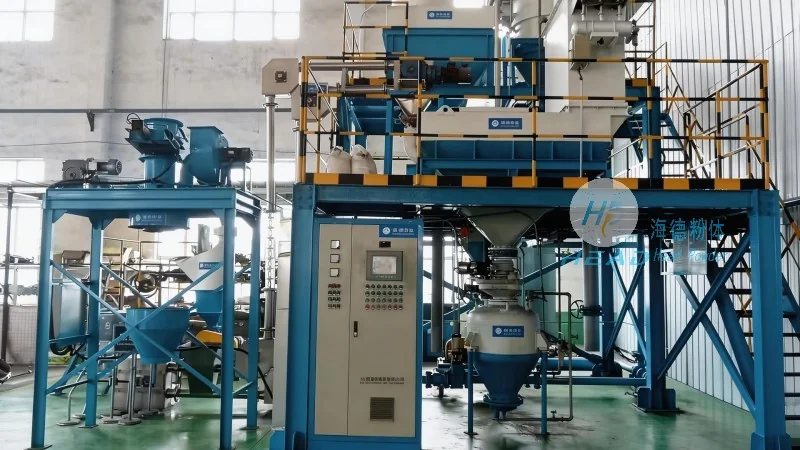
HeadPowder understands that each battery manufacturing facility has unique requirements. Therefore, their pneumatic conveying systems are customizable to meet specific operational needs. The company can design systems with different pipeline configurations, air flow rates, and material handling capacities to suit various production scales. For example, a small-scale laboratory setup may require a compact system with lower material throughput, while a large-scale industrial plant may need a high-capacity system with multiple conveying lines. The systems are also designed to be compatible with existing equipment and infrastructure, minimizing installation time and costs. HeadPowder’s expertise in material handling technology ensures that their systems are reliable and durable, providing long-term performance and support for battery material processing operations.

 Shandong Headpowder Engineering Co., Ltd.
 156-6277-7102(Manager Zhang)
  0531-83386006
  Zhangqiu District, Jinan City, Shandong Province, China
telephone
WeChatconsult
top