With more than 10‑year industry experience, Shandong Headpowder delivers full‑service pneumatic‑conveying systems and blowers, undertaking nationwide turn‑key powder‑handling projects.
HeadPowder, a leading manufacturer based in Shandong, China, specializes in the design and production of advanced pneumatic conveying systems tailored for various industrial applications. This article provides an overview of the dry pebble pneumatic conveying system, focusing on its structural design and operational principles to help users understand its functionality and benefits.
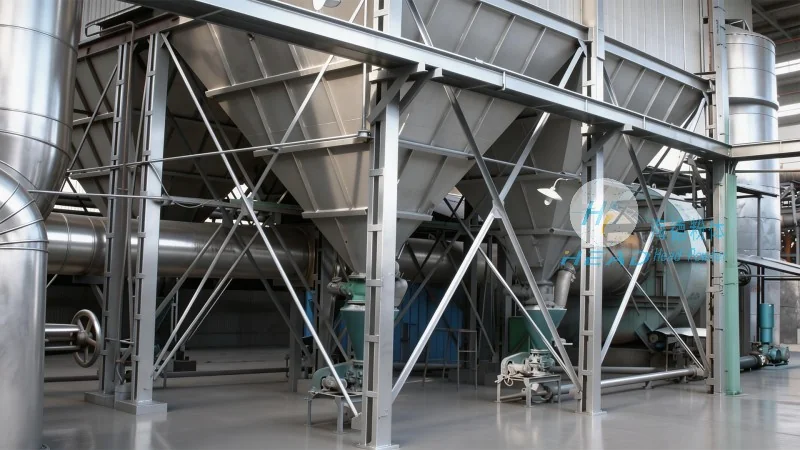
The dry pebble pneumatic conveying system is engineered to efficiently transport dry pebbles or similar granular materials through a pipeline using compressed air. This technology offers a dust-free, flexible, and energy-efficient solution for material handling in industries such as mining, construction, and manufacturing. The system is designed to handle materials with varying particle sizes and densities, ensuring reliable and consistent performance under different operational conditions.
The dry pebble pneumatic conveying system consists of several critical components that work in tandem to achieve effective material transport. The main components include the material hopper, air compressor, conveying pipeline, control valve, and dust collection system. The material hopper is equipped with a feeding mechanism that ensures a steady flow of dry pebbles into the system. The air compressor generates the necessary pressure to create a flow of air within the pipeline, which propels the material forward. The conveying pipeline is typically made of durable materials like stainless steel or PVC to withstand the abrasive nature of pebbles and resist corrosion. The control valve regulates the air pressure and flow rate, allowing for precise control over the conveying process. The dust collection system is integrated to capture any fine particles that may be generated during the operation, ensuring a clean and safe working environment.
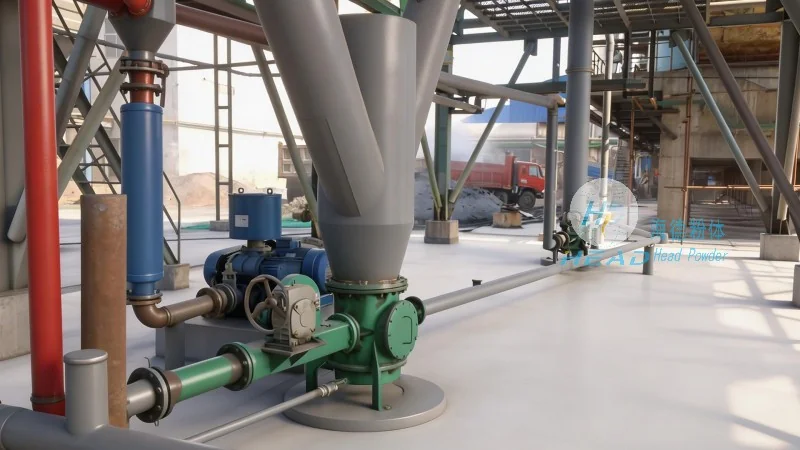
The operation of the dry pebble pneumatic conveying system is based on the principle of air flow and material suspension. When the air compressor is activated, it produces a high-pressure air stream that enters the conveying pipeline. The material hopper feeds the dry pebbles into the pipeline, where the air flow lifts and transports the particles. The velocity of the air is carefully controlled to maintain the material in a suspended state, preventing it from settling or clogging the pipeline. The system uses a combination of positive and negative pressure zones to move the material from the source to the destination. The positive pressure zone is created at the inlet, where the air is compressed and directed into the pipeline, while the negative pressure zone is established at the outlet, where the air is released, allowing the material to be discharged. This dual-pressure system ensures efficient and continuous material transport without the need for mechanical components like conveyors or elevators.
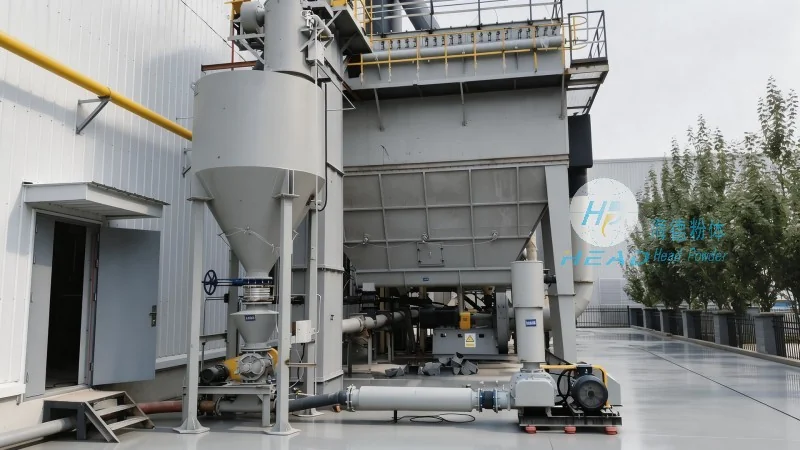
The dry pebble pneumatic conveying system offers several advantages over traditional material handling methods. It provides a dust-free operation, which is crucial for maintaining a safe and healthy work environment, especially in industries where dust can be a health hazard. The system is also highly flexible, as it can be easily reconfigured to handle different material types or transport distances. Additionally, it is energy-efficient, as it uses compressed air to transport materials, reducing the need for mechanical power. The system is widely used in various applications, including the transportation of pebbles for construction projects, the handling of raw materials in mining operations, and the delivery of granular products in manufacturing facilities. Its ability to handle abrasive materials makes it suitable for industries where traditional conveyors may wear out quickly or require frequent maintenance.
HeadPowder's dry pebble pneumatic conveying system is a reliable and efficient solution for material handling in various industrial sectors. By understanding its structural design and operational principles, users can appreciate the benefits it offers, including dust-free operation, flexibility, and energy efficiency. As a leading manufacturer based in Shandong, China, HeadPowder continues to innovate and improve its products to meet the evolving needs of the industry, providing high-quality solutions for material transport and processing.

 Shandong Headpowder Engineering Co., Ltd.
 156-6277-7102(Manager Zhang)
  0531-83386006
  Zhangqiu District, Jinan City, Shandong Province, China
telephone
WeChatconsult
top