With more than 10‑year industry experience, Shandong Headpowder delivers full‑service pneumatic‑conveying systems and blowers, undertaking nationwide turn‑key powder‑handling projects.
HeadPowder, a leading engineering firm based in Shandong, China, specializes in the design and manufacturing of advanced pneumatic conveying systems tailored for handling PVA formaldehyde condensate materials. This article delves into the operational process and working principles of a PVA formaldehyde condensate material pneumatic conveying machine, highlighting its efficiency, reliability, and technical sophistication.
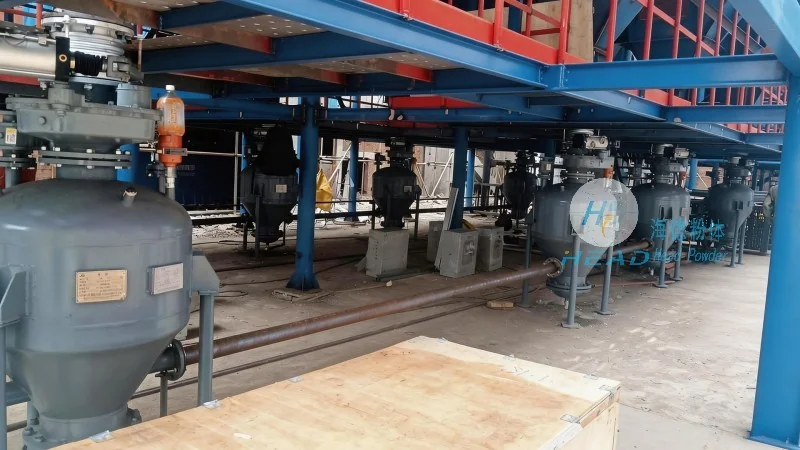
PVA (polyvinyl alcohol) formaldehyde condensate is a common industrial material used in various applications, including adhesives, coatings, and textile processing. The efficient and safe transportation of this material is crucial for maintaining production line continuity and minimizing operational risks. A pneumatic conveying machine offers a solution by utilizing air pressure to move the material through a pipeline system, eliminating the need for mechanical components that may cause contamination or wear.
HeadPowder Engineering Co., Ltd. is a reputable company headquartered in Shandong, China. With a strong focus on engineering innovation and customer-centric solutions, HeadPowder has established itself as a trusted provider of industrial equipment, particularly in the field of material handling systems. The company's expertise lies in designing customized pneumatic conveying solutions that meet the specific requirements of clients across diverse industries.
The PVA formaldehyde condensate material pneumatic conveying machine consists of several critical components that work in tandem to ensure smooth operation. These include the material hopper, which stores the PVA formaldehyde condensate; the air compressor, which generates the necessary air pressure; the conveying pipeline, which transports the material; and the control system, which regulates the flow and pressure. Each component is engineered to withstand the chemical and physical properties of the material, ensuring durability and long-term performance.
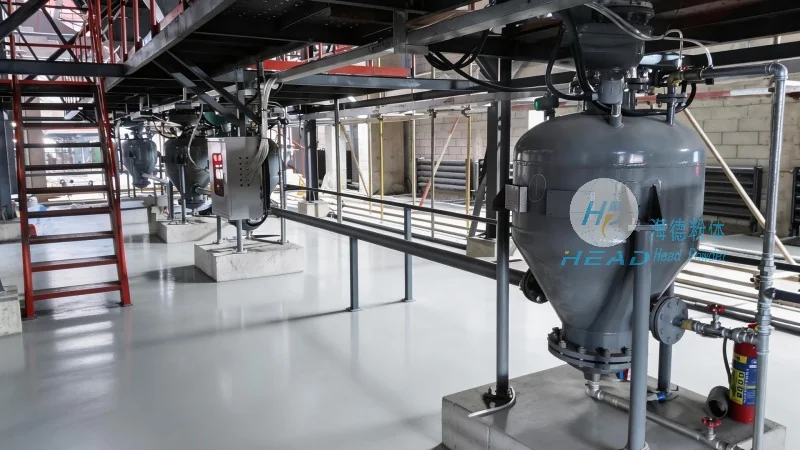
The operation of the PVA formaldehyde condensate material pneumatic conveying machine follows a systematic process. Initially, the material is fed into the hopper from a storage tank or silo. The control system then activates the air compressor, which generates high-pressure air. This air is introduced into the conveying pipeline, creating a flow that lifts and transports the material from the hopper to the discharge point. The material is carried in a slurry-like state, with the air providing the necessary momentum to move it through the pipeline. The discharge point can be a collection bin, a processing unit, or another part of the production line, depending on the application.
The working principle of the pneumatic conveying system is based on the Bernoulli principle and the principles of fluid dynamics. As high-pressure air flows through the conveying pipeline, it creates a low-pressure zone that draws the PVA formaldehyde condensate material into the pipeline. The air and material mixture travels at a high velocity, ensuring that the material is transported efficiently and without clogging. The system can operate in either positive or negative pressure modes, depending on the specific requirements of the material and the application. Positive pressure systems are commonly used for short-distance conveying, while negative pressure systems are preferred for longer distances or when handling dusty materials.
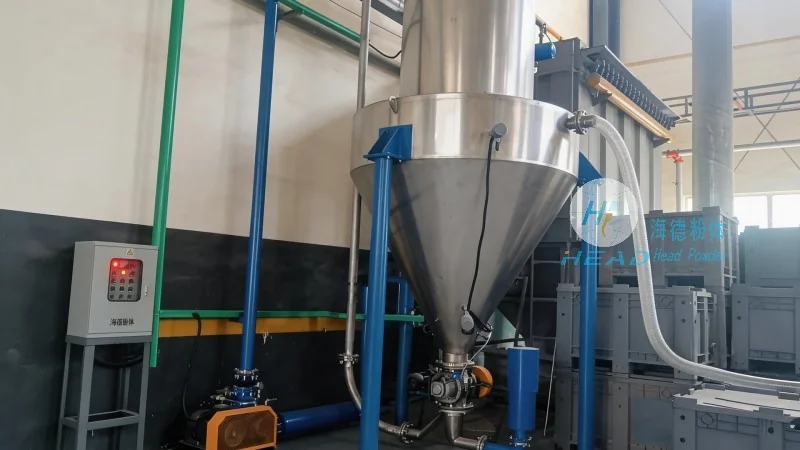
Employing a pneumatic conveying machine for PVA formaldehyde condensate offers several advantages over traditional mechanical conveying methods. Firstly, it eliminates the risk of contamination, as the material is not in direct contact with mechanical components. Secondly, it reduces labor costs and operational downtime, as the system can be automated and requires minimal maintenance. Thirdly, it provides better control over the material flow, allowing for precise dosing and consistent quality. Additionally, the system is compact and can be integrated into existing production lines without significant modifications.
The PVA formaldehyde condensate material pneumatic conveying machine is widely used in various industries, including the chemical, pharmaceutical, and food processing sectors. In the chemical industry, it is used to transport raw materials and finished products in adhesive and coating manufacturing. In the pharmaceutical industry, it is employed to handle PVA-based excipients and drug formulations, ensuring compliance with stringent quality and safety standards. In the food processing industry, it is used to transport food-grade PVA products, such as food additives and packaging materials.
To ensure the long-term reliability of the PVA formaldehyde condensate material pneumatic conveying machine, regular maintenance is essential. The air compressor should be checked for proper operation and lubrication, and the conveying pipeline should be inspected for any blockages or leaks. The control system should be calibrated regularly to maintain optimal performance. Common issues that may arise include clogging of the pipeline, which can be caused by excessive moisture or debris, and air leaks, which can reduce the efficiency of the system. These issues can be resolved by cleaning the pipeline, replacing filters, and checking the integrity of the seals.

 Shandong Headpowder Engineering Co., Ltd.
 156-6277-7102(Manager Zhang)
  0531-83386006
  Zhangqiu District, Jinan City, Shandong Province, China
telephone
WeChatconsult
top