With more than 10‑year industry experience, Shandong Headpowder delivers full‑service pneumatic‑conveying systems and blowers, undertaking nationwide turn‑key powder‑handling projects.
The air-driven conveying system is a critical component in industrial processes that involve the transport of molybdenum oxide (MoO3) material. This system, developed by Shandong HeadPowder Engineering Co., Ltd., is designed to efficiently handle the material from source to destination while maintaining high operational standards. The following sections detail the operation process and working principles of this system, providing a comprehensive understanding of its functionality.
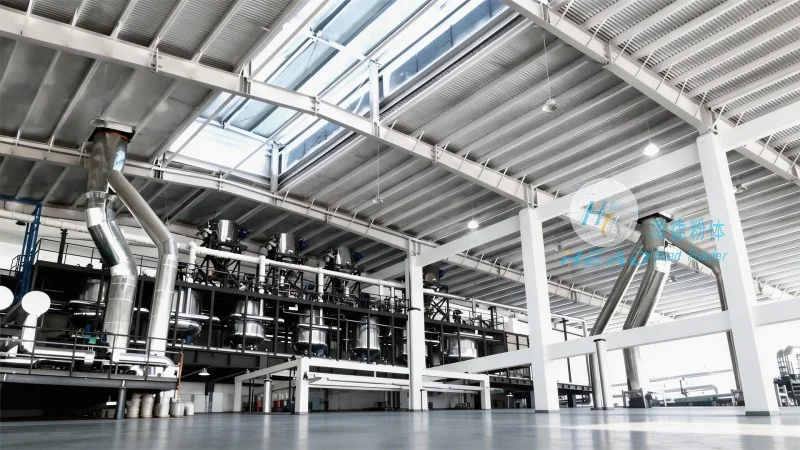
The air-driven molybdenum oxide conveying system consists of several key components that work in tandem to ensure smooth material transport. These components include the material feed hopper, the air supply system (typically a blower or compressor), the conveying line (usually a flexible or rigid pipe), and the material discharge unit. Each component plays a vital role in the overall operation, contributing to the system's efficiency and reliability.
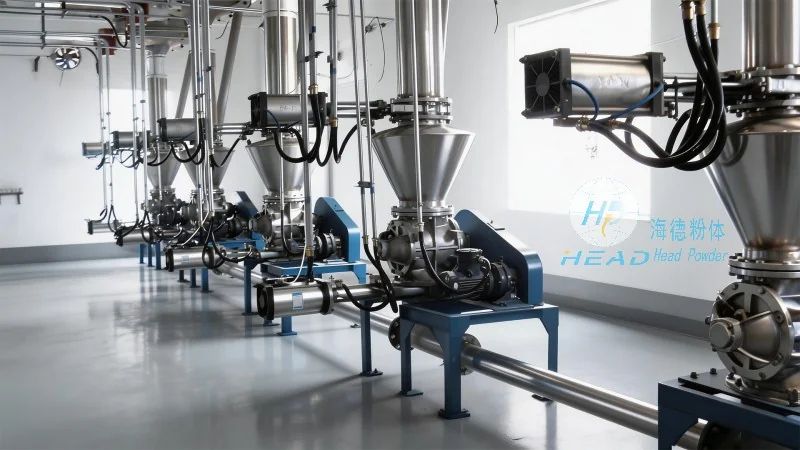
The operation of the air-driven molybdenum oxide material conveying system follows a systematic process. Initially, the molybdenum oxide material is fed into the hopper from the source storage. The material then falls into the conveying line as the air supply system generates a high-velocity airflow. This airflow, often referred to as the "air stream," lifts and transports the material particles through the pipe. The conveying line may include bends or changes in direction, which are designed to accommodate the system's layout while maintaining the material's integrity. Upon reaching the discharge point, the material is released into the receiving container under the control of the system's pressure and flow settings.
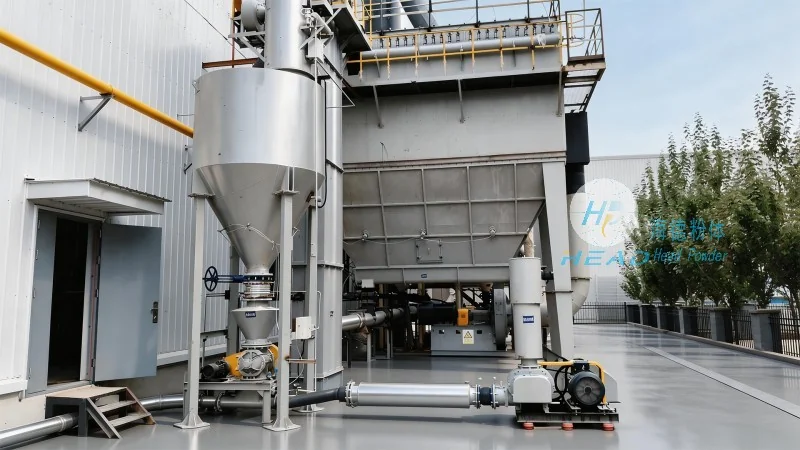
The working principle of the air-driven molybdenum oxide conveying system is based on the fundamental concept of pneumatic transport. The system utilizes compressed air to create a pressure differential that propels the material particles. As the air flows through the conveying line, it entrains the material particles, forming a mixture known as a "pneumatic slurry." The velocity of the air stream is carefully controlled to ensure that the material particles are carried without excessive wear or degradation. The system's design, including the size of the pipe, the air pressure, and the material feed rate, is optimized to achieve the desired conveying capacity and efficiency.
Shandong HeadPowder Engineering Co., Ltd.'s air-driven molybdenum oxide conveying system offers several advantages over traditional mechanical conveying methods. These include reduced material handling time, lower labor costs, and improved safety due to the enclosed system design. The system also minimizes material contamination and dust emissions, which is crucial for handling sensitive materials like molybdenum oxide. Additionally, the flexibility of the system allows for easy integration into existing industrial layouts, making it a versatile solution for various applications.
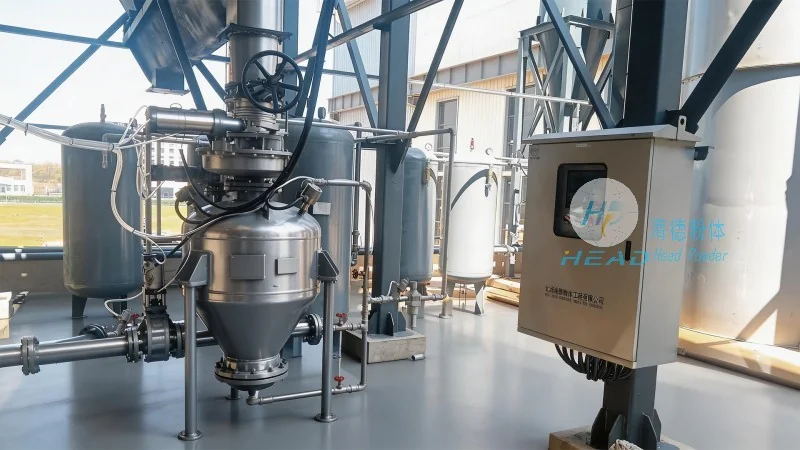
The air-driven molybdenum oxide conveying system is widely used in industries such as chemical processing, mining, and material handling. It can be customized to meet specific operational requirements, including varying conveying distances, material types, and flow rates. Shandong HeadPowder Engineering Co., Ltd. provides tailored solutions based on client needs, ensuring that the system operates optimally in each application.

 Shandong Headpowder Engineering Co., Ltd.
 156-6277-7102(Manager Zhang)
  0531-83386006
  Zhangqiu District, Jinan City, Shandong Province, China
telephone
WeChatconsult
top