With more than 10‑year industry experience, Shandong Headpowder delivers full‑service pneumatic‑conveying systems and blowers, undertaking nationwide turn‑key powder‑handling projects.
Asbestos powder material pneumatic conveying is a critical industrial process used for the efficient transport of asbestos powder from one location to another. This method leverages the principles of fluid dynamics to move dry powder materials through a pipeline system using air or other gases as the conveying medium. The operation process and working principle of such systems are essential for understanding their effectiveness and application in various industrial settings.
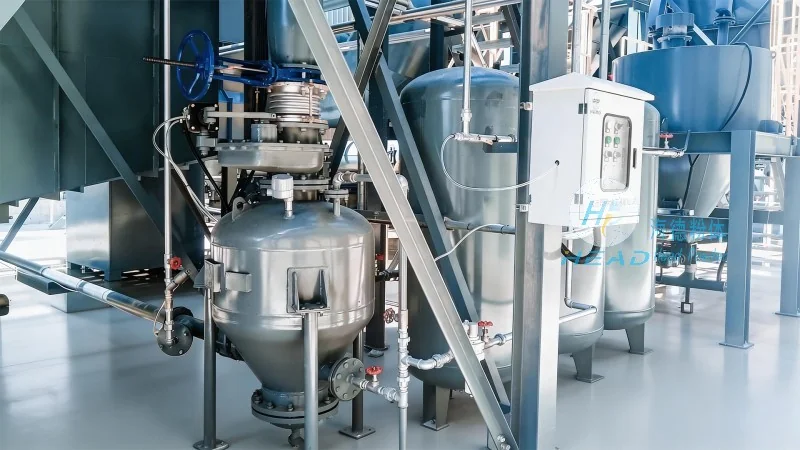
Pneumatic conveying systems for asbestos powder are designed to handle the unique characteristics of asbestos, including its fine particle size and potential health hazards. These systems typically consist of a hopper for material storage, a blower or compressor to generate the conveying air, a pipeline network, and a receiver for the delivered material. The process begins with the material being fed from the hopper into the pipeline, where it is entrained by the high-velocity air stream. This entrainment allows the powder to be transported through the system without direct contact with the pipeline walls, minimizing wear and ensuring a clean transfer.
The effectiveness of asbestos powder pneumatic conveying systems depends on several key components working in tandem. The hopper serves as the initial storage and feeding unit, ensuring a consistent flow of material into the system. The blower or compressor is responsible for generating the necessary air pressure and velocity to entrain the powder particles. The pipeline network, often made of materials resistant to asbestos and corrosion, provides the path for the material and air mixture. The receiver, typically equipped with a dust collection system, collects the conveyed material and separates it from the air, allowing for safe handling and disposal.
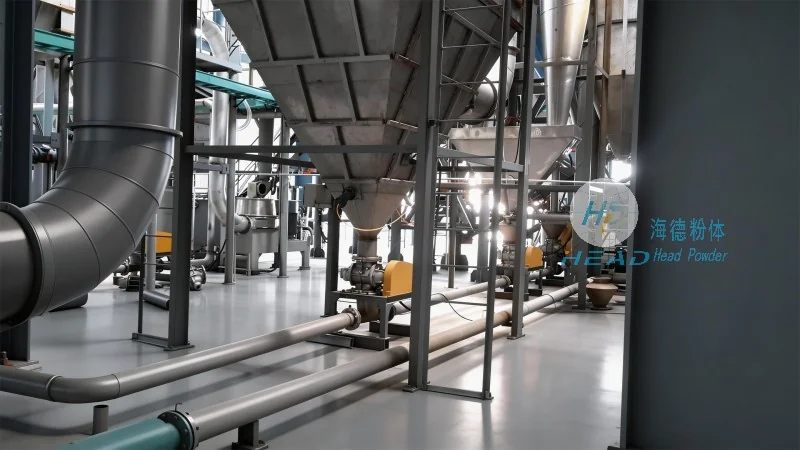
The operation of an asbestos powder pneumatic conveying system follows a systematic sequence of steps. First, the hopper is filled with asbestos powder, and the system is primed by starting the blower. As the air is introduced into the pipeline, it creates a low-pressure zone that draws the powder from the hopper into the air stream. The powder particles are then carried through the pipeline to the receiver. The velocity of the air is carefully controlled to ensure that the powder remains suspended without settling or causing blockages. At the receiver, a cyclone or other separation device separates the powder from the air, and the air is either filtered and released or recirculated back into the system. This process is continuous as long as the material supply is maintained and the system is operating correctly.
The working principle of asbestos powder pneumatic conveying is based on the fundamental laws of fluid dynamics, particularly the concept of particle entrainment. When air flows through a pipeline at a high velocity, it creates a shear force that can lift and transport fine particles. The key parameters affecting this process include air velocity, particle size, and the density of the material. For asbestos powder, which has a fine particle size (typically ranging from 1 to 100 microns), the air velocity must be sufficient to overcome the gravitational force acting on the particles. The system is designed to maintain a velocity above the "critical velocity" for the specific material, ensuring that the powder remains suspended throughout the conveying process. This principle allows for efficient and safe transport of asbestos powder without the need for mechanical components that could cause contamination or damage to the material.
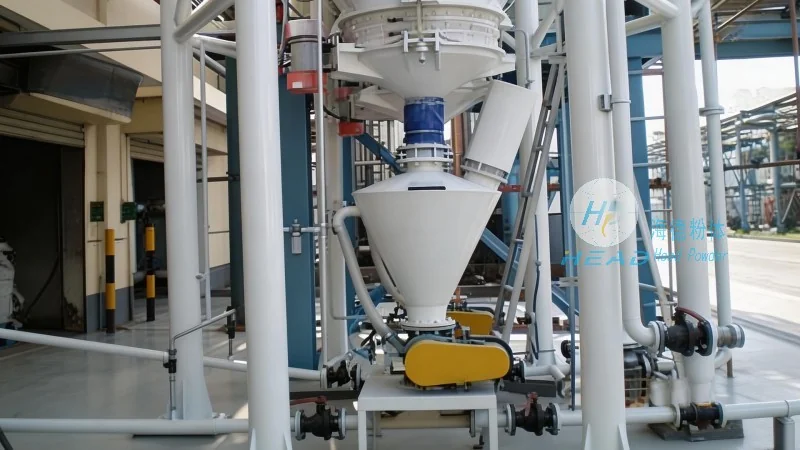
Asbestos powder pneumatic conveying systems offer several advantages over traditional mechanical conveying methods. These include reduced risk of material contamination, lower maintenance requirements due to fewer moving parts, and improved safety by minimizing direct human contact with the powder. The systems are widely used in industries where asbestos is processed, such as construction material manufacturing, insulation production, and waste management. They are particularly valuable in applications where the material needs to be transported over long distances or through complex pipeline networks without degradation or loss.
HeadPowder, the company behind the development and implementation of these pneumatic conveying systems, is a leading provider of engineering solutions for material handling. With a focus on innovation and safety, HeadPowder specializes in designing systems tailored to the unique needs of asbestos powder and other hazardous materials. The company is headquartered in Shandong, China, and has established a reputation for delivering reliable, efficient, and compliant solutions to its clients. By adhering to strict safety standards and using high-quality materials, HeadPowder ensures that its pneumatic conveying systems meet the highest industry standards and provide long-term performance for its customers.

 Shandong Headpowder Engineering Co., Ltd.
 156-6277-7102(Manager Zhang)
  0531-83386006
  Zhangqiu District, Jinan City, Shandong Province, China
telephone
WeChatconsult
top