With more than 10‑year industry experience, Shandong Headpowder delivers full‑service pneumatic‑conveying systems and blowers, undertaking nationwide turn‑key powder‑handling projects.
HeadPowder, a leading enterprise in the field of powder handling technology, specializes in the design, manufacturing, and installation of advanced pneumatic conveying systems tailored for rare earth powder applications. This article provides a detailed overview of the operational workflow and underlying principles of rare earth powder pneumatic conveying lines, highlighting the key components, processes, and benefits of such systems.
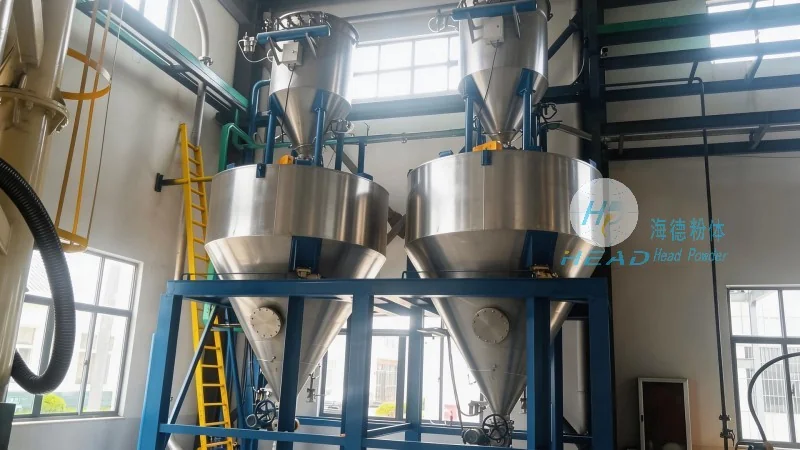
Shandong HeadPowder Engineering Co., Ltd., based in Shandong, China, is dedicated to delivering high-efficiency and reliable solutions for the transportation of rare earth powders. The company's expertise lies in understanding the unique properties of rare earth materials, such as their fine particle size, high reactivity, and the need for contamination-free handling. By leveraging cutting-edge technology and robust engineering, HeadPowder ensures that its pneumatic conveying lines meet the stringent requirements of the rare earth industry.
A typical rare earth powder pneumatic conveying line consists of several critical components that work in tandem to achieve efficient material transport. These components include the material hopper, feeder, air compressor, conveying pipeline, and receiver. Each component plays a vital role in the overall system performance.
The material hopper is designed to store the rare earth powder and maintain a consistent feed rate. It often features a conical or rectangular shape with a discharge valve at the bottom, allowing controlled material release. The feeder, usually a rotary valve or a screw feeder, regulates the flow of powder from the hopper into the conveying pipeline. This step is crucial to prevent blockages and ensure a steady supply of material.
The air compressor generates the necessary pressure or vacuum to move the powder through the pipeline. Depending on the system design, either positive pressure or negative pressure (suction) is employed. Positive pressure systems are commonly used for long-distance or high-capacity transport, while suction systems are suitable for short distances or when the material is to be collected from multiple sources.
The conveying pipeline, typically made of stainless steel or other corrosion-resistant materials, is designed to withstand the abrasive nature of rare earth powders. The pipeline layout includes bends, elbows, and expansion joints to accommodate changes in direction and elevation. Proper sealing and maintenance of the pipeline are essential to minimize material loss and prevent contamination.
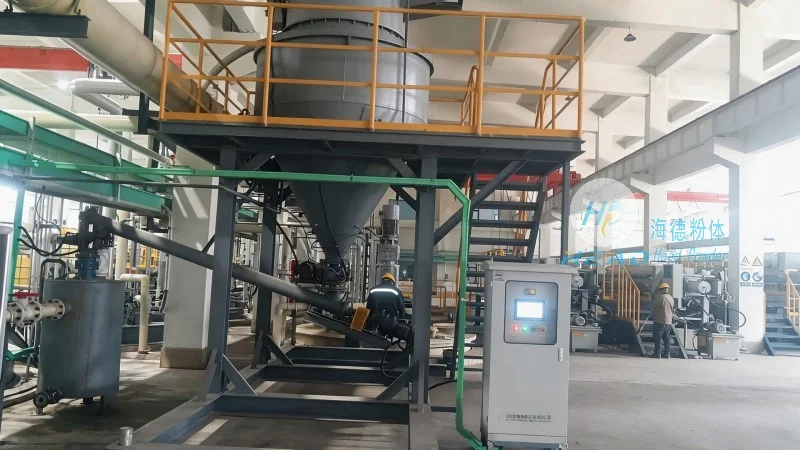
The receiver is the final component of the system, where the conveyed powder is deposited. It is usually a storage tank or a discharge hopper, equipped with a discharge valve to release the material as needed. The receiver may also include a dust collection system to capture any fine particles that escape during the conveying process.
The operation of a rare earth powder pneumatic conveying line follows a systematic sequence of steps, ensuring smooth and continuous material transport. The process begins with the loading of the hopper with the rare earth powder. The feeder then starts to release the powder into the conveying pipeline at a controlled rate.
Simultaneously, the air compressor activates, generating the required airflow to transport the powder. The powder particles are entrained by the air stream and carried through the pipeline to the receiver. The airflow velocity is carefully controlled to maintain a stable conveying condition, avoiding excessive pressure drops or particle separation.
During the conveying process, the system continuously monitors key parameters such as pressure, flow rate, and temperature. Any deviations from the set points are immediately detected and corrected by the control system. This ensures that the conveying operation remains stable and efficient, minimizing downtime and material loss.
Once the powder reaches the receiver, the airflow is adjusted to allow the material to settle and be discharged from the receiver. The receiver may also be equipped with a vibration system or a rotary valve to facilitate the smooth discharge of the powder. The entire process is automated, with the control system managing all aspects of the operation.
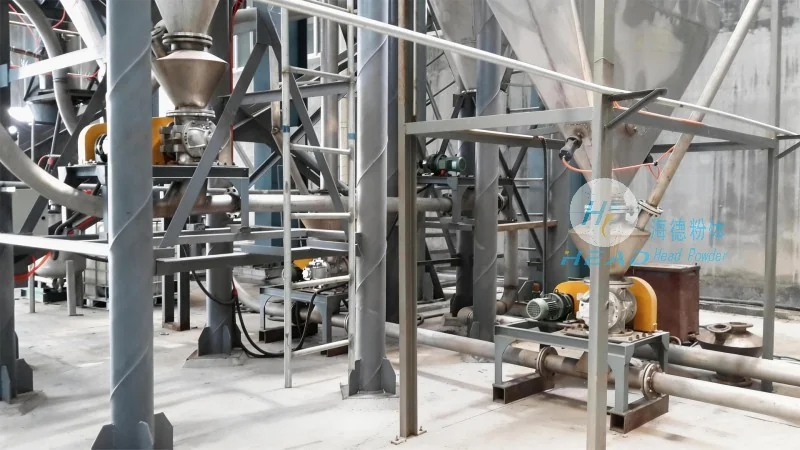
The working principle of a rare earth powder pneumatic conveying line is based on the fundamental concept of fluidization and particle suspension. The air stream acts as a fluid medium, carrying the powder particles through the pipeline. The key to efficient conveying is maintaining the powder in a suspended state, where the particles are kept in motion by the airflow without settling or clogging the pipeline.
In positive pressure systems, the air compressor supplies compressed air to the pipeline, creating a pressure differential that drives the powder forward. The air velocity must be sufficient to overcome the gravitational force acting on the powder particles and the frictional resistance within the pipeline. The pressure drop along the pipeline is a critical parameter, as it indicates the energy required to transport the material.
In suction systems, the air compressor creates a vacuum at the receiver end, drawing the powder from the hopper through the pipeline. The negative pressure ensures that the powder is pulled along the pipeline, with the airflow velocity again being a critical factor for maintaining particle suspension.
The design of the conveying line, including the pipeline diameter, length, and layout, is optimized to balance the air velocity and pressure requirements. The use of appropriate air velocities and pressure levels prevents particle agglomeration, which can lead to blockages and system inefficiencies. Additionally, the selection of materials for the pipeline and components is crucial to avoid corrosion or wear caused by the abrasive nature of rare earth powders.
Rare earth powder pneumatic conveying lines offer numerous advantages over traditional mechanical conveying methods, making them the preferred choice for many industrial applications. The primary benefits include high efficiency, low maintenance, and the ability to handle fine and abrasive powders without contamination.
Efficiency is a key advantage, as pneumatic conveying systems can transport large quantities of powder over long distances with minimal energy consumption. The automated operation reduces labor costs and minimizes human error, ensuring consistent performance. Additionally, the system can be easily integrated with other processing equipment, such as mixing or grinding units, to form a complete production line.
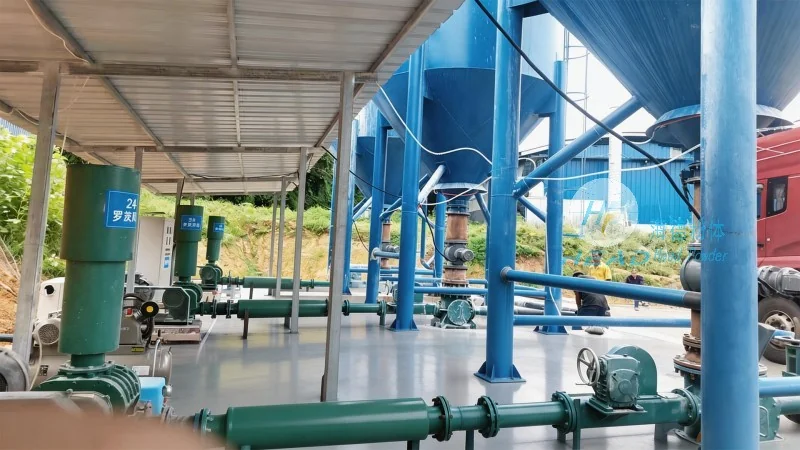
The low maintenance requirements of pneumatic conveying systems are another significant benefit. Unlike mechanical conveyors, which require regular cleaning and replacement of wear parts, pneumatic systems have fewer moving parts and are less prone to wear and tear. This results in lower operational costs and longer system lifespans.
The ability to handle fine and abrasive rare earth powders without contamination is critical for applications where the material purity is essential. Pneumatic conveying systems use enclosed pipelines and sealed components, preventing the powder from coming into contact with the environment or other materials. This ensures that the rare earth powder remains free from contaminants, maintaining its quality and performance.
Applications of rare earth powder pneumatic conveying lines are widespread across various industries. In the rare earth processing industry, these systems are used for transporting raw materials from storage to processing units, as well as for moving finished products to packaging or storage areas. In the manufacturing sector, they are employed in the production of rare earth magnets, catalysts, and other specialized materials. The versatility of pneumatic conveying systems makes them suitable for a wide range of applications, from small-scale laboratory operations to large-scale industrial production.
HeadPowder's rare earth powder pneumatic conveying lines represent a sophisticated and reliable solution for the efficient handling of rare earth materials. By understanding the unique properties of rare earth powders and leveraging advanced engineering principles, HeadPowder ensures that its systems deliver optimal performance, safety, and durability. The operation process and working principles of these lines are designed to meet the stringent requirements of the industry, providing a cost-effective and efficient method for powder transportation.
With its headquarters in Shandong, China, HeadPowder continues to innovate and develop new technologies to enhance the performance of pneumatic conveying systems. The company's commitment to quality and customer satisfaction has established it as a trusted partner in the rare earth processing industry, offering tailored solutions that meet the specific needs of each client.

 Shandong Headpowder Engineering Co., Ltd.
 156-6277-7102(Manager Zhang)
  0531-83386006
  Zhangqiu District, Jinan City, Shandong Province, China
telephone
WeChatconsult
top