With more than 10‑year industry experience, Shandong Headpowder delivers full‑service pneumatic‑conveying systems and blowers, undertaking nationwide turn‑key powder‑handling projects.
Coal ash, a byproduct of coal combustion in power plants and industrial facilities, necessitates efficient and reliable transportation methods for handling and disposal. Pneumatic conveying lines provide a sophisticated solution to move coal ash from source points to storage or processing facilities. This article delves into the operation process and working principles of coal ash pneumatic conveying lines, highlighting the technical aspects and operational efficiency of such systems, which are crucial for optimizing ash management in modern industrial operations.
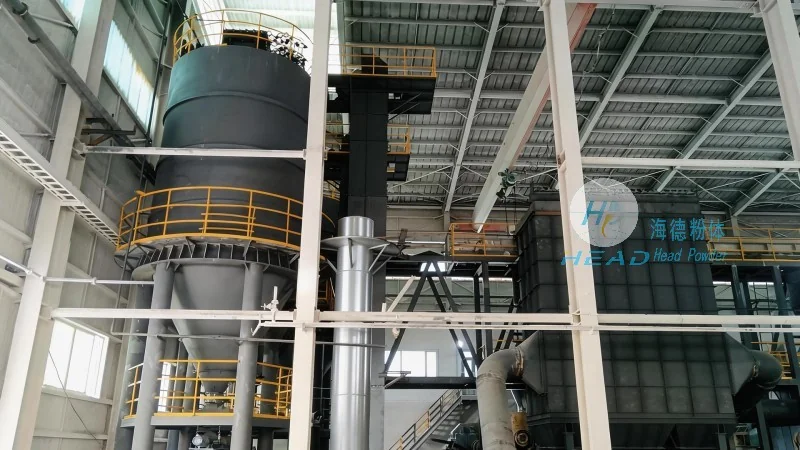
HeadPowder, formally known as Shandong HeadPowder Engineering Co., Ltd., is a prominent engineering firm specializing in material handling and processing solutions. With a strong commitment to innovation and precision, the company has established itself as a leader in designing and implementing pneumatic conveying systems tailored to the needs of the power and industrial sectors. HeadPowder's expertise ensures that coal ash handling operations are optimized for safety, efficiency, and environmental compliance, providing clients with reliable and cost-effective solutions for their ash management challenges.
The coal ash pneumatic conveying line comprises several critical components that collaborate to transport material. These include the ash collection hopper, which gathers ash from boilers or other sources and stores it until conveyance; the air compressor or blower, which generates the necessary air pressure to move the material; the conveying pipeline, which transports the ash from the source to the destination; and the discharge hopper or silo, where the ash is deposited for further processing or storage. Each component is meticulously designed to ensure the smooth and continuous operation of the system, with attention to material flow rates, air pressure, and pipeline dimensions.
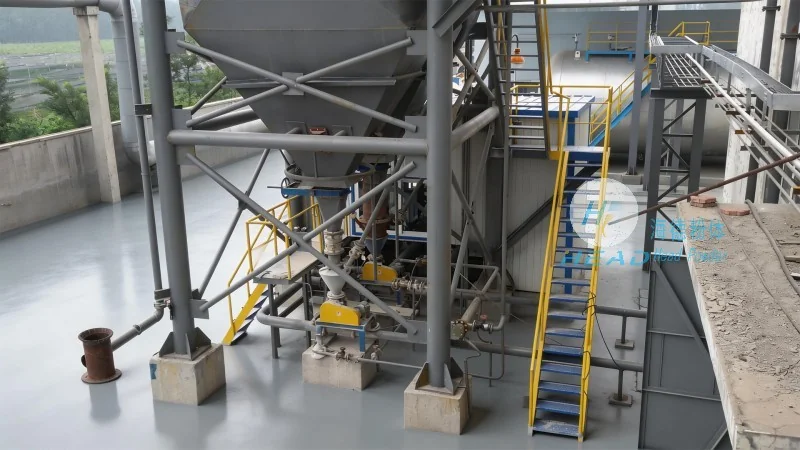
The operation of a coal ash pneumatic conveying line begins with the ash collection phase. The ash is fed into the collection hopper, where it accumulates until the hopper reaches a predetermined level. At this point, the air compressor initiates, generating high-pressure air that is introduced into the conveying pipeline. The air flow creates a pressure differential that propels the coal ash particles through the pipeline. As the ash travels, it is mixed with the air, forming a slurry-like mixture that is efficiently transported to the discharge point. The discharge hopper then receives the ash, which can be further processed or stored for disposal. This process is typically automated, with sensors and control systems monitoring the hopper levels and air pressure to maintain consistent operation.
Pneumatic conveying operates on the fundamental principle of using air to transport solid materials. There are two primary modes of pneumatic conveying: dilute phase and dense phase. Dilute phase conveying utilizes low air velocity and high air-to-material ratios, making it suitable for short distances and low material loads. Dense phase conveying, in contrast, employs higher air velocity and lower air-to-material ratios, which is ideal for longer distances and higher material loads. For coal ash, dense phase conveying is often preferred due to the need to handle larger volumes and maintain material integrity during transport. The system's design, including pipeline diameter, air pressure, and material feed rate, is carefully calibrated to ensure optimal performance, minimize wear on components, and prevent material degradation.
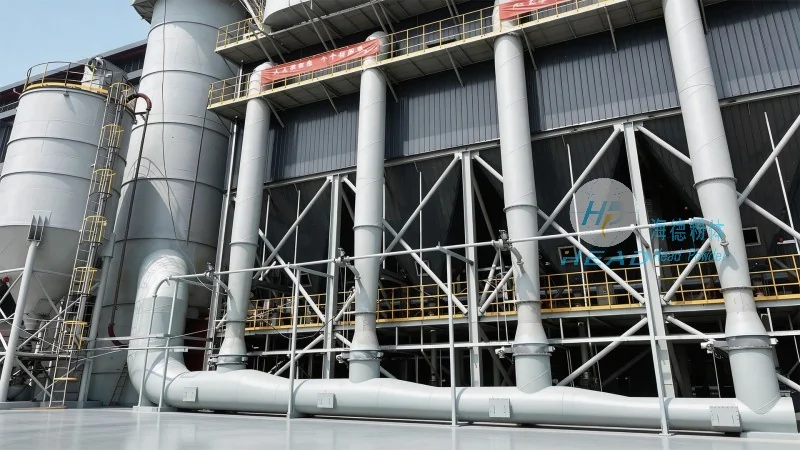
Coal ash pneumatic conveying lines offer several significant advantages over traditional transportation methods such as truck or rail transport. These advantages include reduced labor costs, as the system operates with minimal human intervention, automating the entire process from ash collection to discharge. Enhanced safety is another key benefit, as there is no need for manual handling of ash, which reduces the risk of occupational hazards and accidents. Additionally, pneumatic conveying systems provide improved environmental protection by minimizing dust emissions and preventing contamination of the surrounding environment. The flexibility of the system also allows for easy expansion or modification to accommodate changes in production levels or facility layouts, making it a versatile solution for evolving industrial needs.
Coal ash pneumatic conveying lines are predominantly used in the power generation industry, particularly in thermal power plants that burn coal as a primary fuel source. They are also applicable in industrial facilities such as cement plants and steel mills, where large quantities of ash are generated as a byproduct of industrial processes. The versatility of the system enables it to be adapted to various ash types and handling requirements, making it a valuable asset for any facility dealing with coal ash management. By implementing a pneumatic conveying line, these industries can streamline their ash handling operations, reduce operational costs, and enhance overall efficiency.

 Shandong Headpowder Engineering Co., Ltd.
 156-6277-7102(Manager Zhang)
  0531-83386006
  Zhangqiu District, Jinan City, Shandong Province, China
telephone
WeChatconsult
top