With more than 10‑year industry experience, Shandong Headpowder delivers full‑service pneumatic‑conveying systems and blowers, undertaking nationwide turn‑key powder‑handling projects.
HeadPowder, a leading manufacturer based in Shandong, China, specializes in the design, production, and supply of advanced pneumatic conveying equipment for various industrial applications. This article delves into the operation process and working principle of gypsum granule pneumatic conveying systems, highlighting the technical aspects and operational efficiency of such equipment.
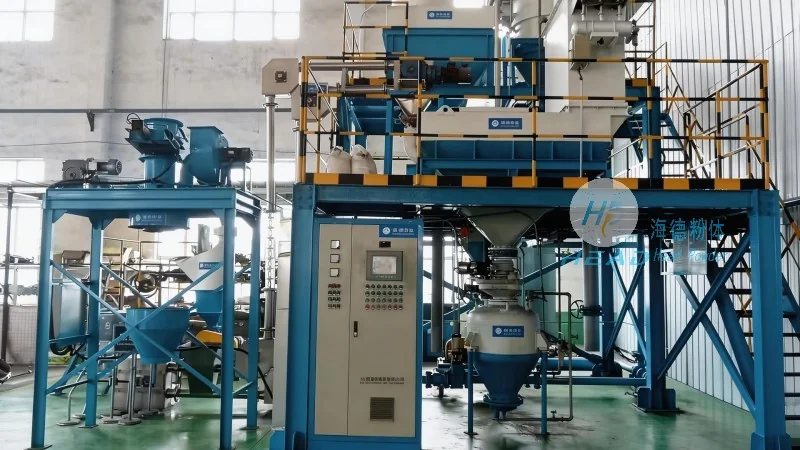
Gypsum granule pneumatic conveying equipment is a critical component in many industrial processes, particularly in the construction materials and chemical industries. These systems are engineered to transport gypsum granules efficiently and safely from one location to another using air as the conveying medium. The equipment typically consists of several key components, including a hopper, a rotary valve, a pneumatic conveying line, and a receiver. Each component plays a vital role in ensuring smooth and reliable material transport.
The gypsum granule pneumatic conveying system operates through the coordinated function of several key components. The hopper serves as the storage and feeding unit, where gypsum granules are stored before being fed into the system. The rotary valve, also known as a feeder, controls the flow rate of the material, ensuring a consistent and controlled discharge into the pneumatic line. The pneumatic conveying line, often made of stainless steel or other corrosion-resistant materials, is the main pathway for transporting the gypsum granules. The receiver, located at the destination point, collects the conveyed material and stores it until further processing or use.
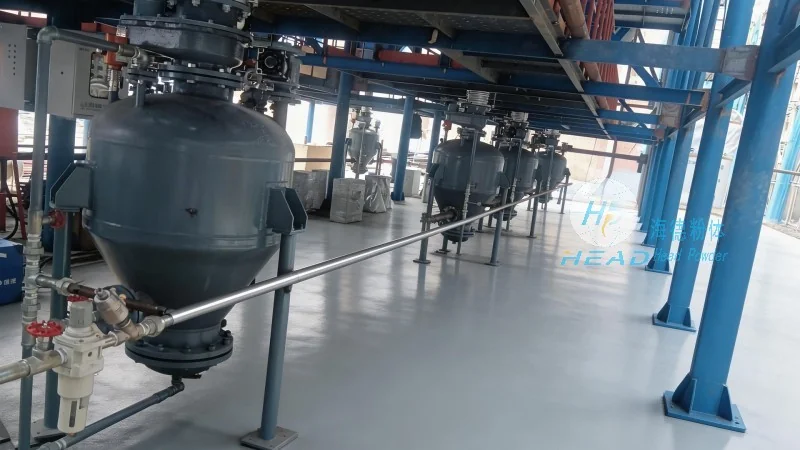
The working principle of gypsum granule pneumatic conveying involves the use of compressed air to create a flow that transports the granules through the conveying line. When the rotary valve opens, gypsum granules fall into the pneumatic line, and the compressed air from the blower or compressor is introduced at the inlet. The air and granules mix and travel through the line, with the air providing the necessary force to move the material. The velocity of the air and the size of the granules determine the conveying capacity and efficiency of the system. Proper design of the conveying line, including bends and expansion sections, is crucial to minimize pressure drop and prevent material deposition or blockage.
The operation process of the gypsum granule pneumatic conveying system begins with the loading of gypsum granules into the hopper. The rotary valve then regulates the flow of granules into the pneumatic line, controlled by the system's control panel. The blower or compressor supplies compressed air, which is directed into the inlet of the conveying line. As the granules enter the line with the air, they are conveyed to the receiver. The receiver collects the material, and the system continues to operate until the hopper is emptied or the desired quantity is conveyed. The control system monitors parameters such as pressure, flow rate, and material level, ensuring optimal performance and preventing operational issues.
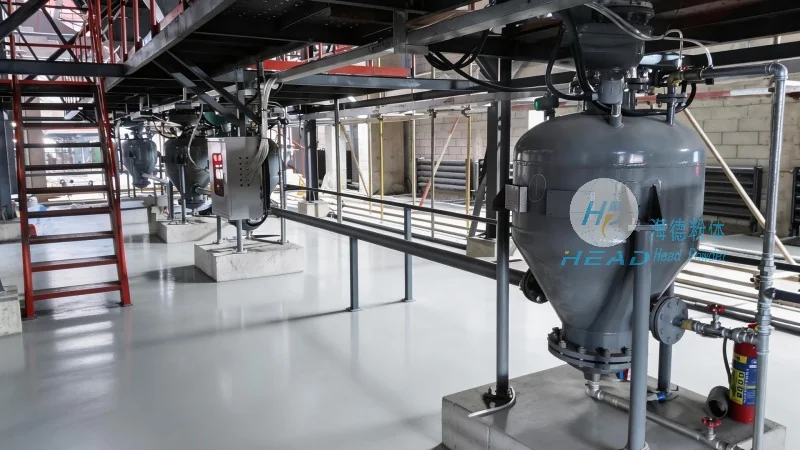
Gypsum granule pneumatic conveying equipment offers several advantages over traditional mechanical conveying methods. These include reduced labor costs, improved safety by eliminating manual handling, and the ability to transport materials over long distances without the need for intermediate storage. The equipment is widely used in applications such as gypsum board production, chemical processing, and material handling in construction and industrial facilities. The efficiency and reliability of these systems make them a preferred choice for industries requiring consistent and high-volume material transport.
HeadPowder's gypsum granule pneumatic conveying equipment exemplifies advanced engineering and operational efficiency. By understanding the operation process and working principle of these systems, industries can leverage the benefits of pneumatic conveying for improved productivity and safety. With its headquarters in Shandong, China, HeadPowder continues to provide high-quality equipment tailored to the specific needs of its clients, ensuring reliable and efficient material transport in various industrial applications.

 Shandong Headpowder Engineering Co., Ltd.
 156-6277-7102(Manager Zhang)
  0531-83386006
  Zhangqiu District, Jinan City, Shandong Province, China
telephone
WeChatconsult
top