With more than 10‑year industry experience, Shandong Headpowder delivers full‑service pneumatic‑conveying systems and blowers, undertaking nationwide turn‑key powder‑handling projects.
Monocrystalline silicon is a critical material in the semiconductor industry, and the efficient handling of this material is essential for production efficiency and product quality. Pneumatic conveying equipment, particularly designed for monocrystalline silicon, plays a vital role in transporting this delicate material from one processing stage to another. This article provides a detailed overview of the operation process and working principle of such equipment, highlighting the key components, operational steps, and the importance of precision in handling monocrystalline silicon.
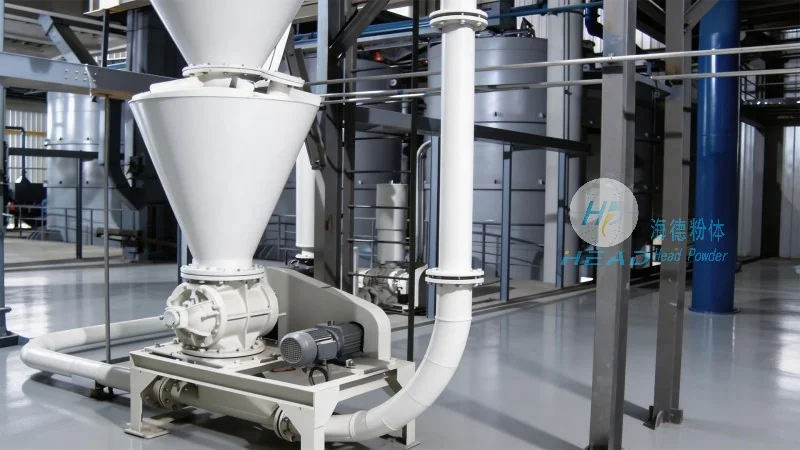
Monocrystalline silicon pneumatic conveying equipment is engineered to transport monocrystalline silicon particles through an air stream, ensuring minimal particle damage and maintaining the material's purity. The system typically consists of several key components, including a hopper for material storage, a feeder to control the flow rate, a conveying line with appropriate ducting, and a receiver for the delivered material. Each component is designed to work in harmony to achieve efficient and reliable material transport.
The performance of monocrystalline silicon pneumatic conveying equipment relies on the proper functioning of its core components. The hopper, often equipped with a level indicator and a discharge valve, stores the monocrystalline silicon and provides a consistent feed to the feeder. The feeder, which can be a rotary valve or a vibratory feeder, regulates the material flow rate to match the conveying system's capacity. The conveying line, made from materials resistant to silicon dust and corrosion, ensures the material is transported without contamination. The receiver, equipped with a dust collection system, collects the conveyed material and prevents air leakage. These components work together to maintain the integrity of the monocrystalline silicon during transport.
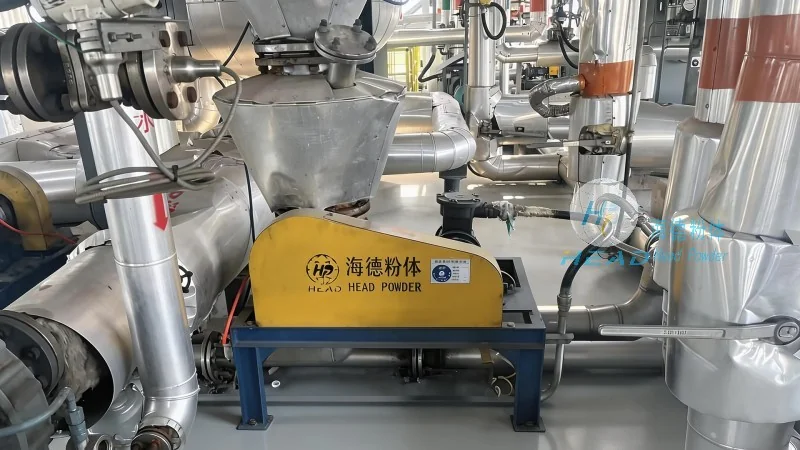
The operation of monocrystalline silicon pneumatic conveying equipment involves several sequential steps to ensure smooth material transport. The process begins with loading the hopper with monocrystalline silicon material. The feeder then starts, controlling the material flow into the conveying line. Simultaneously, the air compressor or blower generates a high-pressure air stream that propels the material particles through the ducting. The air stream carries the silicon particles to the receiver, where the material is deposited. The system is designed to maintain a consistent air pressure and flow rate to prevent material degradation or blockages. Regular monitoring of the system's pressure, flow rate, and material level ensures optimal operation and early detection of any issues.
The working principle of monocrystalline silicon pneumatic conveying equipment is based on the fluidization and transport of solid particles by an air stream. When the air is introduced into the conveying line at a sufficient velocity, it creates a turbulent flow that lifts the monocrystalline silicon particles from the hopper. The particles are then carried along the ducting by the air stream, moving towards the receiver. The key to efficient conveying is maintaining the air velocity above the minimum fluidization velocity of the silicon particles, which prevents particle settling and ensures continuous transport. The system's design, including the size and shape of the ducting, the angle of the conveying line, and the air pressure, all influence the conveying efficiency and material handling performance. Proper design and maintenance of the equipment are crucial to achieve reliable and consistent material transport.
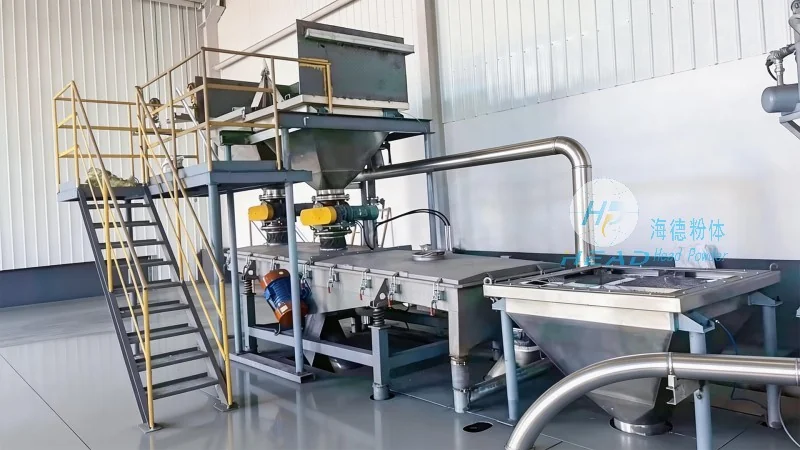
Handling monocrystalline silicon requires precision and control due to its high purity and sensitivity to contamination or mechanical damage. The pneumatic conveying system is designed to minimize particle impact and friction, which can cause surface defects or contamination. The use of smooth ducting, low-velocity conveying, and proper air filtration ensures that the material remains in its pristine condition. Additionally, the system's control mechanisms, such as variable speed drives and pressure sensors, allow for real-time adjustments to maintain optimal conveying conditions. This precision is essential for maintaining the quality of the monocrystalline silicon, which directly impacts the performance of semiconductor devices.
Monocrystalline silicon pneumatic conveying equipment is widely used in the semiconductor manufacturing industry for transporting silicon wafers, raw silicon material, and other related components. The benefits of using such equipment include improved production efficiency, reduced labor costs, and enhanced material handling safety. The equipment allows for continuous material transport, reducing downtime and increasing throughput. Additionally, the enclosed system prevents dust contamination and environmental pollution, ensuring compliance with industrial safety standards. The precision and reliability of the equipment also contribute to higher product quality and reduced waste.

 Shandong Headpowder Engineering Co., Ltd.
 156-6277-7102(Manager Zhang)
  0531-83386006
  Zhangqiu District, Jinan City, Shandong Province, China
telephone
WeChatconsult
top