With more than 10‑year industry experience, Shandong Headpowder delivers full‑service pneumatic‑conveying systems and blowers, undertaking nationwide turn‑key powder‑handling projects.
Coconut shell powder, a widely used material in various industrial applications, requires efficient and reliable handling systems to ensure smooth production processes. Pneumatic conveying equipment, specifically designed for transporting such powders, plays a crucial role in modern material handling solutions. This article delves into the operation process and working principles of such equipment, highlighting the key components, operational steps, and the benefits of using pneumatic systems for coconut shell powder transport.
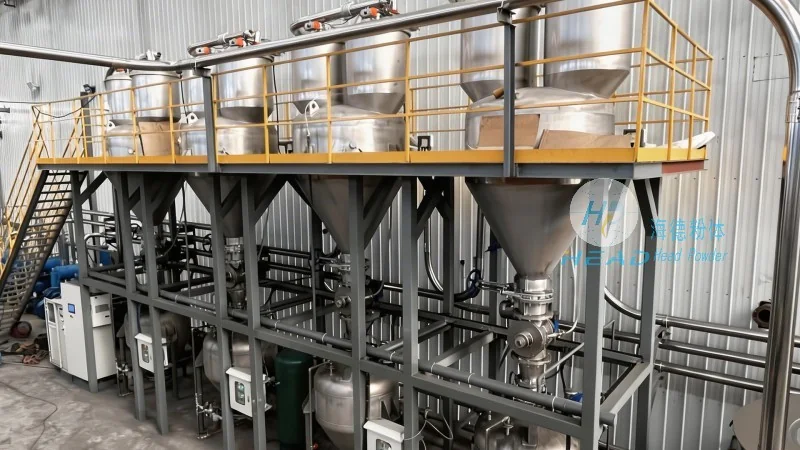
The effectiveness of a pneumatic conveying system for coconut shell powder largely depends on its well-designed components. These include the hopper for material storage, the conveyor pipeline, the air compressor or blower, the control valves, and the dust collection system. Each component works in tandem to ensure the efficient movement of the powder from the source to the destination. The hopper is typically equipped with a feeder, such as a rotary valve or a star valve, which regulates the flow of powder into the pipeline. The pipeline itself is made of materials resistant to corrosion and abrasion, often stainless steel or special plastic, to withstand the abrasive nature of coconut shell powder. The air compressor or blower generates the necessary air pressure to move the powder particles through the system. Control valves, including check valves and pressure relief valves, manage the air flow and pressure within the system, preventing backflow and ensuring safe operation. Finally, the dust collection system, often a cyclone separator or a bag filter, captures any fine particles that may escape the pipeline, maintaining air quality and preventing environmental contamination.
The operation process of a pneumatic conveying system for coconut shell powder involves several sequential steps. Initially, the coconut shell powder is fed into the hopper from the storage silo or raw material container. The feeder then regulates the flow of powder into the pipeline, ensuring a consistent and controlled rate of material discharge. Simultaneously, the air compressor or blower starts operating, generating a high-pressure air stream. This air stream, combined with the powder particles, forms a mixture known as a "pneumatic stream" or "conveying stream." The mixture travels through the pipeline, with the air providing the necessary kinetic energy to move the powder. As the mixture moves, it passes through any necessary processing equipment, such as a filter or a dryer, before reaching the destination point, which could be a storage silo, a processing unit, or a packaging system. At the destination, the powder is separated from the air through a separator, and the air is either recycled back into the system or discharged through the dust collection system. The entire process is controlled by a central control system that monitors parameters like pressure, flow rate, and temperature, ensuring optimal performance and preventing any operational issues.

The working principle of pneumatic conveying for coconut shell powder is based on the fundamental concept of fluidization and particle transport. When air is introduced into the pipeline at a sufficient velocity, it creates a low-pressure zone that draws the powder particles into the air stream. This process, known as "fluidization," allows the powder to be suspended and transported as a slurry-like mixture. The key to efficient conveying is maintaining the air velocity at a level that keeps the powder particles suspended without causing excessive pressure drop or particle degradation. The air pressure and velocity are carefully controlled to ensure that the powder particles do not settle or clog the pipeline. The system operates on the principle of differential pressure, where the pressure at the inlet (hopper) is higher than at the outlet (destination), creating a pressure gradient that drives the material flow. This gradient, combined with the air flow, ensures that the coconut shell powder moves smoothly and efficiently through the entire conveying system. The working principle also involves the use of appropriate air flow rates and pipeline diameters to minimize energy consumption and maximize conveying efficiency.
Implementing pneumatic conveying systems for coconut shell powder offers several significant benefits. Firstly, it provides a dust-free and clean operation environment, as the powder is contained within the pipeline and handled without direct contact with the air, reducing the risk of dust exposure and environmental pollution. Secondly, it offers high conveying efficiency, with the ability to transport large quantities of powder over long distances with minimal loss. The system is also flexible, allowing for easy integration with existing production lines and the ability to adjust the conveying rate as per production needs. Additionally, pneumatic conveying reduces the need for manual handling and labor, improving workplace safety and productivity. The system is also relatively compact and can be installed in various configurations, including vertical and horizontal pipelines, to suit different plant layouts. Finally, the use of pneumatic conveying can lead to cost savings in terms of reduced material handling time and lower maintenance costs compared to traditional methods like bucket elevators or belt conveyors.
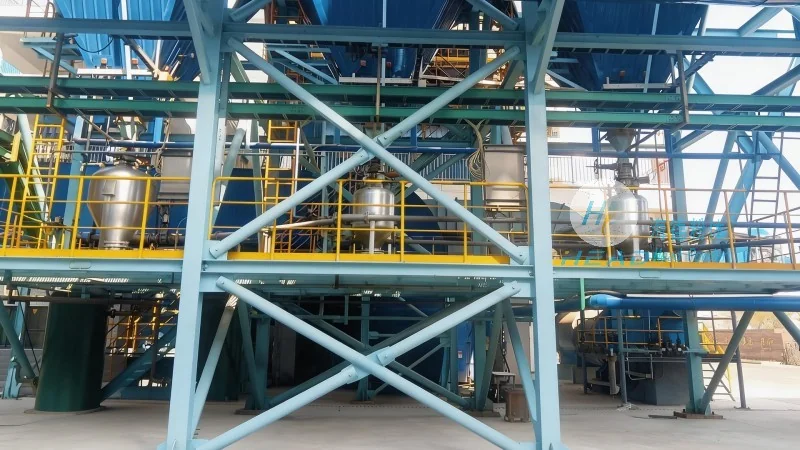
Pneumatic conveying systems for coconut shell powder are widely used in various industries, including food processing, pharmaceuticals, and chemical manufacturing. They are particularly suitable for applications where the powder needs to be transported from a storage area to a processing unit or packaging line. The system is also effective in handling fine and abrasive powders, such as coconut shell powder, which can be difficult to transport using traditional methods. When selecting a pneumatic conveying system, several factors need to be considered, including the particle size and density of the powder, the required conveying distance and capacity, and the available space for installation. The choice of air compressor or blower type, pipeline material, and control system also plays a critical role in ensuring the system's performance and longevity. Proper maintenance and regular inspection of the system components are essential to prevent issues like clogging, corrosion, or air leakage, which can affect the overall efficiency and reliability of the conveying process.
In conclusion, pneumatic conveying equipment for coconut shell powder is a highly effective and efficient solution for material handling in various industrial applications. The operation process involves the coordinated function of several key components, including the hopper, feeder, pipeline, air compressor, and control valves, working together to transport the powder in a controlled and safe manner. The working principle is based on fluidization and differential pressure, ensuring that the powder particles are suspended and moved through the system with minimal degradation. The benefits of using such systems include dust-free operation, high conveying efficiency, flexibility, and cost savings. By understanding the operation process and working principles, industries can optimize their material handling processes and improve overall productivity. As a leading provider in this field, Shandong HeadPowder Engineering Co., Ltd. specializes in designing and manufacturing customized pneumatic conveying systems tailored to the specific needs of coconut shell powder applications, ensuring reliable and efficient material transport solutions.

 Shandong Headpowder Engineering Co., Ltd.
 156-6277-7102(Manager Zhang)
  0531-83386006
  Zhangqiu District, Jinan City, Shandong Province, China
telephone
WeChatconsult
top