With more than 10‑year industry experience, Shandong Headpowder delivers full‑service pneumatic‑conveying systems and blowers, undertaking nationwide turn‑key powder‑handling projects.
HeadPowder, a leading provider in the field, specializes in the technology of pneumatic conveying for powders such as sawdust and husk. This article delves into the fundamental principles behind this process and explores the specific characteristics of working scenes where such systems are effectively applied.
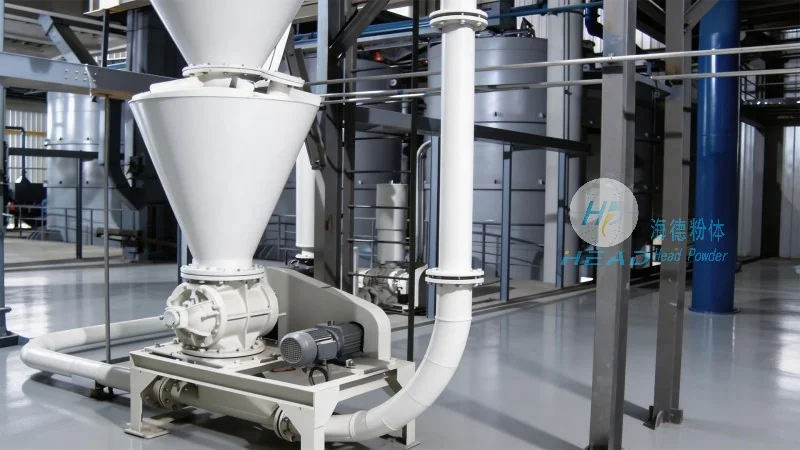
Pneumatic conveying is a method that utilizes air or gas to transport particulate materials through a pipeline. For sawdust and husk powders, which are typically light and dusty, this technology offers an efficient solution for moving these materials from one location to another without the need for mechanical components like belts or buckets. The process relies on the creation of a pressure differential within the system, where air is either drawn in (in suction mode) or pushed through (in pressure mode) the pipeline, carrying the powder particles along with it.
The key components of a pneumatic conveying system include the material feed hopper, the conveying pipeline, the air supply unit (either a blower or a vacuum pump), and the discharge hopper. The material is introduced into the system from the hopper, and the air flow then lifts and transports the powder particles through the pipeline to the discharge point. The design of the system, including the size of the pipeline, the velocity of the air, and the angle of the pipeline, all play critical roles in ensuring efficient and reliable transport. Proper air velocity is essential to prevent particle settling or blockages, while the pipeline layout must be optimized to minimize pressure losses and energy consumption.
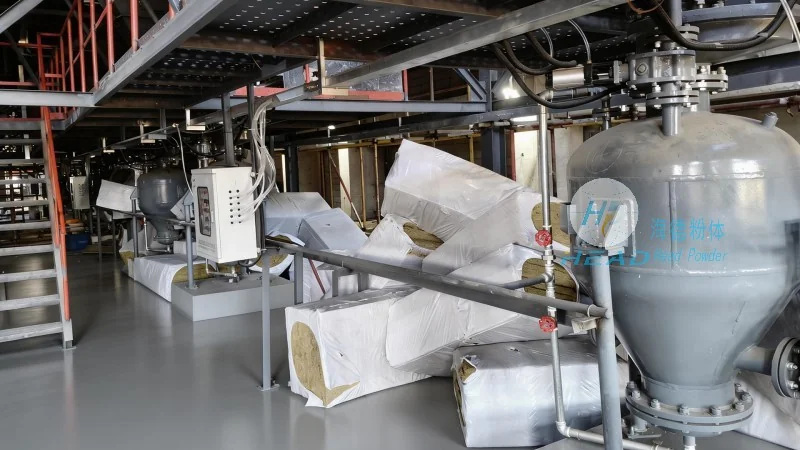
The application of pneumatic conveying for sawdust and husk powders is prevalent in various industrial settings. One common scenario is in the wood processing industry, where sawdust is generated as a byproduct of lumber cutting and needs to be transported to storage silos or processing facilities. The systems are often integrated into the production line, allowing for seamless transfer of the material without manual handling, which enhances safety and productivity.
In agricultural processing, husk powders from crops like rice or wheat are commonly handled using pneumatic conveying. These powders are typically used as animal feed or as raw materials in other agricultural products. The systems are designed to handle the varying moisture content and particle sizes of these materials, ensuring consistent and reliable transport. Additionally, in recycling facilities, sawdust and husk powders may be collected from different sources and transported to a central processing unit for further treatment or reuse.
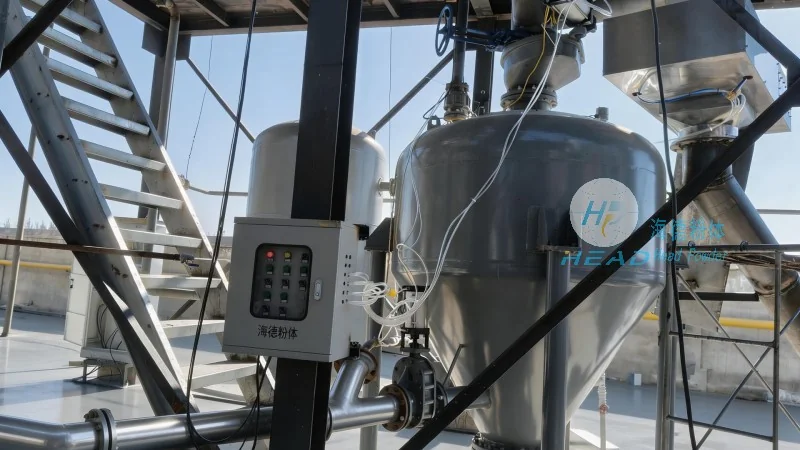
The working scene characteristics also include considerations for environmental factors. Since sawdust and husk powders are often dusty, the systems are equipped with dust collection and filtration units to minimize air pollution and ensure compliance with environmental regulations. The design of the system must also account for the potential for material degradation, such as moisture absorption or oxidation, which can affect the quality of the powder during transport.
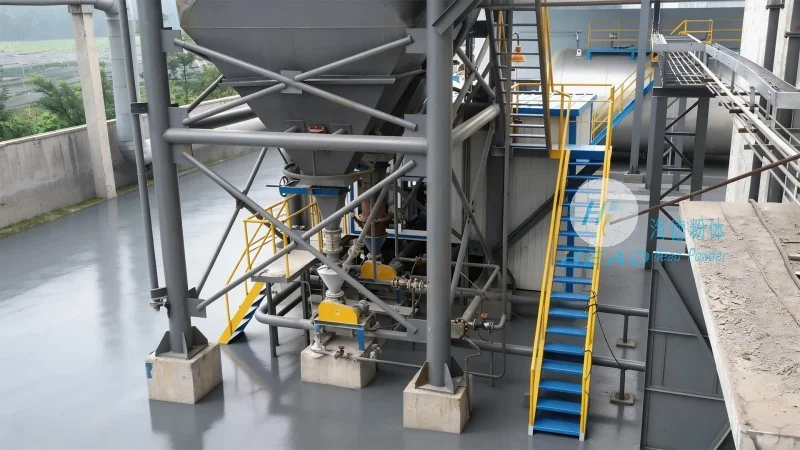
Implementing pneumatic conveying systems for sawdust and husk powders offers several advantages. One of the primary benefits is the ability to transport materials over long distances without the need for intermediate storage or handling points. This reduces the risk of material contamination and improves overall process efficiency. Additionally, the systems are relatively compact and can be easily integrated into existing industrial setups, making them a flexible solution for various applications.
However, there are also considerations to keep in mind when using pneumatic conveying for these materials. The high velocity of air can lead to increased energy consumption, and the system must be designed to handle the specific properties of the powder, such as its density and flowability. Furthermore, the system may require regular maintenance to prevent blockages or wear and tear from the abrasive nature of the powder particles.

 Shandong Headpowder Engineering Co., Ltd.
 156-6277-7102(Manager Zhang)
  0531-83386006
  Zhangqiu District, Jinan City, Shandong Province, China
telephone
WeChatconsult
top