

Working Principle and Features of Pneumatic Conveying Systems for Battery Materials
Pneumatic conveying systems are a critical component in the battery material processing industry, providing an efficient method for transporting bulk materials such as powders and granules. These systems utilize air or gas as the primary medium to move materials through pipelines, offering a flexible and reliable solution for various industrial applications. Understanding the underlying working principle and distinctive features of these systems is crucial for optimizing material handling processes in battery manufacturing facilities.
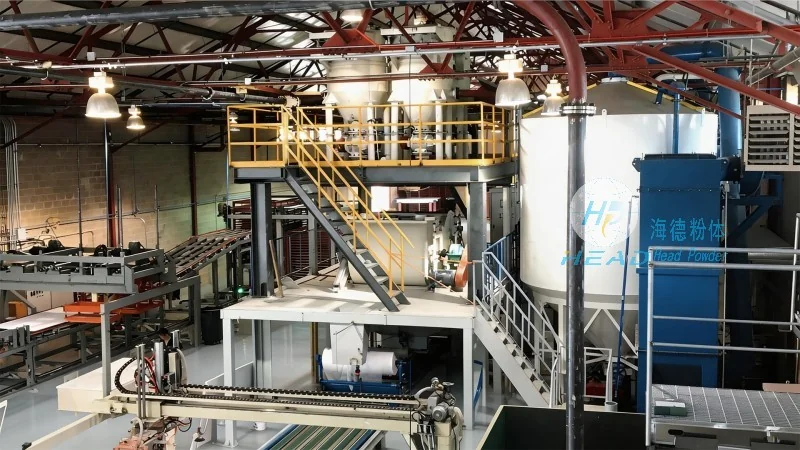
Working Principle of Pneumatic Conveying Systems for Battery Materials
The fundamental operation of a pneumatic conveying system involves the use of compressed air or gas to generate a flow that transports material particles through a pipeline. The process typically begins with the material being introduced into a hopper or feeder, where it is then drawn into the conveying line by the air flow. As the air moves through the system, it carries the material particles along, ensuring a continuous and controlled transfer. The system can operate in either positive pressure or negative pressure modes, depending on the specific characteristics of the material and the application requirements. Positive pressure systems utilize compressed air to push the material through the line, while negative pressure systems employ suction to draw the material in. This dual-mode capability allows for adaptation to different material types, such as fine powders or coarse granules, and varying process conditions. The air pressure and flow rate are carefully controlled to maintain optimal material transport efficiency and prevent blockages or material degradation.
Key Features of Pneumatic Conveying Systems for Battery Materials
Pneumatic conveying systems for battery materials exhibit several key features that enhance their performance and suitability for industrial use. One of the primary advantages is their ability to handle a wide array of material types, including fine powders, coarse granules, and even sticky or abrasive materials commonly used in battery manufacturing. This versatility is essential for processing materials like lithium carbonate, nickel oxide, and graphite, which vary significantly in size, density, and flow properties. Another critical feature is the system's capacity to preserve material integrity during transport. Unlike mechanical conveyors, which can cause particle breakage, segregation, or contamination, pneumatic systems use air to gently move materials, minimizing these issues. Additionally, these systems offer high flexibility in terms of layout and integration. They can be installed in various configurations to accommodate the spatial constraints of a facility, allowing for seamless integration into existing production lines without extensive modifications. This adaptability is particularly valuable in battery manufacturing plants, where space optimization is a key consideration.
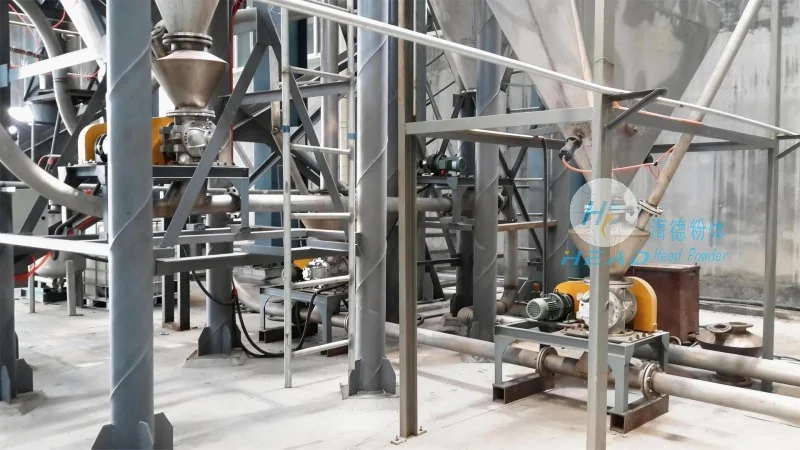
Efficiency and Reliability in Material Handling
The efficiency and reliability of pneumatic conveying systems are paramount in battery material processing. These systems are designed to achieve high material throughput rates, often with minimal downtime for maintenance. The consistent air flow provided by the system ensures reliable and on-time material transport, which is critical for maintaining production schedules. Furthermore, the systems are engineered to minimize energy consumption, making them cost-effective in the long term. In battery manufacturing, where material handling is a significant operational cost, the efficiency of the conveying system directly impacts overall production cost and profitability. The ability to handle large volumes of material while maintaining low operational costs is a major advantage of pneumatic conveying technology. Additionally, the systems are equipped with advanced control mechanisms that allow for real-time monitoring and adjustment, ensuring optimal performance under varying conditions.
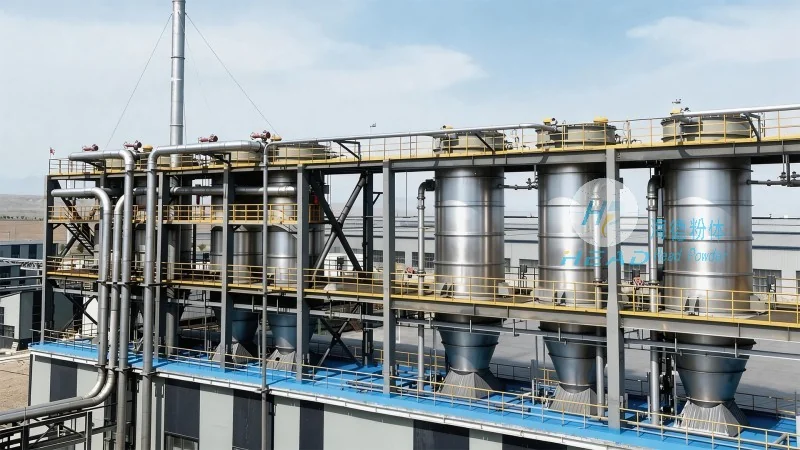
Customization and Application in Battery Manufacturing
Pneumatic conveying systems are often customized to meet the specific needs of battery material processing. HeadPowder, a leading manufacturer based in Shandong, China, specializes in developing tailored solutions that address the unique requirements of clients. The company's engineers work closely with clients to design systems that match their production volumes, material characteristics, and facility layout. Customization may include adjustments to the conveying line diameter, air pressure levels, and control systems to ensure optimal performance. For example, in processing fine lithium carbonate powders, a negative pressure system might be preferred to prevent dust dispersion, while a positive pressure system could be used for handling coarse graphite granules. Such customization ensures that the system operates efficiently and safely, meeting the stringent quality and safety standards of the battery industry.
About Shandong HeadPowder Engineering Co., Ltd.
Shandong HeadPowder Engineering Co., Ltd., commonly known as HeadPowder, is a prominent manufacturer of specialized equipment for the powder and bulk material handling industry. With a strong focus on innovation and quality, the company has established itself as a trusted provider of pneumatic conveying systems for battery material processing. HeadPowder's expertise lies in designing and manufacturing equipment that meets the demanding requirements of modern battery manufacturing, ensuring reliable and efficient material handling solutions. The company's facilities are located in Shandong, China, where it leverages local resources and technical expertise to deliver high-quality products to clients globally. HeadPowder's commitment to research and development ensures that its products remain at the forefront of technology, providing clients with competitive advantages in their respective markets. The company's dedication to customer satisfaction and product excellence has earned it a reputation as a reliable partner in the battery material processing industry.