

What is Zircon Sand Powder Pneumatic Conveying? And What Are Its Design Principles?
Zircon sand, a key raw material in various industrial applications, often requires efficient and reliable transport methods to move it from one location to another. Pneumatic conveying, a technology that uses compressed air or other gases to transport bulk materials, has become a popular choice for handling zircon sand powder due to its advantages in cleanliness, safety, and flexibility. This article aims to explain what zircon sand powder pneumatic conveying is and delve into the core design principles that underpin such systems.
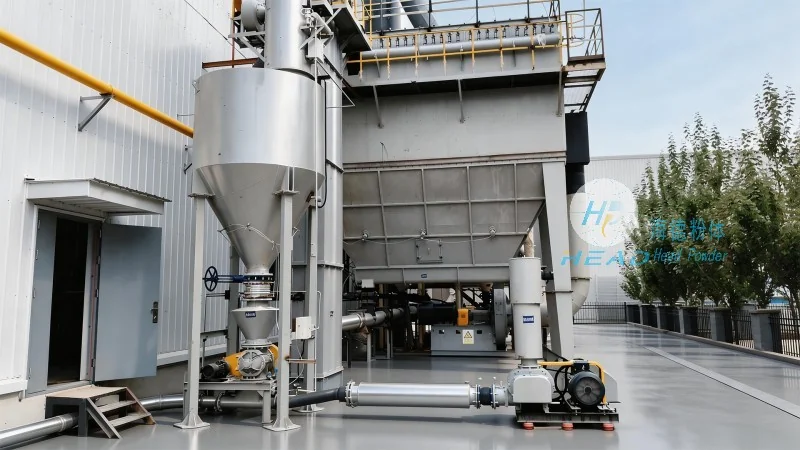
Understanding Zircon Sand Powder Pneumatic Conveying
Zircon sand powder pneumatic conveying is a method of transporting zircon sand particles through a pipeline using a gas stream, typically air. Unlike traditional mechanical conveying systems that rely on belts, buckets, or screws, pneumatic systems use pressure differentials to move the material. The process involves feeding the zircon sand into a hopper, where it is then drawn into a pipeline by a vacuum or pressure source. The gas stream carries the particles along the pipeline, delivering them to the destination point. This method is particularly suitable for zircon sand due to its fine particle size and the need to avoid contamination or dust exposure during transport.
Key Components of a Pneumatic Conveying System
Designing an effective zircon sand powder pneumatic conveying system involves integrating several critical components. These components work in harmony to ensure efficient and reliable material transport. The primary components include:
1. Feeder: The feeder is responsible for accurately and consistently feeding the zircon sand into the conveying system. For zircon sand, which can be abrasive and have varying particle sizes, a suitable feeder such as a rotary valve or a screw feeder is often used to maintain a steady flow rate and prevent blockages.
2. Hopper: The hopper serves as a storage vessel that holds the zircon sand before it is fed into the pipeline. It is designed to accommodate the bulk volume of the material and provide a smooth transition to the feeder. The hopper may also include a level indicator to monitor the material inventory.
3. Conveying Pipeline: The pipeline is the main channel through which the zircon sand and gas travel. It is typically made of materials like stainless steel or PVC to withstand the abrasive nature of zircon sand and to prevent corrosion. The pipeline is designed with appropriate bends and elbows to guide the material along the desired path, minimizing pressure losses and ensuring smooth flow.
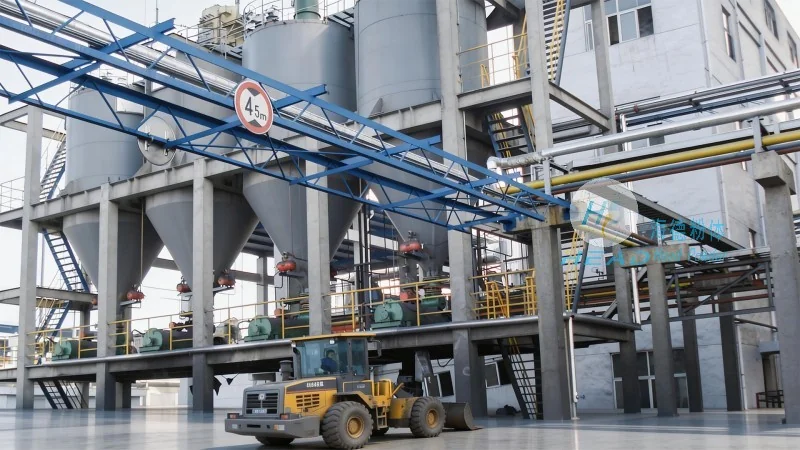
4. Conveying Unit (Vacuum or Positive Pressure): This component generates the necessary pressure or vacuum to move the zircon sand through the pipeline. In a vacuum system, a fan or vacuum pump creates a low-pressure environment that draws the material into the pipeline. In a positive pressure system, a blower or compressor supplies high-pressure air that pushes the material forward. The choice between vacuum and positive pressure depends on factors such as the distance to be covered, the material characteristics, and the system layout.
5. Receiver: The receiver is the final destination where the zircon sand is deposited. It is designed to collect the material efficiently and prevent spillage. The receiver may include a discharge valve or a hopper to control the outflow of the material.
6. Control System: The control system monitors and regulates the operation of the pneumatic conveying system. It includes sensors to measure pressure, flow rate, and material level, as well as controllers to adjust the feeder speed, air flow, and other parameters to maintain optimal performance. The control system ensures that the system operates safely and efficiently, preventing overloading or underloading of the pipeline.
Design Principles for Zircon Sand Powder Pneumatic Conveying
The design of a zircon sand powder pneumatic conveying system is guided by several key principles to ensure its effectiveness and reliability. These principles are tailored to the unique characteristics of zircon sand, such as its particle size, density, and abrasiveness. The main design principles include:
1. Particle Size and Flowability: Zircon sand particles are typically fine and can be cohesive, which affects their flowability. The design must consider the particle size distribution to ensure that the material can be conveyed without clogging or bridging in the hopper or pipeline. Proper hopper design, such as using a conical or wedge-shaped hopper with a smooth interior, helps to promote flow and prevent material buildup.
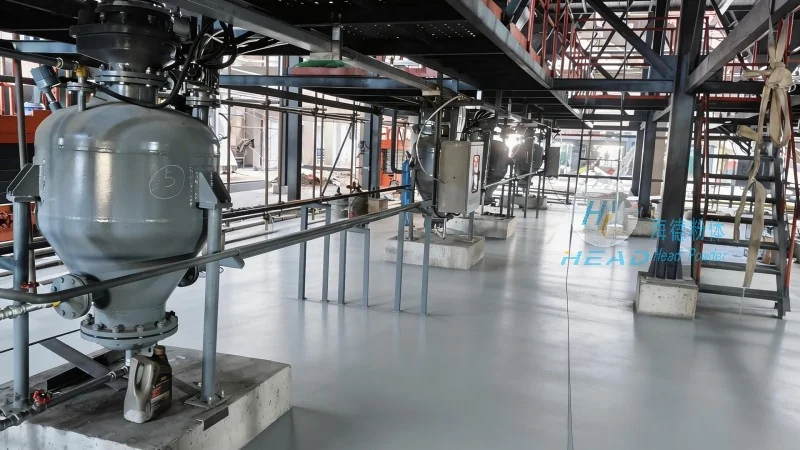
2. Pressure Drop and Velocity: The velocity of the gas stream and the pressure drop along the pipeline are critical factors in pneumatic conveying. The velocity must be high enough to keep the particles suspended in the gas stream but not so high as to cause excessive wear on the pipeline or equipment. The pressure drop is influenced by the pipeline length, diameter, and the number of bends. Proper sizing of the pipeline and the use of smooth bends can minimize pressure losses and reduce energy consumption.
3. Abrasion Resistance: Zircon sand is abrasive, which can cause wear on the conveying equipment and pipeline. The design must incorporate materials that are resistant to abrasion, such as stainless steel or high-grade plastic. The pipeline and components are often lined with wear-resistant materials or coated with protective layers to extend their service life.
4. Temperature Considerations: Zircon sand may be heated during processing or handling, which can affect its properties and the performance of the conveying system. The design must consider the temperature of the material and the gas stream to ensure that the equipment can withstand the thermal conditions without deformation or damage.
5. System Integration and Layout: The layout of the pneumatic conveying system is crucial for its efficiency and cost-effectiveness. The system should be designed to minimize the length of the pipeline and the number of bends, as both factors increase pressure losses and energy consumption. The integration of the system with other processes, such as storage and processing, should be considered to ensure smooth operation and optimal material flow.
Applications and Benefits of Zircon Sand Powder Pneumatic Conveying
Zircon sand powder pneumatic conveying is widely used in various industries, including ceramics, glass, and refractory materials, where zircon sand is a key component. The benefits of this technology include:
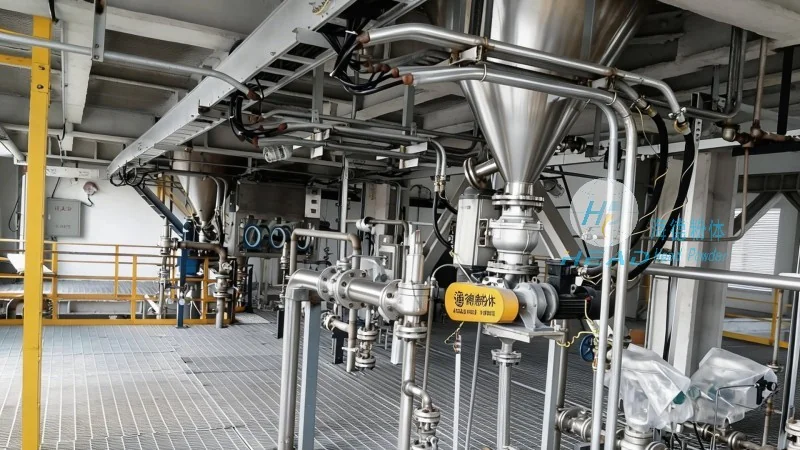
1. Cleanliness and Hygiene: Pneumatic conveying systems are enclosed, which prevents dust and particles from escaping into the environment. This is particularly important for zircon sand, which can be hazardous if inhaled. The enclosed system also protects the material from contamination, ensuring its quality and purity.
2. Flexibility and Scalability: Pneumatic conveying systems can be easily adapted to different production requirements. They can be scaled up or down to accommodate changes in production volume, and the layout can be modified to fit different plant configurations. This flexibility makes them suitable for both small-scale and large-scale operations.
3. Energy Efficiency: Compared to traditional mechanical conveying systems, pneumatic systems can be more energy-efficient, especially for long-distance transport. The use of compressed air or vacuum can reduce the need for mechanical components, such as belts or screws, which consume more energy.
4. Safety: Pneumatic conveying systems are generally safer than mechanical systems, as they eliminate the risk of material spillage or equipment failure. The enclosed design also reduces the risk of accidents and injuries.
Conclusion
Zircon sand powder pneumatic conveying is an efficient and reliable method for transporting zircon sand, a critical raw material in many industrial applications. The design of such systems is based on several key principles, including the consideration of particle size, pressure drop, abrasion resistance, and system layout. By integrating the right components and following these design principles, manufacturers can ensure that their zircon sand is transported safely, cleanly, and efficiently. Companies like Shandong HeadPowder Engineering Co., Ltd., based in China, specialize in designing and manufacturing pneumatic conveying systems tailored to the unique needs of zircon sand and other bulk materials. Their expertise in material handling and process engineering helps to optimize the performance of pneumatic conveying systems, ensuring that they meet the highest standards of efficiency and reliability.