With more than 10‑year industry experience, Shandong Headpowder delivers full‑service pneumatic‑conveying systems and blowers, undertaking nationwide turn‑key powder‑handling projects.
Calcium chloride is a widely used chemical in various industrial applications, and the efficient handling of this material often requires specialized equipment. The calcium chloride pneumatic conveying system is a critical solution for transporting this substance safely and effectively. This article explores the equipment involved in such systems and delves into the fundamental design principles that ensure optimal performance.
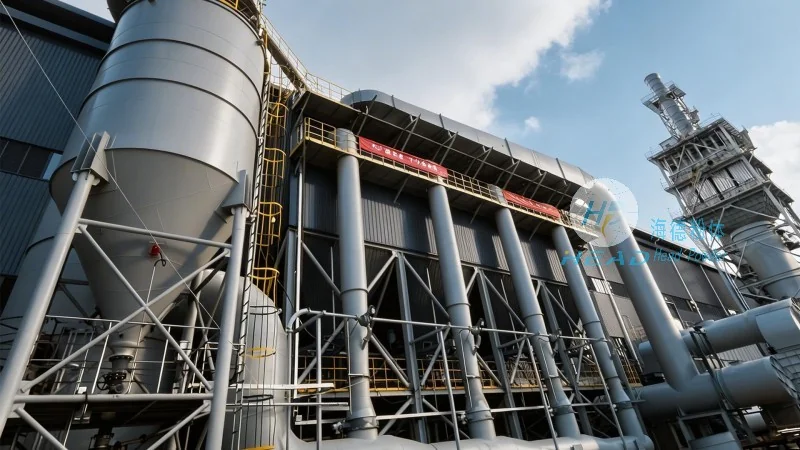
The calcium chloride pneumatic conveying system is a technology that uses air or other gases to transport solid materials, in this case, calcium chloride, through a pipeline. This method offers several advantages over traditional mechanical conveying systems, such as reduced equipment wear, lower maintenance costs, and the ability to handle materials in a dust-free environment. The system typically consists of several key components, including a material feeder, a conveyor line, a control system, and a dust collection unit. Each component plays a vital role in the overall operation of the system.
The material feeder is responsible for introducing calcium chloride into the conveying line. It can be a rotary valve, a screw feeder, or a hopper with a discharge valve, depending on the specific application and material characteristics. The feeder must be designed to handle the bulk density and flow properties of calcium chloride, ensuring a consistent and controlled feed rate. The conveyor line is the main pathway for the material, usually made of stainless steel or other corrosion-resistant materials to withstand the chemical properties of calcium chloride. The line is equipped with pressure vessels and valves to regulate the air flow and material movement. The control system manages the entire operation, monitoring pressure, flow rates, and other parameters to maintain optimal performance. Finally, the dust collection unit ensures that any airborne particles are captured and contained, improving safety and compliance with environmental regulations.
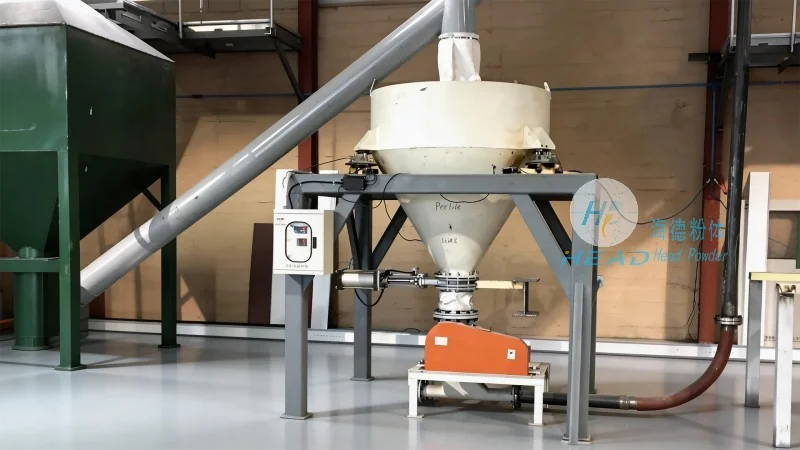
The design of a calcium chloride pneumatic conveying system is based on several key principles to ensure efficiency and reliability. The first principle is the selection of the appropriate air velocity, which must be high enough to keep the material in suspension but not so high as to cause excessive pressure drops or equipment wear. The air velocity is typically determined by the material's properties, such as its bulk density and particle size. The second principle is the proper sizing of the conveyor line, which must be large enough to accommodate the material flow without causing blockages or excessive pressure losses. The line diameter and length are critical factors that affect the system's performance. The third principle is the use of appropriate materials for the components, such as stainless steel or corrosion-resistant alloys, to prevent degradation from the calcium chloride. Additionally, the system must be designed with safety features, including pressure relief valves and dust collection systems, to protect operators and the environment.
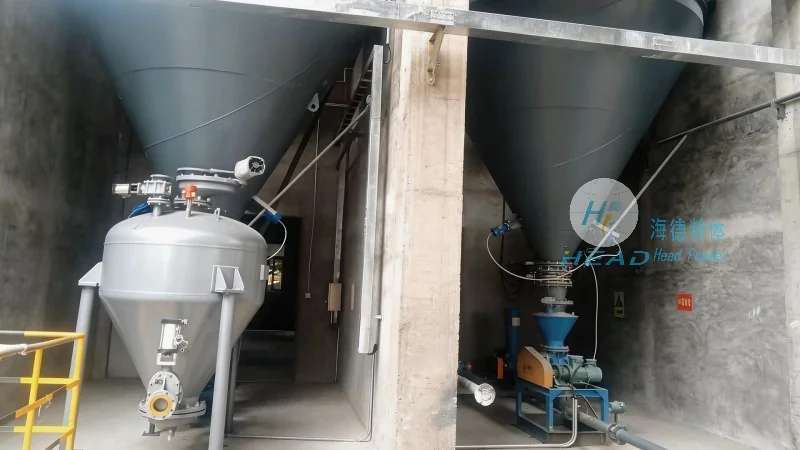
The calcium chloride pneumatic conveying system is used in various industries, including construction, agriculture, and chemical processing. In construction, it is used to transport calcium chloride for de-icing and road treatment. In agriculture, it is used as a soil conditioner and a source of calcium for plants. In chemical processing, it is used as a raw material for various products, such as antifreeze and dehydrating agents. The benefits of using this system include improved safety due to the enclosed conveying process, reduced material waste due to minimal spillage, and increased efficiency due to the ability to transport materials over long distances without the need for intermediate storage. The system also offers flexibility in terms of layout, as it can be installed in various configurations to suit the specific needs of the application.
In conclusion, the calcium chloride pneumatic conveying system is a sophisticated piece of equipment designed to handle calcium chloride efficiently and safely. The system's design is based on several key principles, including the selection of appropriate air velocity, proper line sizing, and the use of corrosion-resistant materials. The system offers numerous benefits, including improved safety, reduced waste, and increased efficiency. As a leading manufacturer in this field, Shandong HeadPowder Engineering Co., Ltd. specializes in providing high-quality calcium chloride pneumatic conveying systems tailored to the specific needs of various industries. With their expertise and commitment to quality, they ensure that their systems meet the highest standards of performance and reliability.

 Shandong Headpowder Engineering Co., Ltd.
 156-6277-7102(Manager Zhang)
  0531-83386006
  Zhangqiu District, Jinan City, Shandong Province, China
telephone
WeChatconsult
top