With more than 10‑year industry experience, Shandong Headpowder delivers full‑service pneumatic‑conveying systems and blowers, undertaking nationwide turn‑key powder‑handling projects.
Understanding the pneumatic conveying of anhydrous sodium sulfate is crucial for industries that rely on efficient material handling solutions. This process involves transporting the dry, crystalline form of sodium sulfate using air or gas as the conveying medium. The design principles behind such systems are engineered to ensure optimal performance, safety, and cost-effectiveness.
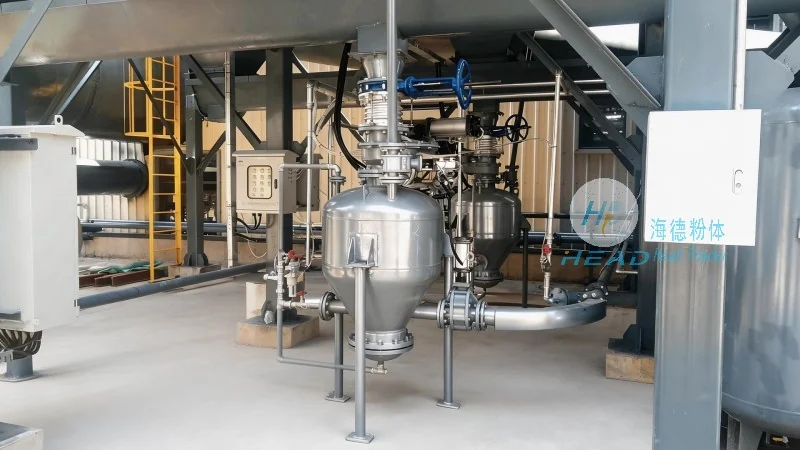
Anhydrous sodium sulfate, also known as anhydrous sulfate of soda, is a white crystalline solid commonly used in various industrial applications, including glass manufacturing, paper production, and chemical processing. Pneumatic conveying offers a non-contact method to move this material from one location to another, avoiding contamination and reducing the need for mechanical components that might wear out or cause product degradation.
The design of a pneumatic conveying system for anhydrous sodium sulfate must consider several critical factors to achieve reliable operation. First, the system must be capable of generating sufficient air velocity to lift and transport the material particles. The air velocity needs to be high enough to overcome the gravitational force acting on the particles but not so high as to cause excessive wear on the system components or degrade the material.
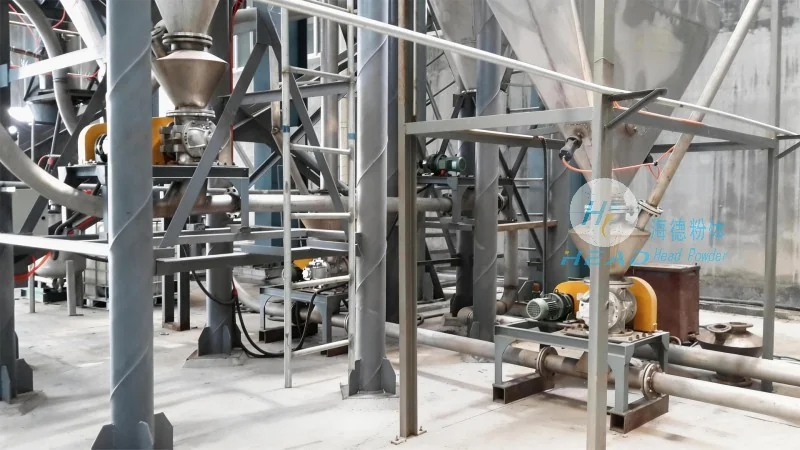
Second, the system design must incorporate appropriate equipment such as feeders, conveyors, and separation devices. The feeder is responsible for introducing the material into the conveying line at a controlled rate, ensuring a consistent flow. The conveyor itself, often a pipeline, must be sized and constructed to handle the material's properties, including its density and particle size distribution. Separation devices, like cyclones or filters, are essential for removing the material from the air stream and preventing dust accumulation in the system.
When designing a pneumatic conveying system for anhydrous sodium sulfate, the material's physical characteristics play a significant role. The crystalline nature of the material means it can be abrasive, which requires the use of durable materials for the conveyor components, such as stainless steel or specialized coatings. Additionally, the material's tendency to agglomerate or form lumps may necessitate the inclusion of a pre-processing step, like a rotary valve or a vibratory feeder, to break up the agglomerates and ensure a uniform flow.
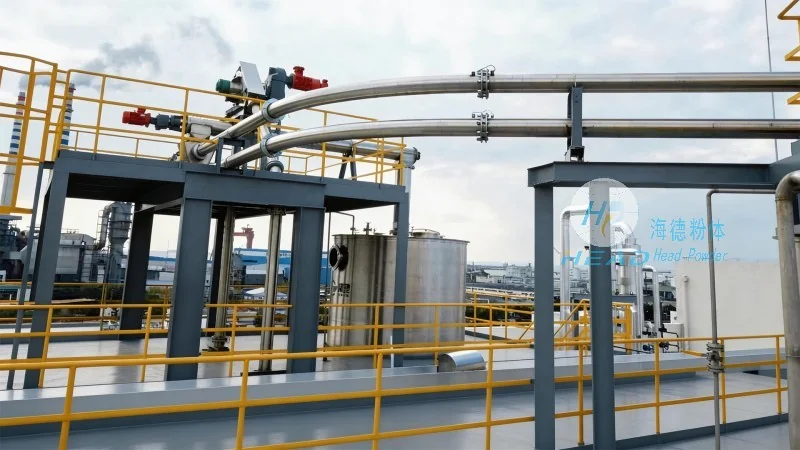
Efficiency is a key consideration in the design of pneumatic conveying systems. This includes minimizing energy consumption by optimizing air velocity and pressure, as well as reducing the risk of system blockages or clogging. Regular maintenance is also critical to ensure the longevity and reliability of the system. This involves cleaning the conveying lines, checking for wear on components, and replacing filters or seals as needed. Proper maintenance helps maintain the system's performance and prevents costly downtime.
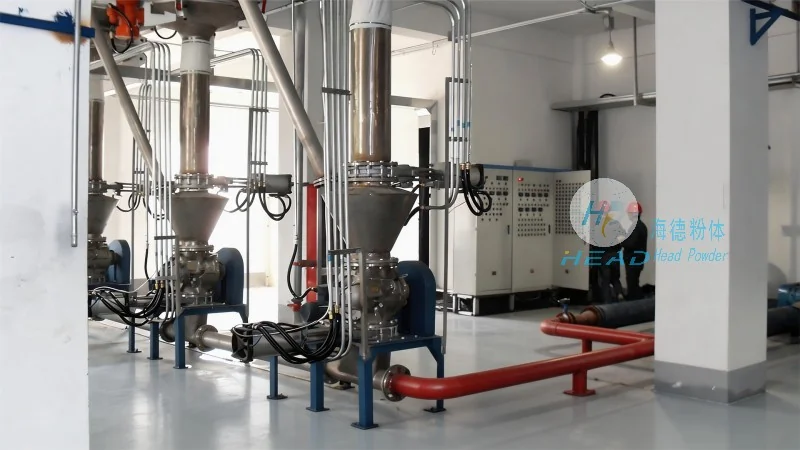
Pneumatic conveying of anhydrous sodium sulfate is widely used in various industrial settings. For instance, in glass manufacturing, the material is used as a flux to lower the melting point of silica, and pneumatic conveying allows for its precise delivery to the furnace. In chemical processing, the material is used as a drying agent or in the production of other chemicals, and the conveying system ensures that it is transported safely and efficiently to the processing units. The flexibility of pneumatic conveying makes it suitable for a range of applications where traditional mechanical conveying methods may be less effective or more costly.
In summary, the pneumatic conveying of anhydrous sodium sulfate is a sophisticated process that relies on well-designed systems to handle the material efficiently and safely. The design principles, including air velocity control, appropriate equipment selection, and material handling considerations, are essential for achieving optimal performance. By understanding these principles and implementing proper maintenance, industries can benefit from the advantages of pneumatic conveying, including reduced labor costs, improved product quality, and enhanced operational efficiency.

 Shandong Headpowder Engineering Co., Ltd.
 156-6277-7102(Manager Zhang)
  0531-83386006
  Zhangqiu District, Jinan City, Shandong Province, China
telephone
WeChatconsult
top