With more than 10‑year industry experience, Shandong Headpowder delivers full‑service pneumatic‑conveying systems and blowers, undertaking nationwide turn‑key powder‑handling projects.
CaCO₃ stone powder, commonly known as calcium carbonate powder, is a widely used industrial material. Its applications span across various sectors including papermaking, plastics, coatings, and construction. The efficient and reliable transportation of this fine powder is crucial for industrial processes. Pneumatic conveying has emerged as a preferred method for handling such materials due to its ability to transport powders without direct contact with mechanical components, reducing wear and contamination risks.
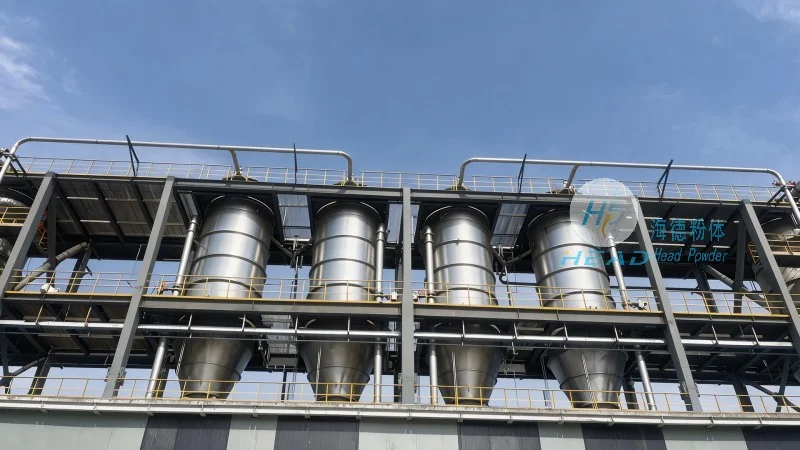
Pneumatic conveying systems utilize air or other gases to transport bulk materials through a pipeline. The fundamental principle involves creating a pressure differential that propels the powder particles along the pipeline. There are two primary types of pneumatic conveying: dilute-phase and dense-phase. Dilute-phase systems operate at higher velocities, suitable for long-distance transport, while dense-phase systems use lower velocities and higher pressure to move material more gently, minimizing product degradation.
The design of a pneumatic conveying system for calcium carbonate stone powder requires careful consideration of several key factors. First, the particle size and density of the powder are critical. Calcium carbonate powders typically have a fine particle size, which can lead to issues like dust accumulation and blockages if not properly managed. The system design must account for these characteristics to ensure smooth operation. Second, the system must be capable of handling the specific flow rates and pressure requirements. For example, the conveying velocity must be sufficient to prevent particle settling but not so high as to cause excessive wear on the system components.
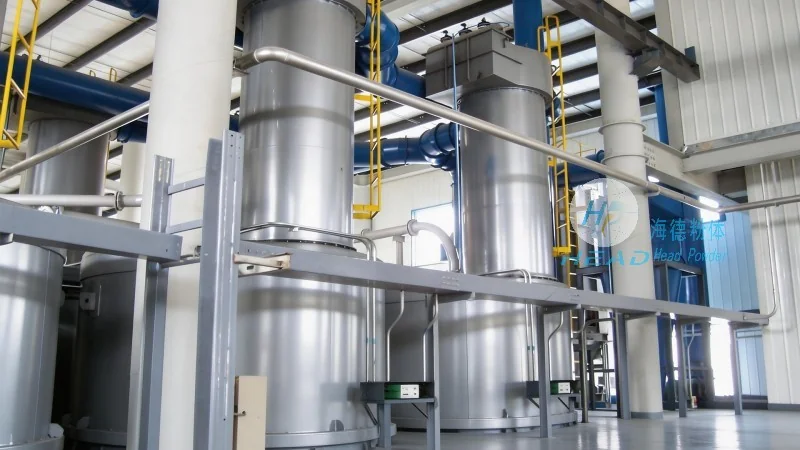
Several essential components make up a pneumatic conveying system for calcium carbonate stone powder. The feed hopper is the starting point, where the powder is loaded and fed into the system. The feeder, often a rotary valve or a screw feeder, controls the flow rate of the material into the pipeline. The pipeline itself is typically made of materials resistant to abrasion and corrosion, such as stainless steel or special alloys, to withstand the abrasive nature of calcium carbonate particles. The air compressor or blower provides the necessary air pressure to move the powder. Additionally, the system may include filters and cyclones to separate the powder from the air stream, ensuring that the material is collected efficiently and the air is cleaned before release.
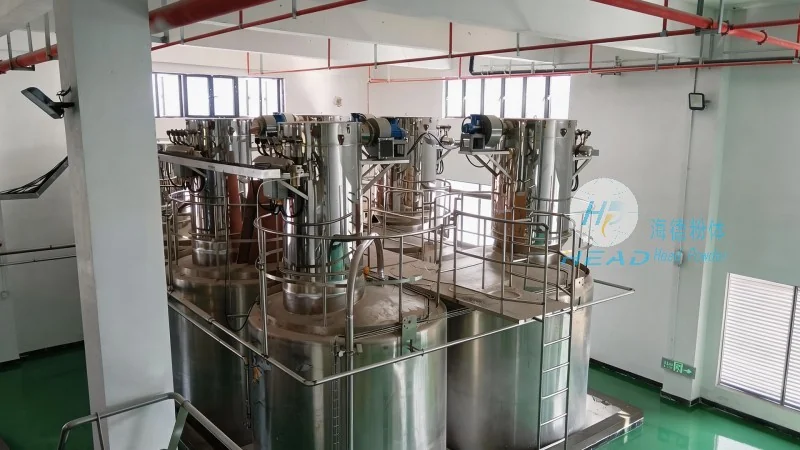
Pneumatic conveying offers several advantages when handling calcium carbonate stone powder. One of the most significant benefits is the elimination of direct contact between the material and mechanical parts, which reduces product contamination and wear. This is particularly important for food-grade or pharmaceutical-grade calcium carbonate powders where purity is paramount. Another advantage is the ability to transport materials over long distances without the need for multiple transfer points, improving operational efficiency. The system also allows for easy integration with other processing equipment, such as mixers or reactors, streamlining the overall production process.
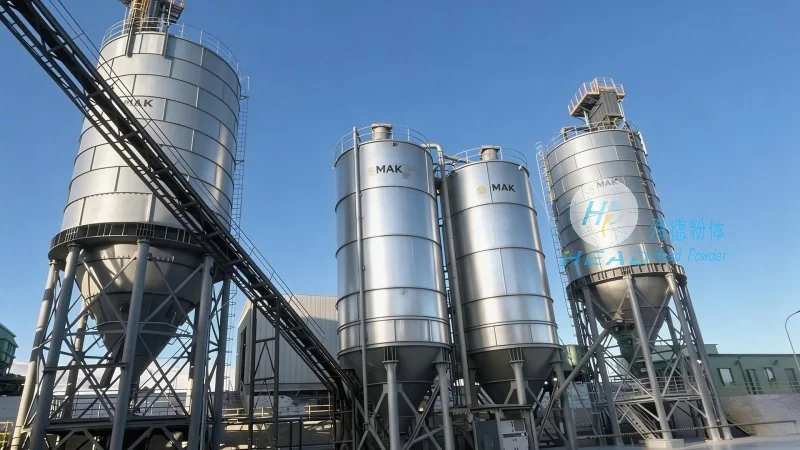
Proper maintenance and operation are vital to ensure the longevity and efficiency of a pneumatic conveying system for calcium carbonate stone powder. Regular cleaning of the pipeline and components is necessary to prevent buildup of powder and reduce the risk of blockages. The air compressor should be maintained to ensure consistent pressure and airflow. Monitoring the system for any signs of wear or inefficiency, such as increased pressure drop or reduced flow rate, is essential for early detection and corrective action. Additionally, the system should be designed with safety features to prevent dust explosions, which is a critical consideration for handling fine powders like calcium carbonate.
In conclusion, pneumatic conveying is an effective and reliable method for transporting calcium carbonate stone powder. The design principles, which include careful consideration of particle characteristics, system components, and operational parameters, are crucial for achieving optimal performance. By understanding these principles and implementing appropriate system design, industrial facilities can ensure efficient and safe handling of calcium carbonate powders, enhancing overall productivity and product quality.

 Shandong Headpowder Engineering Co., Ltd.
 156-6277-7102(Manager Zhang)
  0531-83386006
  Zhangqiu District, Jinan City, Shandong Province, China
telephone
WeChatconsult
top