With more than 10‑year industry experience, Shandong Headpowder delivers full‑service pneumatic‑conveying systems and blowers, undertaking nationwide turn‑key powder‑handling projects.
Denitration urea, also known as reduced nitrogen fertilizer, is a critical component in modern agricultural and industrial applications. The efficient transportation of this material from production sites to storage or application points is essential for maintaining operational efficiency and product quality. Pneumatic conveying systems, particularly those designed for urea, offer a reliable solution to this challenge. This article explores the concept of denitration urea pneumatic conveying and delves into the fundamental design principles that underpin such systems.
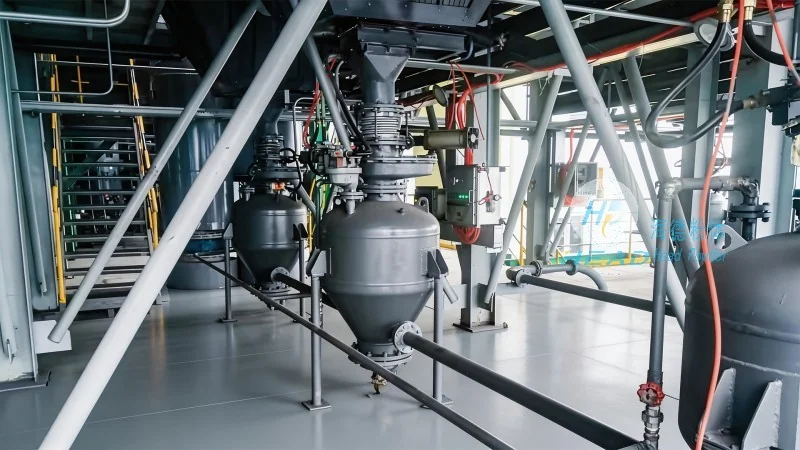
Pneumatic conveying involves the movement of bulk materials through a pipeline using a gas stream, typically air or other gases. In the context of denitration urea, this technology is employed to transport the granular fertilizer safely and effectively. The process relies on the creation of a pressure differential or the use of vacuum to move the material. There are two primary types of pneumatic conveying: pressure and vacuum systems. Pressure systems use compressed air to push the material, while vacuum systems use a vacuum to pull it. The choice between these depends on factors such as the distance to be covered, the material's properties, and the required flow rate.
The design of a denitration urea pneumatic conveying system requires careful consideration of several key principles to ensure optimal performance. First, the system must be able to handle the specific physical properties of denitration urea, including its particle size, density, and flow characteristics. The material's tendency to agglomerate or clog the pipeline is a significant concern, and the design must incorporate features to prevent this, such as proper hopper design and the use of air classifiers or cyclones. Second, the system must maintain the material's quality and prevent degradation. This involves controlling the temperature and pressure within the pipeline to avoid moisture absorption or chemical changes. Third, the system must be energy-efficient and cost-effective. This is achieved through the selection of appropriate air velocities, pipeline diameters, and the use of efficient air compressors or vacuum pumps.
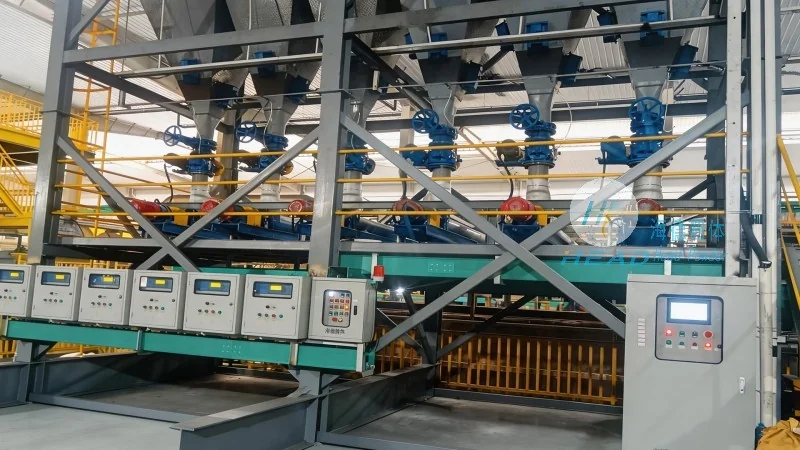
A typical denitration urea pneumatic conveying system consists of several key components. The primary components include a hopper or feeder to store and feed the material, a conveyor line (pipeline) to transport the material, a blower or vacuum pump to provide the necessary air pressure or vacuum, and a receiver or silo to store the material at the destination. Additional components may include air classifiers or cyclones to separate the material from the air stream, filters to clean the air, and control systems to regulate the flow and pressure. The hopper design is particularly important as it must prevent material bridging and ensure a consistent feed rate. The conveyor line is typically made of materials such as stainless steel or plastic to resist corrosion and abrasion from the urea particles. The blower or vacuum pump must be capable of providing the required air volume and pressure to move the material through the pipeline at the desired flow rate.
There are several advantages to using pneumatic conveying for denitration urea. First, it is a closed system, which helps to prevent dust emissions and contamination of the material. This is particularly important for denitration urea, which can be hygroscopic and prone to absorbing moisture from the air. Second, pneumatic conveying systems are relatively simple to install and maintain compared to other bulk material handling methods. Third, they can be easily integrated with other processes, such as storage and packaging. Fourth, they offer high flexibility in terms of the distance and layout of the conveyor line. Finally, they can be designed to handle a wide range of flow rates, from low to high, making them suitable for various applications.
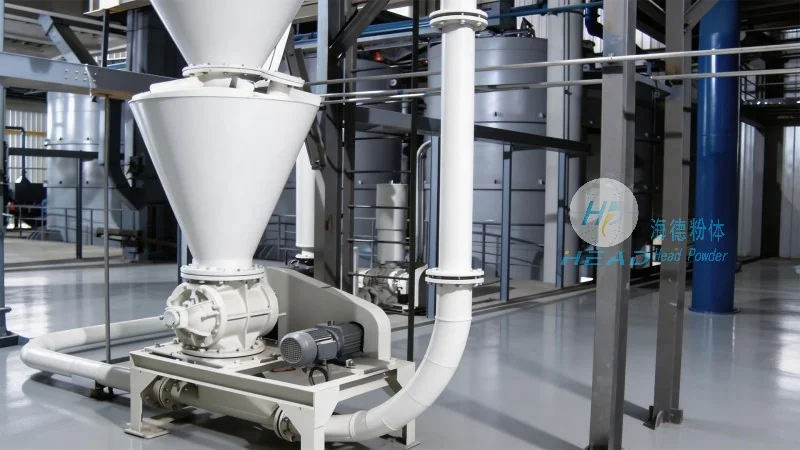
When designing and installing a denitration urea pneumatic conveying system, several factors must be considered. First, the system must be designed to handle the specific characteristics of denitration urea, including its particle size distribution, moisture content, and flowability. Second, the system must be able to handle the potential for material clogging or blockages, which can be caused by agglomeration or the presence of foreign objects. This requires the use of appropriate hopper designs, air classifiers, and cleaning mechanisms. Third, the system must be designed to minimize energy consumption and operating costs. This involves selecting the appropriate air velocity, pipeline diameter, and blower or vacuum pump size. Fourth, the system must be installed in a way that minimizes the risk of dust emissions and ensures compliance with environmental regulations. Finally, the system must be designed for easy maintenance and repair, with accessible components and clear operational instructions.
Denitration urea pneumatic conveying is a reliable and efficient method for transporting denitration urea from production sites to storage or application points. The design of such systems requires careful consideration of the material's properties, the required flow rate, and the distance to be covered. By incorporating the key design principles and components, a pneumatic conveying system can effectively handle denitration urea while maintaining its quality and preventing contamination. As a leading provider of engineering solutions, Shandong HeadPowder Engineering Co., Ltd. specializes in the design and manufacturing of pneumatic conveying systems tailored to the specific needs of denitration urea applications. With our expertise and commitment to quality, we help our clients optimize their material handling processes and improve overall operational efficiency.

 Shandong Headpowder Engineering Co., Ltd.
 156-6277-7102(Manager Zhang)
  0531-83386006
  Zhangqiu District, Jinan City, Shandong Province, China
telephone
WeChatconsult
top