With more than 10‑year industry experience, Shandong Headpowder delivers full‑service pneumatic‑conveying systems and blowers, undertaking nationwide turn‑key powder‑handling projects.
Bread flour, a fundamental ingredient in the baking industry, demands efficient and hygienic handling to preserve its quality and freshness. Pneumatic conveying systems have become a preferred solution for transporting such fine powders due to their ability to move materials without mechanical components that could introduce contamination or degrade the product. This article examines the concept of bread flour pneumatic conveying and explores the core design principles that ensure optimal performance.

Pneumatic conveying utilizes compressed air to transport bulk materials through a pipeline system. For bread flour, this method moves the powder from storage silos or processing areas to production lines or packaging stations. The process is categorized into dilute-phase and dense-phase conveying. Dilute-phase systems employ low air-to-material ratios, enabling high-speed transport over long distances with minimal pressure drops. Dense-phase systems use higher air-to-material ratios and lower velocities, offering slower, more controlled transport that reduces product degradation and prevents dusting.
Shandong HeadPowder Engineering Co., Ltd., a leading manufacturer based in Shandong, China, specializes in designing and implementing advanced pneumatic conveying solutions for the food industry. With extensive experience in handling sensitive materials like bread flour, the company develops systems that meet stringent hygiene standards and regulatory requirements. The company’s approach focuses on customizing solutions to match specific production needs, ensuring each system is optimized for efficiency, reliability, and product integrity. By partnering with HeadPowder, businesses benefit from tailored pneumatic conveying systems that enhance operational efficiency while maintaining the quality of their bread flour products.
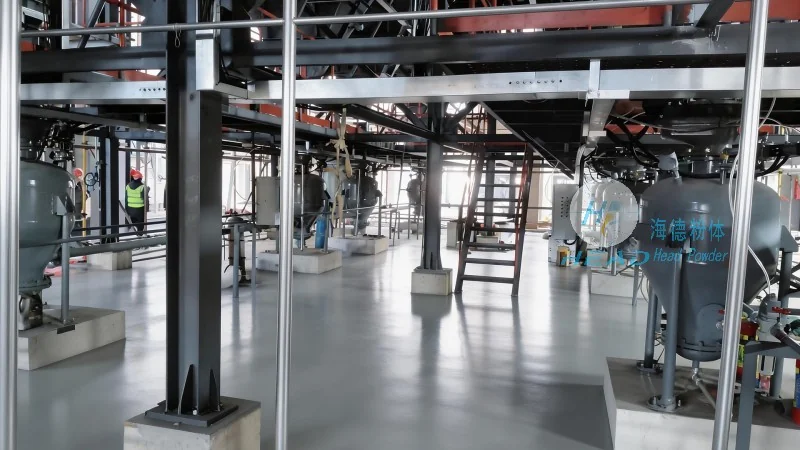
The success of a bread flour pneumatic conveying system relies on critical design principles addressing the unique properties of flour. These include material flow analysis, system pressure considerations, and equipment selection. Material flow analysis determines appropriate air velocity and pressure to suspend flour particles and prevent blockages or excessive wear. For fine, cohesive flour, consistent flow rates are essential to avoid agglomeration. System pressure directly impacts conveying distance and capacity; higher pressures enable longer distances but increase energy use and costs, requiring a balanced approach for efficiency and cost-effectiveness.
A typical bread flour pneumatic conveying system includes key components: a hopper or silo for storage, a feeder (rotary valve or mass flow meter) to control flow, a conveying line (stainless steel or corrosion-resistant) sized for flow rate and pressure drop, a filter/separator (cyclone or bag filter) to remove excess air and prevent product loss, and a dust collection system (fan and storage bin) to maintain air quality and comply with regulations. The hopper minimizes bridging and ensures consistent feed, while the feeder regulates material input. The conveying line is designed to handle expected flow and pressure. The filter removes fine particles, and the dust collection system recovers or stores flour.
Pneumatic conveying offers advantages over mechanical methods, including elimination of contaminating components like belts or augers. It provides precise flow control and dosing, reducing waste. The systems are more hygienic and easier to clean, critical for food safety compliance. Long-distance transport without intermediate storage points enhances efficiency and reduces spoilage risk. Flexibility to adapt to production changes makes it a cost-effective solution for baking businesses.
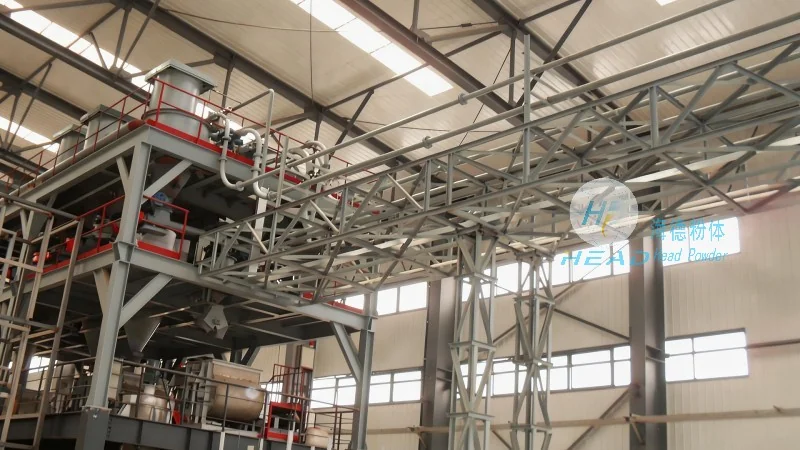
Challenges include product degradation from high velocities or pressure drops, and blockages from agglomeration or foreign materials. Mitigation involves selecting appropriate air velocity and pressure, regular maintenance, and anti-agglomerating additives. High energy consumption for long-distance conveying is addressed with energy-efficient components like variable frequency drives (VFDs) and high-efficiency fans. Proper design and maintenance maximize pneumatic conveying benefits.
Bread flour pneumatic conveying is an effective and hygienic method for transporting fine powders in the baking industry. Core design principles—material flow analysis, pressure management, and equipment selection—are vital for optimal performance and product integrity. Companies like Shandong HeadPowder Engineering Co., Ltd. develop customized solutions leveraging expertise to meet client needs. By understanding these principles and addressing challenges, businesses enhance efficiency, maintain product quality, and comply with regulations. As the demand for high-quality bread flour grows, advanced pneumatic conveying systems remain essential for competitiveness and market adaptation.

 Shandong Headpowder Engineering Co., Ltd.
 156-6277-7102(Manager Zhang)
  0531-83386006
  Zhangqiu District, Jinan City, Shandong Province, China
telephone
WeChatconsult
top