With more than 10‑year industry experience, Shandong Headpowder delivers full‑service pneumatic‑conveying systems and blowers, undertaking nationwide turn‑key powder‑handling projects.
Carbon black is a vital component in numerous industrial applications, and its efficient handling is crucial for maintaining production efficiency and product quality. Pneumatic conveying is a widely adopted method for transporting carbon black, offering benefits such as dust-free operation, layout flexibility, and the ability to handle fine powders like carbon black. This article examines the concept of carbon black pneumatic conveying and explores the key design principles that ensure effective and reliable material transport.
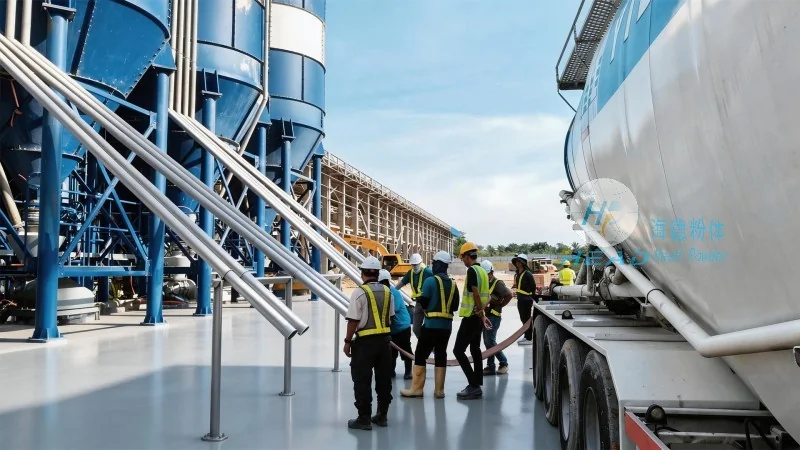
Pneumatic conveying systems utilize air or other gases to transport solid materials, including carbon black, through a pipeline. Unlike mechanical conveyors that rely on physical contact and moving parts, pneumatic systems depend on gas flow to move particles. This approach is especially suitable for carbon black due to its fine particle size and potential for dust generation. The primary objective of a carbon black pneumatic conveying system is to move the material from a source (e.g., storage silos or production lines) to a destination (e.g., processing equipment or storage tanks) while preserving the material's integrity and minimizing degradation.
A typical carbon black pneumatic conveying system comprises several essential components, each playing a critical role in operation. These components include the material source (such as a silo or hopper), the conveying line (usually made of stainless steel or other corrosion-resistant materials), air or gas supply equipment (like blowers or compressors), and the destination equipment (such as a mixer or storage tank). Additionally, the system may incorporate accessories like filters, cyclones, and pressure vessels to manage dust, control pressure, and ensure safe operation.
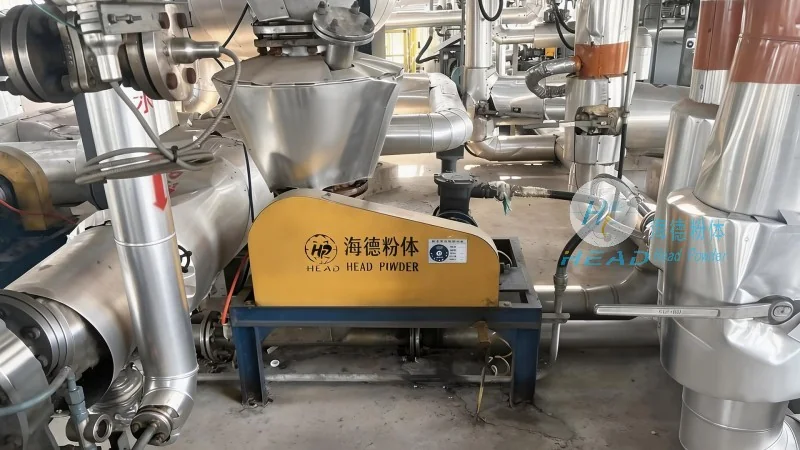
The design of a carbon black pneumatic conveying system must consider several factors to ensure optimal performance. The first principle is the selection of the appropriate conveying method, which can be categorized into dilute phase or dense phase systems. Dilute phase systems employ high air velocities to transport particles in a dispersed state, while dense phase systems use lower velocities and higher pressure to move material in a slurry-like state. The choice between these methods depends on the carbon black's properties, the distance to be conveyed, and the required flow rate.
A second critical design principle is the sizing of the conveying line and air supply equipment. The diameter and length of the pipeline must be carefully calculated to maintain the required air velocity and pressure. Insufficient air velocity can lead to particle settling or blockages, while excessive velocity can cause excessive wear on system components and increase energy consumption. The blower or compressor must be sized to provide adequate air volume and pressure to overcome the system's resistance and maintain the desired conveying rate.
Carbon black's fine particle size and tendency to agglomerate or form dust clouds require special attention during system design. To prevent blockages and ensure smooth flow, the system may include devices such as in-line mixers, vibrators, or air knives. These components help break up agglomerates and maintain a consistent particle size distribution. Additionally, the use of corrosion-resistant materials, such as stainless steel or PTFE-coated pipes, is essential to prevent material degradation and system wear caused by carbon black's acidic or abrasive properties.
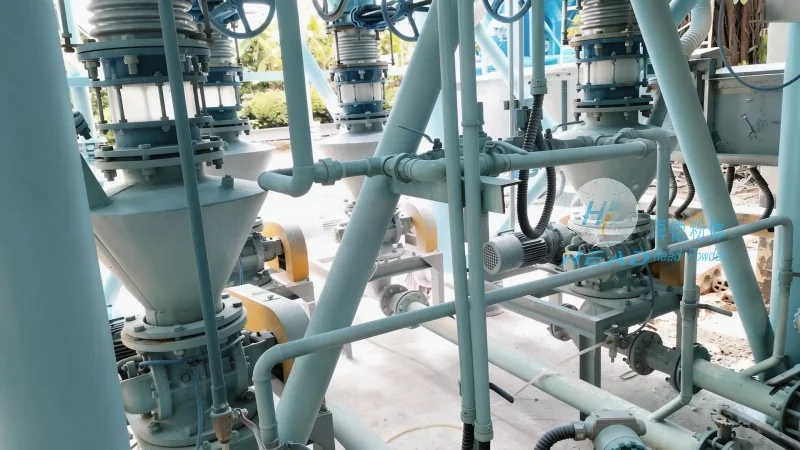
Effective carbon black pneumatic conveying also involves proper system integration and regular maintenance. The system must be designed to integrate seamlessly with existing production lines or storage facilities, ensuring minimal disruption to operations. Regular maintenance, including cleaning of filters, checking for leaks, and inspecting components for wear, is crucial to maintain system efficiency and prevent downtime. Proper maintenance also helps extend the system's lifespan and reduce long-term operational costs.
Shandong HeadPowder Engineering Co., Ltd., commonly known as HeadPowder, is a leading provider of engineering solutions for material handling and processing. With a focus on innovation and customer satisfaction, HeadPowder specializes in designing and manufacturing pneumatic conveying systems tailored to the specific needs of industries such as carbon black production and processing. The company's expertise in material handling technology ensures that clients receive reliable, efficient, and cost-effective solutions that meet their operational requirements. HeadPowder's commitment to quality and service has made it a trusted partner for businesses seeking to optimize their material transport processes.

 Shandong Headpowder Engineering Co., Ltd.
 156-6277-7102(Manager Zhang)
  0531-83386006
  Zhangqiu District, Jinan City, Shandong Province, China
telephone
WeChatconsult
top