With more than 10‑year industry experience, Shandong Headpowder delivers full‑service pneumatic‑conveying systems and blowers, undertaking nationwide turn‑key powder‑handling projects.
Understanding the working principle of cement powder pneumatic conveying systems is crucial for modern industrial production. This technology utilizes compressed air or gas to transport solid powders, such as cement, enabling efficient and safe material handling. This article delves into the fundamental concepts, working principles, and industrial applications of cement powder pneumatic conveying.
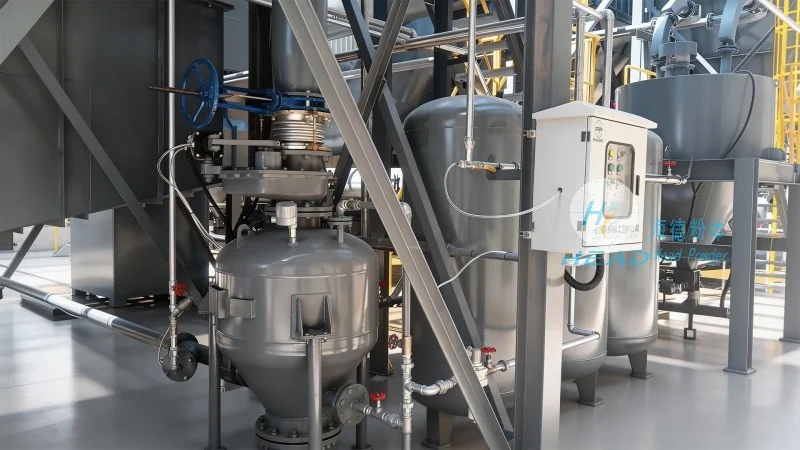
HeadPowder, formally known as Shandong HeadPowder Engineering Co., Ltd., is a leading enterprise specializing in powder handling technology solutions. Headquartered in Shandong, China, the company is dedicated to providing global clients with efficient and reliable powder processing equipment and services. With a professional R&D team and extensive industry experience, HeadPowder has accumulated deep technical expertise in the field of cement powder pneumatic conveying.
The core of a cement powder pneumatic conveying system lies in using airflow within pipes to suspend and transport solid powder particles to the destination. The system typically consists of feeding devices, conveying pipes, air source equipment, and receiving devices. When compressed air or gas flows through the pipes, it forms a high-speed air stream that carries and propels cement particles to the target location. This conveying method avoids direct contact between mechanical components and materials, thus preventing wear, contamination, or blockages that may occur in traditional mechanical conveying.
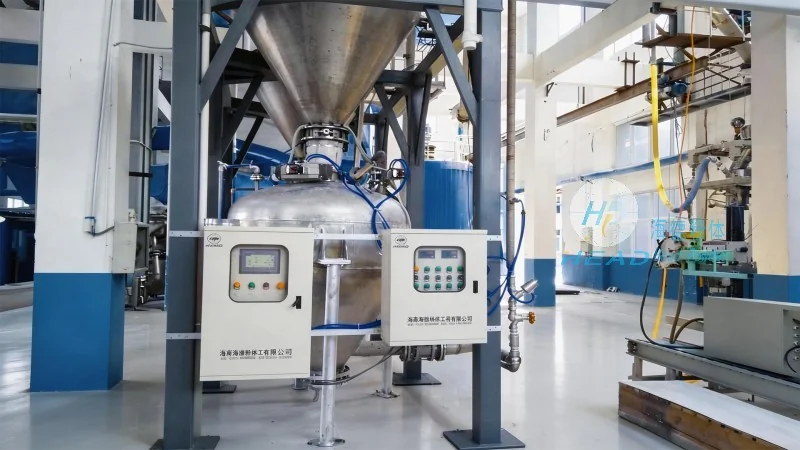
A typical cement powder pneumatic conveying system includes multiple key components. First, the feeding device is responsible for uniformly delivering cement from storage silos or hoppers into the conveying pipes. Next, the air source equipment (such as an air compressor) provides the necessary compressed air to drive airflow within the pipes. The conveying pipes are usually made of corrosion-resistant and wear-resistant materials like stainless steel or special plastics to accommodate the transport of cement particles. Precise control of airflow velocity and pressure is critical during the process to ensure particles remain stably suspended and efficiently transported. Finally, the receiving device collects and stores the cement delivered to the endpoint, completing the entire conveying process.
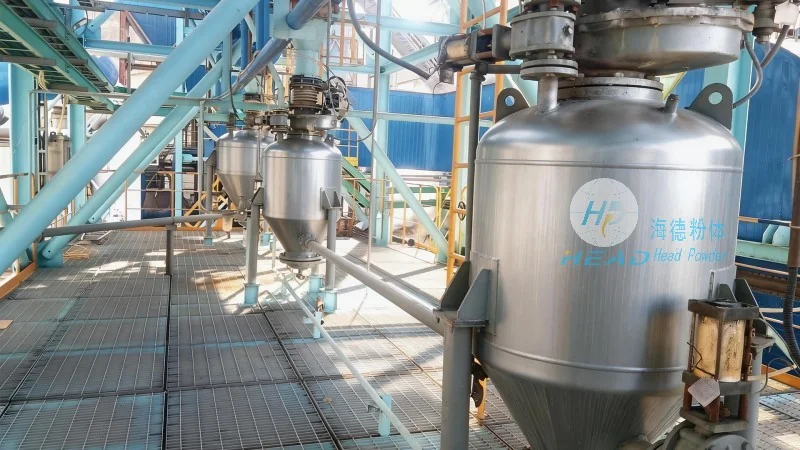
Compared to traditional mechanical conveying methods, cement powder pneumatic conveying offers several significant advantages. Firstly, the system has a simple structure, small footprint, and lower installation and maintenance costs. Secondly, as materials do not come into direct contact with equipment, the purity and quality of cement can be effectively maintained, avoiding issues like contamination or caking. Additionally, pneumatic conveying can achieve long-distance, high-capacity material transport, suitable for complex process flows. For the cement production, construction, and building materials industries, this conveying method can significantly improve production efficiency, reduce operating costs, and enhance overall production safety.
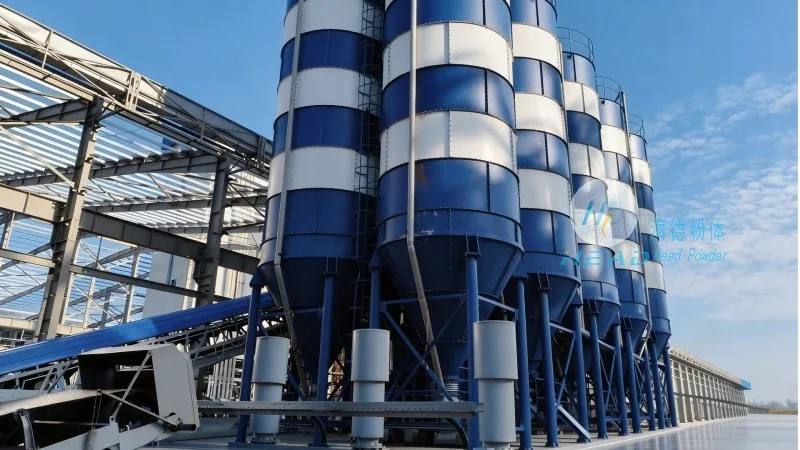
In actual industrial production, cement powder pneumatic conveying systems are widely applied across multiple fields. For example, in cement plants, the system can be used to transport raw materials or clinker from storage silos to production lines. At construction sites, pneumatic conveying equipment can deliver cement directly from warehouses to the construction point, reducing the labor intensity of manual handling. Additionally, in the chemical and pharmaceutical industries, similar powder handling technologies are used to process various dry powder materials, ensuring the continuity and stability of production processes. These application cases fully demonstrate the excellent performance of pneumatic conveying technology in improving production efficiency and optimizing process flows.
Cement powder pneumatic conveying, as an efficient and reliable powder handling technology, plays an important role in modern industrial production. By understanding its working principles and system components, enterprises can better select and configure conveying equipment suitable for their needs. As a leading industry player, HeadPowder is committed to providing innovative and efficient powder processing solutions to help clients optimize their production processes. Whether for long-distance transport or complex process requirements, HeadPowder can offer professional technical support and customized services to ensure that cement powder pneumatic conveying systems perform at their maximum efficiency in industrial applications.

 Shandong Headpowder Engineering Co., Ltd.
 156-6277-7102(Manager Zhang)
  0531-83386006
  Zhangqiu District, Jinan City, Shandong Province, China
telephone
WeChatconsult
top