

Classification and Application Analysis of Titanium Dioxide Pneumatic Conveying Systems
As a key material in the chemical industry, titanium dioxide (TiO₂) is widely used in coatings, plastics, paper, and other fields. The efficient and safe transportation of TiO₂ is crucial for production processes. Pneumatic conveying systems have become a popular choice for TiO₂ handling due to their advantages in preventing material contamination, reducing dust pollution, and improving production efficiency. This article provides a classification of TiO₂ pneumatic conveying systems and analyzes their practical applications, with a focus on the expertise of Shandong HeadPowder Engineering Co., Ltd., a leading enterprise in this field.
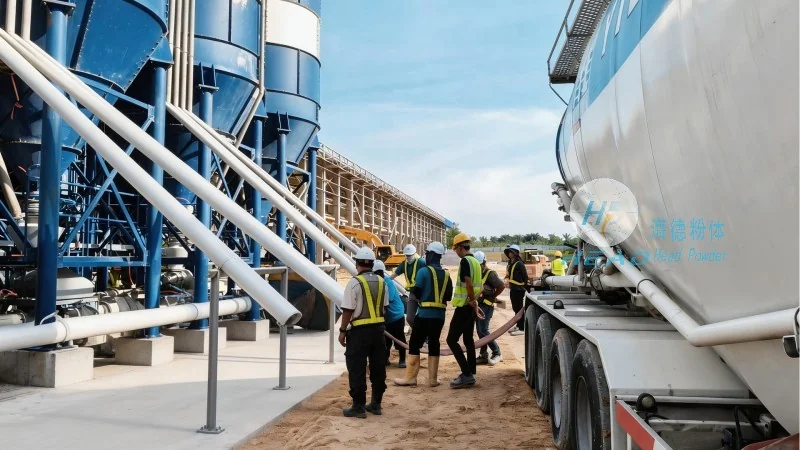
Classification of Titanium Dioxide Pneumatic Conveying Systems
Pneumatic conveying systems for TiO₂ can be broadly classified into two main categories: dilute-phase and dense-phase systems. Each type has distinct characteristics and is suitable for different production scenarios.
Dilute-Phase Pneumatic Conveying Systems
Dilute-phase systems are characterized by the material being transported in a dispersed state within the air stream. These systems typically operate at higher air velocities and lower material concentrations. They are commonly used for short-distance transportation and for materials with good fluidity. In the context of TiO₂, dilute-phase systems are often employed in applications where the material needs to be conveyed from a storage silo to a processing unit without significant pressure drops. The system design includes components such as a feeder, a venturi or eductor, and a receiver. The air flow rate is carefully controlled to maintain the material in a suspended state, ensuring smooth and continuous transport. Shandong HeadPowder Engineering Co., Ltd. specializes in designing dilute-phase systems that meet the specific requirements of TiO₂ handling, including considerations for material moisture content and particle size distribution.

Dense-Phase Pneumatic Conveying Systems
Dense-phase systems, also known as low-velocity or pressure-type systems, transport material in a more concentrated state, often with a higher material-to-air ratio. These systems operate at lower air velocities and higher pressures, which helps to minimize material degradation and prevent blockages. Dense-phase conveying is particularly suitable for transporting TiO₂ over longer distances or through complex piping networks. The system typically includes a positive displacement blower or compressor, a material feeder, and a receiver. The air is introduced at a controlled rate to maintain the material in a dense phase, ensuring stable and reliable transport. Shandong HeadPowder Engineering Co., Ltd. offers dense-phase solutions that are optimized for high-capacity TiO₂ transportation, providing enhanced safety and efficiency in industrial settings.
Application Analysis of Titanium Dioxide Pneumatic Conveying Systems
The application of TiO₂ pneumatic conveying systems varies across different industries and production scales. Understanding the specific needs of each application is essential for selecting the most appropriate system configuration.
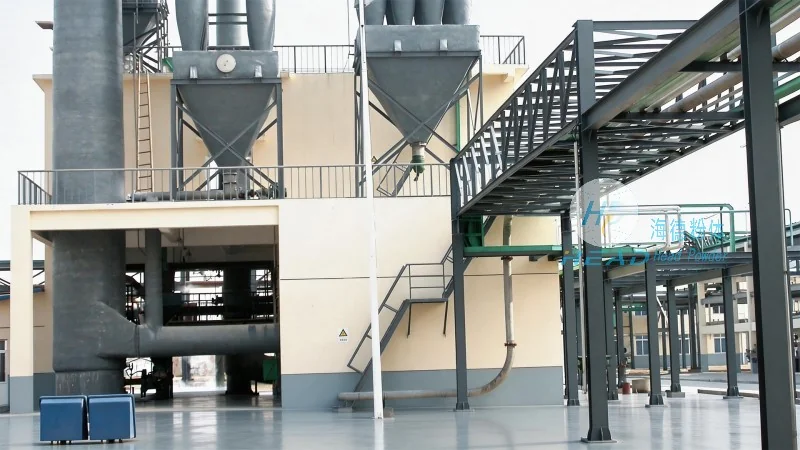
Application in Coatings and Plastics Industry
In the coatings and plastics industry, TiO₂ is used as a pigment and a UV absorber. The pneumatic conveying system must ensure that the material is delivered to the mixing or extrusion equipment without any contamination or degradation. Shandong HeadPowder Engineering Co., Ltd. has developed specialized dilute-phase systems for this industry, which are designed to handle fine TiO₂ powders with high precision. The systems are equipped with advanced filtration and cleaning mechanisms to maintain the purity of the material, which is critical for the quality of the final products. The company's expertise in material flow control and system integration has enabled the successful implementation of these systems in various coating and plastic manufacturing plants.
Application in Paper Industry
TiO₂ is widely used as a brightening agent in the paper industry to improve the whiteness and opacity of paper products. The pneumatic conveying system for TiO₂ in this sector must be capable of handling large volumes of material while maintaining low dust emissions. Dense-phase systems are often preferred in paper mills due to their ability to transport material over longer distances without significant pressure loss. Shandong HeadPowder Engineering Co., Ltd. has implemented dense-phase conveying solutions in several paper manufacturing facilities, ensuring efficient and clean transportation of TiO₂ from storage to the papermaking process. The systems are designed to meet the strict environmental regulations and to enhance the overall productivity of the paper production line.
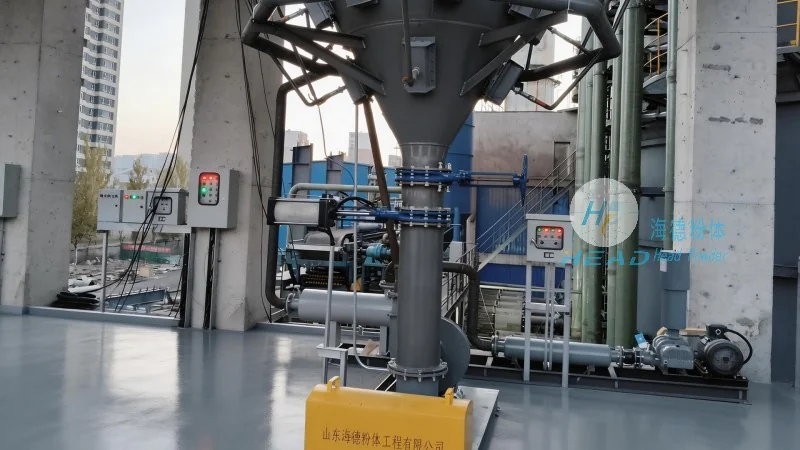
Application in Chemical Manufacturing
In chemical manufacturing, TiO₂ is processed into various forms, such as rutile and anatase, before being used in other applications. The pneumatic conveying system must be robust enough to handle the processing conditions, including high temperatures and corrosive environments. Shandong HeadPowder Engineering Co., Ltd. provides customized dense-phase systems for chemical processing plants, which are built with corrosion-resistant materials and equipped with temperature control features. These systems ensure the safe and efficient transport of TiO₂ during the chemical conversion and purification stages. The company's experience in handling aggressive materials has led to the successful deployment of these systems in chemical manufacturing facilities across China.
Advantages and Considerations in TiO₂ Pneumatic Conveying
Both dilute-phase and dense-phase pneumatic conveying systems offer significant advantages for TiO₂ transportation, including reduced labor costs, improved safety, and enhanced product quality. However, the selection of the appropriate system depends on several factors, such as the distance of transportation, the material characteristics, and the required flow rate. Shandong HeadPowder Engineering Co., Ltd. conducts thorough assessments of each project to determine the optimal system type and configuration. The company's engineers consider factors like material moisture content, particle size, and bulk density to ensure that the selected system meets the specific needs of the client. By leveraging their expertise in system design and material handling, Shandong HeadPowder Engineering Co., Ltd. has successfully delivered numerous TiO₂ pneumatic conveying systems that have improved the efficiency and reliability of production processes in various industries.