With more than 10‑year industry experience, Shandong Headpowder delivers full‑service pneumatic‑conveying systems and blowers, undertaking nationwide turn‑key powder‑handling projects.
Arsenic trioxide (As₂O₃), also known as arsenic(III) oxide, is a highly toxic and hazardous substance commonly used in industrial applications such as pharmaceuticals, metal processing, and chemical synthesis. The safe and efficient transportation of this material is critical due to its health risks and regulatory requirements. Pneumatic conveying systems offer a reliable method for handling As₂O₃, with two primary configurations: negative pressure (or vacuum) and positive pressure systems. This article provides a detailed analysis of both approaches, highlighting their operational principles, advantages, limitations, and practical applications.
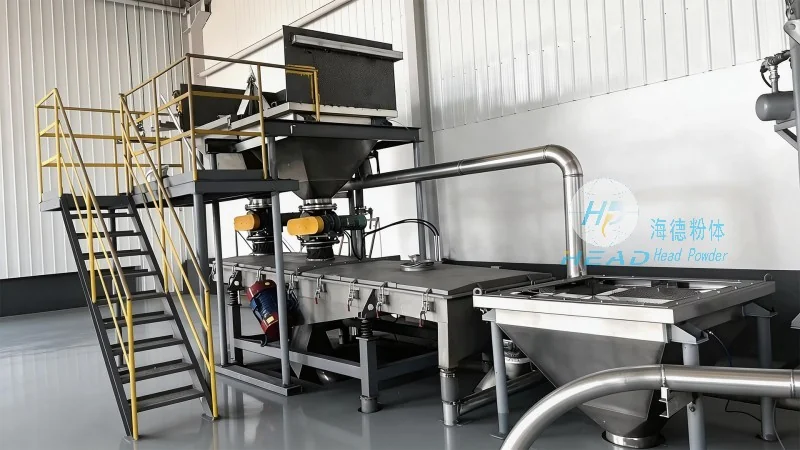
Negative pressure systems operate by creating a vacuum at the receiving end, drawing material from the source into the conveying line. The system uses a vacuum pump to maintain the low pressure, which pulls the material through the pipeline. This method is particularly suitable for applications where the material is to be transferred from a lower elevation or when the receiving point is located at a higher elevation than the source. The vacuum also helps in controlling dust emissions, as the material is drawn into the system rather than being expelled into the environment.
Key components of a negative pressure system include a vacuum pump, a hopper or feeder at the source, a filter to capture any airborne particles, and a discharge valve at the receiving end. The system's design must consider the material's flow properties, such as its density, moisture content, and particle size, to ensure smooth and continuous conveying. For As₂O₃, which can be fine and powdery, the filter is crucial to prevent clogging and maintain system efficiency. The vacuum level is typically adjusted to match the material's specific gravity and the pipeline length, ensuring that the material is conveyed without excessive pressure drops or blockages.
Advantages of negative pressure systems include lower energy consumption compared to positive pressure systems, as the vacuum pump operates at a lower pressure. They are also less likely to cause dust explosions due to the inward flow of material, making them safer for hazardous materials like As₂O₃. However, negative pressure systems have limitations, such as the need for a sealed receiving container to maintain the vacuum and the potential for backflow if the vacuum pump fails. Additionally, the system's capacity is limited by the vacuum pump's power and the pipeline's diameter, which may not be sufficient for high-volume applications.
Positive pressure systems, on the other hand, use a blower or compressor to generate pressure at the source, pushing the material through the pipeline. The system operates by forcing air or a carrier gas (often air) through the material, creating a high-pressure environment that propels the material to the receiving end. This method is ideal for applications where the source is at a higher elevation than the receiving point, as the pressure pushes the material downward. Positive pressure systems are generally more robust and can handle higher material flow rates compared to negative pressure systems.

Key components of a positive pressure system include a blower, a hopper or feeder, a pipeline with appropriate diameter and length, and a discharge valve at the receiving end. The blower's capacity and pressure rating are critical factors, as they determine the system's conveying capacity. For As₂O₃, which is often in a fine powder form, the system must be designed to prevent particle segregation and caking. The carrier gas velocity must be maintained above the material's minimum fluidization velocity to ensure that the material remains suspended and conveyed efficiently.
Advantages of positive pressure systems include higher conveying capacities and the ability to handle longer pipeline distances. They are also more flexible in terms of layout, as the source and receiving points can be located at different elevations without requiring complex vacuum systems. However, positive pressure systems have higher energy consumption due to the continuous operation of the blower, and they pose a higher risk of dust explosions if the system is not properly vented or if the material is ignited. The system also requires regular maintenance to prevent clogging and ensure consistent performance.
When selecting between negative and positive pressure pneumatic conveying systems for As₂O₃, several factors must be considered. The primary considerations include the material's properties, the distance and elevation between the source and receiving points, the required conveying capacity, and safety regulations. Negative pressure systems are generally preferred for applications where the receiving point is at a higher elevation or where dust control is a critical concern. They are also more energy-efficient for shorter distances and lower material flow rates. Positive pressure systems are better suited for high-volume applications, longer pipeline distances, and when the source is at a higher elevation.
For As₂O₃, which is a hazardous material, safety is paramount. Both systems must comply with local and international regulations regarding the handling of toxic substances. Negative pressure systems offer better dust containment, reducing the risk of exposure to workers and the environment. Positive pressure systems, while more powerful, require additional safety measures such as explosion-proof components and proper venting to mitigate dust explosion risks.
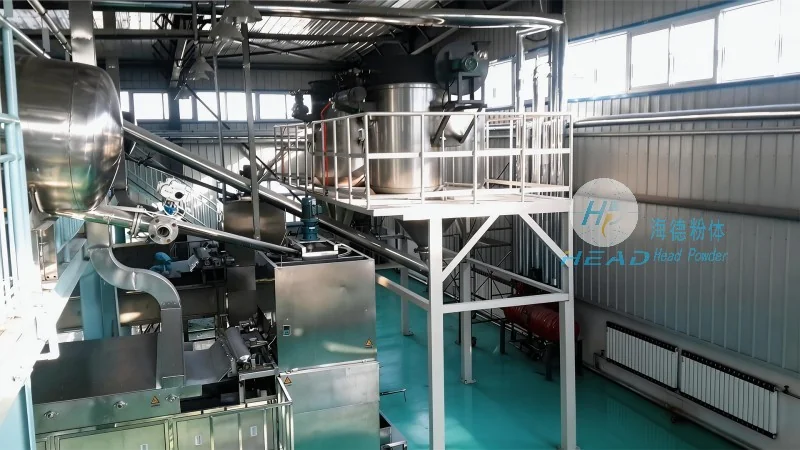
The choice of system also depends on the specific application. For example, in pharmaceutical manufacturing, where As₂O₃ is used as an intermediate, a negative pressure system may be preferred to minimize the risk of contamination and exposure. In metal processing, where large quantities of As₂O₃ are handled, a positive pressure system may be more appropriate due to its higher capacity and ability to handle longer distances.
HeadPowder Engineering, a leading provider of pneumatic conveying solutions, has successfully implemented both negative and positive pressure systems for As₂O₃ handling in various industrial settings. One notable case study involves a pharmaceutical plant in China that required the safe transfer of As₂O₃ from a storage silo to a processing unit. The plant opted for a negative pressure system due to the receiving unit's higher elevation and the need to minimize dust emissions. The system, designed and installed by HeadPowder, included a vacuum pump with a capacity of 100 m³/h, a stainless steel hopper with a filter, and a discharge valve with a dust collection system. The implementation resulted in a 20% reduction in material loss and a significant improvement in worker safety.
Another example is a metal processing facility in Shandong, China, where HeadPowder installed a positive pressure system to transport As₂O₃ from a raw material storage area to a smelting furnace. The system used a high-pressure blower with a capacity of 200 m³/h and a pipeline length of 500 meters. The positive pressure system allowed the facility to increase its production capacity by 30% while maintaining compliance with environmental regulations. The system's robust design and regular maintenance by HeadPowder ensured consistent performance and minimal downtime.
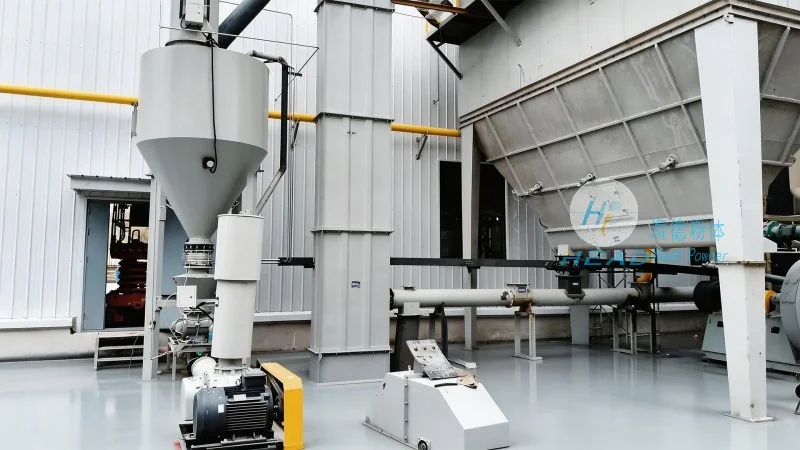
Implementing a pneumatic conveying system for As₂O₃ requires careful planning and consideration of several key factors. First, the material's properties must be thoroughly analyzed, including its particle size distribution, moisture content, and flowability. As₂O₃ is a fine powder with a high specific gravity, which can lead to clogging if not properly handled. The system design must account for these properties to ensure smooth conveying and prevent blockages.
Second, safety is a critical consideration. As₂O₃ is a toxic and potentially carcinogenic substance, and the system must be designed to minimize exposure to workers. This includes using sealed components, proper ventilation, and dust collection systems. The system must also comply with local regulations regarding the handling of hazardous materials, such as the Occupational Safety and Health Administration (OSHA) standards in the United States or the relevant regulations in China.
Third, the system's capacity and efficiency must be optimized. The pipeline diameter, length, and layout must be designed to minimize pressure drops and energy consumption. For example, using larger diameter pipelines for longer distances can reduce pressure losses and improve conveying efficiency. Regular maintenance of the system components, such as the vacuum pump or blower, is essential to ensure consistent performance and prevent breakdowns.
Fourth, the system's integration with existing facilities must be considered. The source and receiving points may need to be modified to accommodate the new conveying system. HeadPowder provides comprehensive engineering and installation services to ensure that the system integrates seamlessly with the existing infrastructure, minimizing disruption to production.

 Shandong Headpowder Engineering Co., Ltd.
 156-6277-7102(Manager Zhang)
  0531-83386006
  Zhangqiu District, Jinan City, Shandong Province, China
telephone
WeChatconsult
top