With more than 10‑year industry experience, Shandong Headpowder delivers full‑service pneumatic‑conveying systems and blowers, undertaking nationwide turn‑key powder‑handling projects.
For industrial applications involving the transport of powdered materials, efficient and reliable material handling is crucial. Among the various methods available, pneumatic conveying stands out as a versatile solution, especially for transporting pigment granules. This article explores the principles and applications of pneumatic conveying systems designed for pigment granules, highlighting how air flow can be utilized to move these materials with high efficiency and minimal disruption.
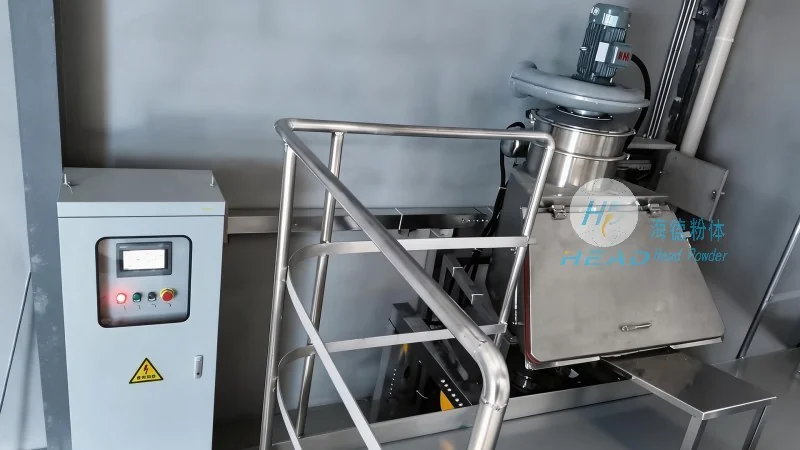
HeadPowder, or Shandong HeadPowder Engineering Co., Ltd., is a reputable company based in Shandong, China, specializing in the design, manufacturing, and implementation of advanced material handling systems. With a focus on innovation and customer-centric solutions, HeadPowder has established itself as a trusted partner for industries requiring precise and efficient transport of bulk materials, including pigment granules. The company's expertise lies in developing customized pneumatic conveying systems that meet the specific needs of clients, ensuring optimal performance and durability.
Pigment granules are finely processed powders used in various industries, such as plastics, coatings, and inks, to impart color and other properties to end products. These materials are typically dry, free-flowing, and require careful handling to prevent agglomeration or degradation. Traditional methods of transporting pigment granules, like belt conveyors or manual handling, often lead to material loss, contamination, and increased labor costs. Pneumatic conveying offers a solution by using air pressure to move the granules through a pipeline system, reducing the risk of contamination and ensuring a consistent flow rate.
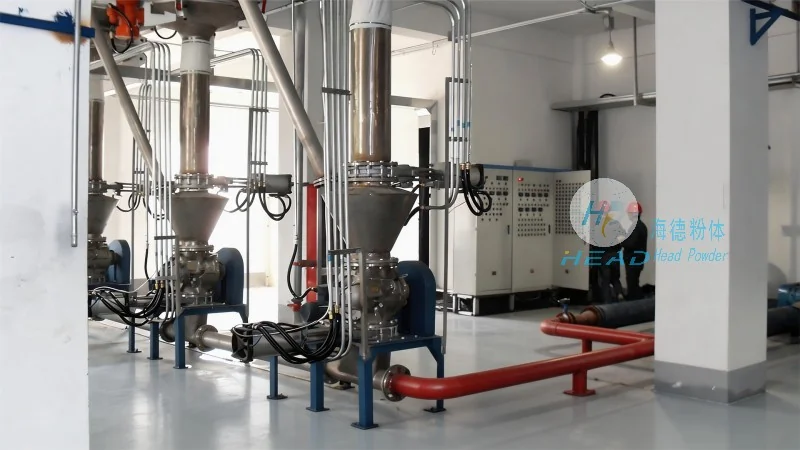
Pneumatic conveying systems operate on the principle of transporting solid materials in a gas stream. There are two main types of pneumatic conveying: pressure and vacuum systems. Pressure systems use compressed air to push the material through the pipeline, while vacuum systems use a vacuum to draw the material into the system. For pigment granules, pressure systems are often preferred due to their ability to handle higher material loads and longer distances without significant pressure drop. The system typically consists of a hopper, a conveyor line, and a receiver, with the air flow controlled by a blower or compressor.
Several critical components are essential for the efficient operation of a pneumatic conveying system for pigment granules. These include: 1. Hopper: A container that holds the pigment granules and feeds them into the conveyor line. The hopper is designed to minimize material buildup and ensure a consistent flow. 2. Blower/Compressor: The heart of the system, it provides the necessary air pressure to move the granules through the pipeline. The choice of blower depends on the material characteristics, such as particle size and density. 3. Conveying Line: The pipeline through which the granules and air travel. It is typically made of materials like stainless steel or plastic to prevent corrosion and material contamination. 4. Control Valves: Used to regulate the air flow and pressure, ensuring smooth operation and preventing system overloading. 5. Receiver: The final container where the transported pigment granules are collected. The receiver is designed to separate the material from the air and prevent dust emissions.

Implementing a pneumatic conveying system for pigment granules offers several advantages over traditional methods. First, it provides a closed system, which reduces the risk of dust contamination and environmental pollution. This is particularly important for pigments used in food or pharmaceutical applications, where purity is paramount. Second, pneumatic conveying allows for precise control over the material flow rate, ensuring consistent quality in the end product. Third, the system is compact and can be integrated into existing production lines, minimizing space requirements. Fourth, it reduces labor costs by automating the material handling process, and fifth, it minimizes material degradation due to reduced friction and exposure to air.
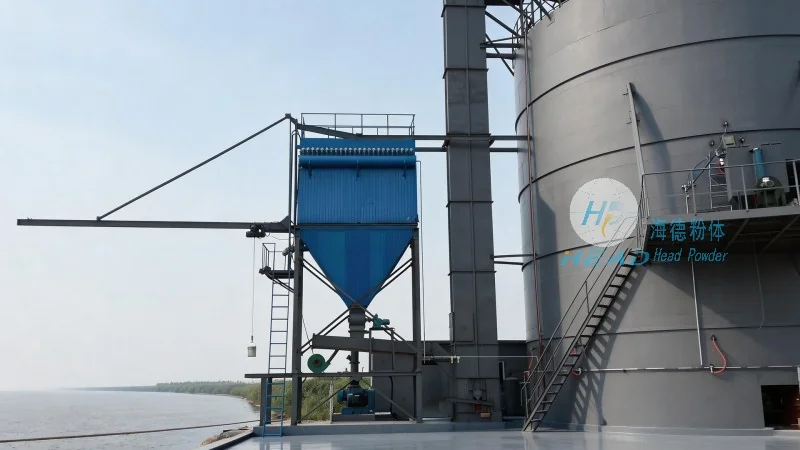
Pneumatic conveying systems for pigment granules are widely used in various industries. In the plastics industry, they are used to transport colorants to extrusion lines, ensuring uniform color distribution in the final products. In the coatings industry, they help in delivering pigments to mixing and application equipment, maintaining color consistency. In the inks industry, pneumatic conveying is used to transport pigments to printing presses, ensuring high-quality prints. Additionally, these systems are used in the food and pharmaceutical industries for transporting food-grade pigments, where hygiene and purity are critical.
HeadPowder offers customized pneumatic conveying solutions tailored to the specific needs of each client. The company considers factors such as material properties, production volume, and distance to design a system that maximizes efficiency and minimizes costs. Regular maintenance is essential to ensure the longevity and performance of the system. This includes checking the blower for proper operation, cleaning the conveying line to prevent clogging, and inspecting the control valves for any wear and tear. By adhering to a regular maintenance schedule, clients can ensure that their pneumatic conveying system operates at optimal levels, reducing downtime and maintenance costs.

 Shandong Headpowder Engineering Co., Ltd.
 156-6277-7102(Manager Zhang)
  0531-83386006
  Zhangqiu District, Jinan City, Shandong Province, China
telephone
WeChatconsult
top