With more than 10‑year industry experience, Shandong Headpowder delivers full‑service pneumatic‑conveying systems and blowers, undertaking nationwide turn‑key powder‑handling projects.
HeadPowder, a leading engineering firm based in Shandong, China, specializes in the design and implementation of efficient powder conveying systems tailored for industrial applications, particularly in the handling of fly ash from desulfurization and dust removal processes. This article provides a detailed introduction to the structure and operational principles of such systems, highlighting their critical role in modern industrial operations.
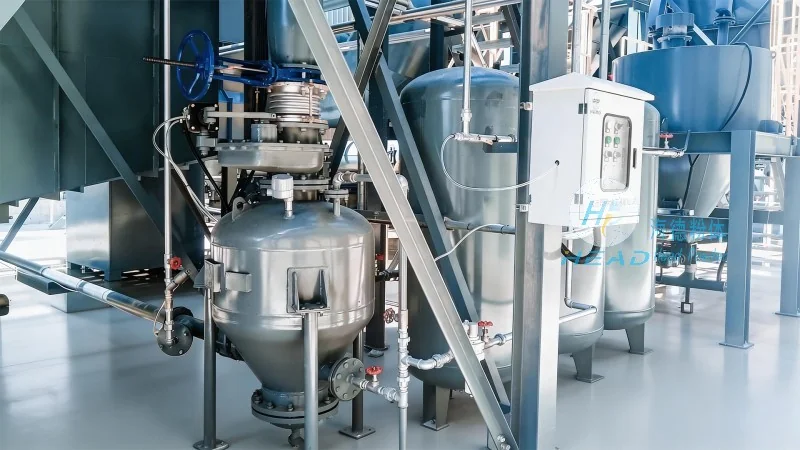
The fly ash powder conveying system for desulfurization and dust removal typically comprises several key components that work in tandem to ensure reliable and efficient material transport. These components include a hopper for material storage, a feeder mechanism to control the flow rate, a conveying pipeline (often equipped with air or mechanical components), and a discharge unit for delivering the ash to its final destination. Each component is engineered to handle the unique characteristics of fly ash, such as its fine particle size, moisture content, and potential for reactivity.
The structural design of the conveying system is optimized to minimize material degradation and ensure consistent performance. For instance, the hopper is often designed with a conical or wedge-shaped bottom to facilitate smooth material discharge, preventing blockages caused by agglomeration. The feeder, which may be a rotary valve or a screw conveyor, regulates the flow rate by adjusting the speed or position of the moving parts, ensuring a steady supply of ash to the conveying pipeline. The pipeline itself may utilize pneumatic or mechanical methods, with pneumatic systems employing compressed air to create a flow of ash particles through the duct, while mechanical systems rely on positive displacement pumps or screw conveyors to move the material.
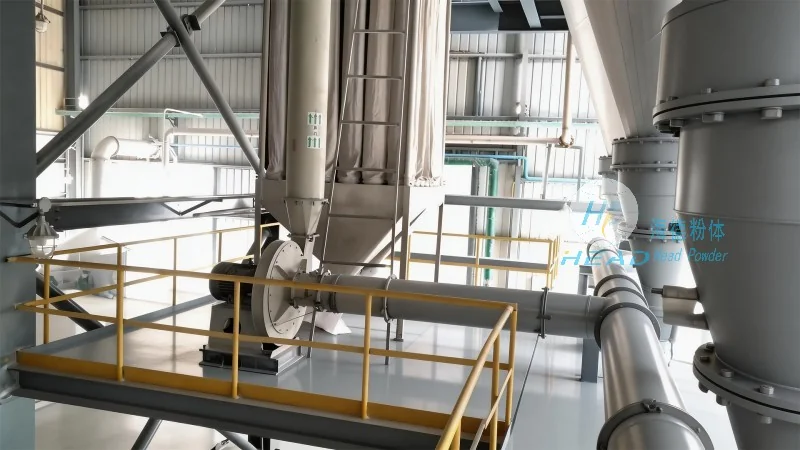
These systems offer several advantages in industrial settings, including high efficiency in material transport, reduced labor costs compared to manual handling, and improved safety by minimizing exposure to dust and airborne particles. They are commonly used in power plants, cement factories, and other facilities where large volumes of fly ash are generated. The reliability of the system, combined with its ability to handle varying ash characteristics, makes it a preferred solution for continuous operation and environmental compliance.
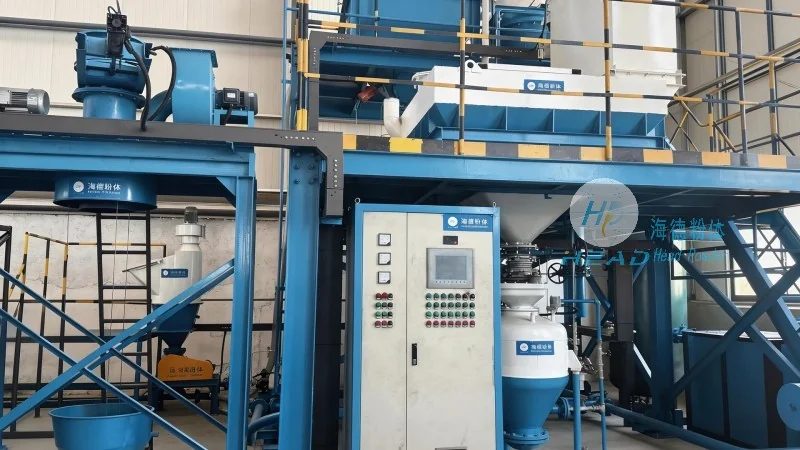
Several technical factors must be considered to ensure the optimal performance of the fly ash powder conveying system. These include the selection of appropriate materials for the hopper and pipeline to resist corrosion and abrasion from the ash particles, the maintenance of proper air pressure or mechanical force in pneumatic systems, and the regular cleaning of components to prevent clogging. Additionally, the system's design must account for the potential moisture content of the ash, as excessive moisture can lead to blockages and reduced conveying efficiency. Proper sealing and insulation of the pipeline are also crucial to prevent dust leakage and maintain operational safety.
HeadPowder's expertise in designing and manufacturing fly ash powder conveying systems for desulfurization and dust removal underscores the importance of reliable material handling in industrial processes. By integrating advanced structural designs and operational principles, these systems enhance efficiency, safety, and environmental compliance for facilities dealing with large volumes of fly ash. As a trusted partner in engineering solutions, HeadPowder continues to provide innovative and effective solutions tailored to the specific needs of its clients in Shandong and beyond.

 Shandong Headpowder Engineering Co., Ltd.
 156-6277-7102(Manager Zhang)
  0531-83386006
  Zhangqiu District, Jinan City, Shandong Province, China
telephone
WeChatconsult
top