With more than 10‑year industry experience, Shandong Headpowder delivers full‑service pneumatic‑conveying systems and blowers, undertaking nationwide turn‑key powder‑handling projects.
Plaster mortar, a fundamental material in construction, plays a crucial role in interior and exterior finishing. The efficiency and effectiveness of plaster mortar delivery directly impact the quality of construction projects. Among the various methods used to transport plaster mortar, several common approaches have been widely adopted in the industry. This article provides a detailed comparison of these common delivery methods, highlighting their characteristics, advantages, and limitations, with a focus on the expertise of Shandong HeadPowder Engineering Co., Ltd., a leading provider in the field.

Plaster mortar, composed of gypsum or other binders mixed with aggregates and water, is typically delivered to construction sites through different systems. The choice of delivery method depends on factors such as project scale, site conditions, material properties, and operational requirements. Common delivery methods include mechanical pumping, gravity-fed systems, and manual or semi-manual transport. Each method has its own set of benefits and challenges, which are essential to understand for optimal project execution.
HeadPowder, a prominent name in the plaster and construction materials sector, is headquartered in Shandong, China. With a strong commitment to innovation and quality, the company specializes in the production and supply of plaster mortar and related delivery solutions. By leveraging advanced technology and industry experience, HeadPowder aims to enhance the efficiency of plaster mortar transportation, ensuring high-quality results for construction projects worldwide.
One of the most widely used methods for plaster mortar delivery is the mechanical pumping system. This method utilizes pumps, such as piston or diaphragm pumps, to force the mortar through a pipeline to the application point. The mechanical pumping system offers several advantages, including high delivery pressure, consistent flow rates, and the ability to transport mortar over long distances without the need for manual handling. It is particularly suitable for large-scale projects where rapid and uniform application is required. However, the mechanical pumping system requires regular maintenance, proper calibration, and skilled operators to ensure optimal performance. Additionally, the initial investment and operational costs can be higher compared to other methods.
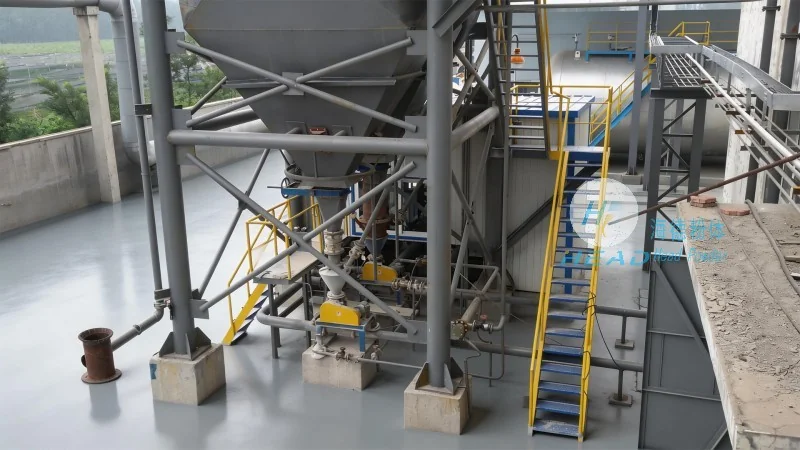
Gravity-fed systems rely on the natural force of gravity to transport plaster mortar from a storage tank or hopper to the work area. The mortar is typically stored in a elevated tank, and the flow is controlled by valves and regulators. This method is often used for smaller projects or in areas with limited access to power. The primary advantage of gravity-fed systems is their simplicity and low operational cost, as they do not require mechanical power. However, they are limited by the height of the storage tank and the distance to the application point. The flow rate is also dependent on the head pressure, which may not be sufficient for high-rise or complex structures. Furthermore, the system may be prone to clogging if the mortar consistency is not properly managed.
For smaller-scale or remote construction sites, manual and semi-manual transport methods are still in use. These methods include the use of buckets, wheelbarrows, or mortar boxes to carry the mortar from the mixing area to the work site. While these methods are cost-effective and do not require specialized equipment, they are labor-intensive and have several limitations. The manual transport of plaster mortar is physically demanding, leading to potential health and safety risks for workers. The consistency of the mortar may also vary due to manual handling, affecting the uniformity of the application. Additionally, the capacity of manual transport is limited, which can slow down the overall construction process, especially for large projects.
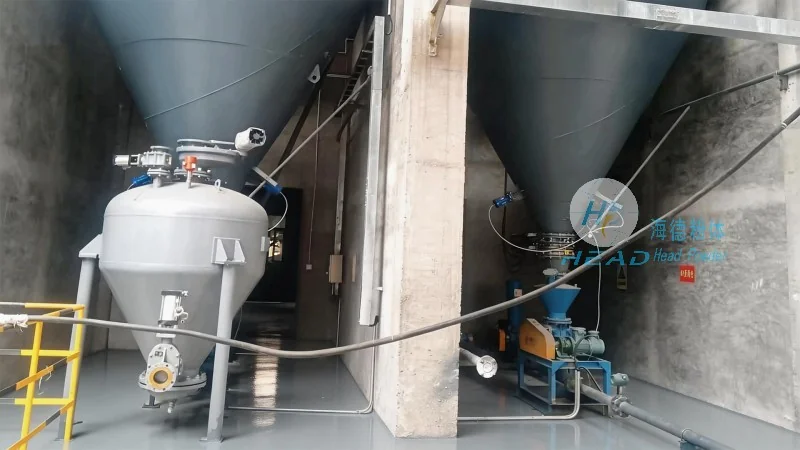
When comparing the mechanical pumping system, gravity-fed system, and manual transport, several key factors emerge. The mechanical pumping system provides the highest efficiency and control, making it ideal for large-scale projects. The gravity-fed system offers cost savings and simplicity but is constrained by physical limitations. Manual transport, while economical for small tasks, is inefficient and poses health risks. The choice of delivery method should be based on project requirements, site conditions, and budget considerations. For instance, a high-rise building project would benefit significantly from a mechanical pumping system due to its ability to deliver mortar to upper floors with consistent pressure. In contrast, a small residential renovation might find a gravity-fed system or manual transport more practical and cost-effective.
Each delivery method has distinct advantages and limitations that influence its suitability for different construction scenarios. The mechanical pumping system excels in terms of speed and uniformity but demands higher capital and operational costs. The gravity-fed system is economical and simple but is limited by its reliance on elevation and flow rate. Manual transport is inexpensive but is labor-intensive and may compromise the quality of the work. Understanding these trade-offs is crucial for construction professionals to select the most appropriate delivery method for their specific needs. HeadPowder, with its expertise in plaster mortar and delivery solutions, can assist in evaluating these factors and recommending the best approach for individual projects.
In conclusion, the selection of a plaster mortar delivery method is a critical decision in construction projects, impacting both efficiency and quality. The mechanical pumping system, gravity-fed system, and manual transport each offer unique benefits and challenges. For optimal results, it is essential to consider project scale, site conditions, material properties, and operational constraints. Shandong HeadPowder Engineering Co., Ltd. provides comprehensive solutions tailored to these needs, ensuring that construction projects achieve high standards through efficient plaster mortar delivery. By leveraging advanced technology and industry knowledge, HeadPowder continues to support the construction industry in delivering superior plaster mortar delivery methods.

 Shandong Headpowder Engineering Co., Ltd.
 156-6277-7102(Manager Zhang)
  0531-83386006
  Zhangqiu District, Jinan City, Shandong Province, China
telephone
WeChatconsult
top