With more than 10‑year industry experience, Shandong Headpowder delivers full‑service pneumatic‑conveying systems and blowers, undertaking nationwide turn‑key powder‑handling projects.
Industrial salt pneumatic conveying systems are critical components in various industrial processes, designed to efficiently transport bulk materials like industrial salt from one location to another. This article provides an overview of the equipment used in such systems, focusing on their structural design and operational principles. The information is presented by Shandong HeadPowder Engineering Co., Ltd., a company based in Shandong, China, specializing in engineering solutions for material handling and processing.
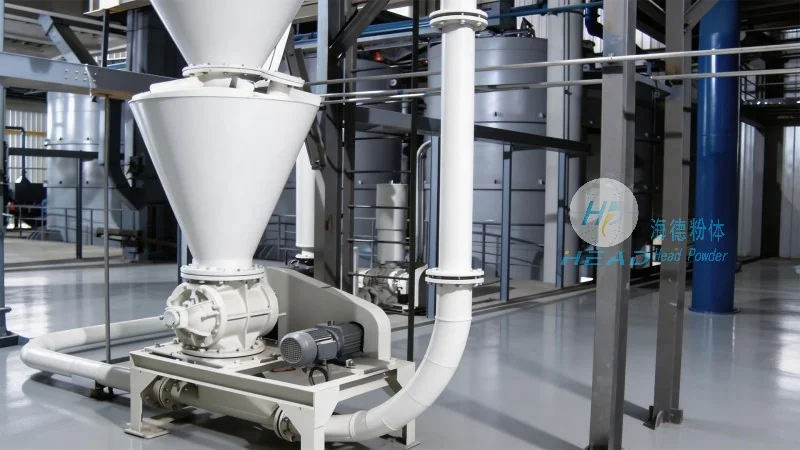
Industrial salt pneumatic conveying systems utilize air as the medium to transport solid materials. These systems are widely used in industries such as chemical processing, food processing, and mining, where the efficient and safe movement of bulk materials is essential. The primary goal of these systems is to minimize material loss, reduce labor costs, and enhance overall operational efficiency. By employing pneumatic conveying, companies can achieve seamless material transfer without the need for mechanical components like conveyor belts or buckets, which can be prone to wear and tear.
The industrial salt pneumatic conveying system consists of several key components that work in tandem to ensure smooth material transport. These components include the hopper, feeder, air compressor, conveying line, and receiver. Each component plays a crucial role in the overall functionality of the system.
The hopper is the initial storage container where industrial salt is loaded. It is typically designed with a conical or rectangular shape to facilitate uniform material flow. The feeder, often a rotary valve or a screw feeder, is responsible for controlling the rate at which salt is released from the hopper into the conveying line. This component ensures a consistent and controlled feed of material, preventing blockages and maintaining system efficiency.
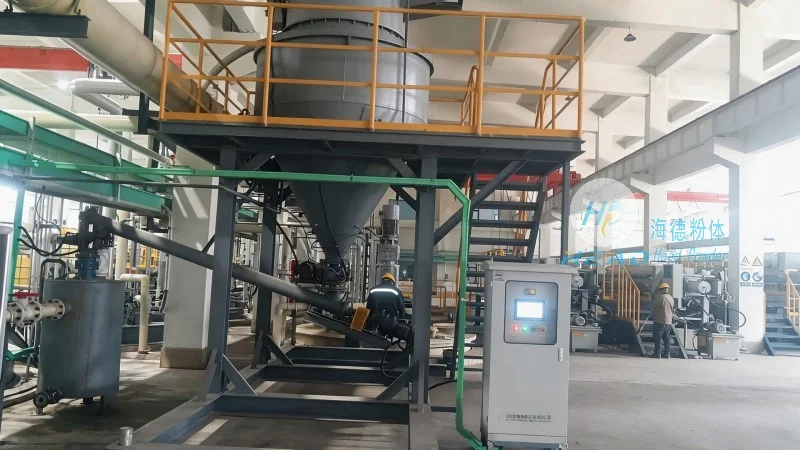
The air compressor is the heart of the pneumatic conveying system, generating the necessary pressure to move the industrial salt through the conveying line. The compressor is usually equipped with an air treatment unit, which includes filters and dryers to remove moisture and contaminants from the air. This is crucial because moisture can cause the salt to clump together, leading to system inefficiencies or blockages. The air treatment unit ensures that the air used for conveying is clean and dry, maintaining the integrity of the material and the longevity of the system components.
The conveying line is the main channel through which industrial salt travels from the feeder to the receiver. It is typically made of stainless steel or other corrosion-resistant materials to withstand the abrasive nature of the salt and prevent contamination. The design of the pipeline includes bends, elbows, and straight sections, which are strategically placed to guide the material flow. The diameter and length of the conveying line are carefully calculated based on the material's properties, such as particle size, density, and flowability, to ensure optimal performance.
The receiver is the final storage container where the industrial salt is deposited after being conveyed. It is designed to handle the incoming material and prevent spillage or dust emissions. The discharge system, which may include a rotary valve or a gate valve, controls the release of the salt from the receiver into the next processing stage or storage area. This component ensures that the material is discharged safely and efficiently, maintaining the system's overall flow rate and preventing material buildup.
The operation of the industrial salt pneumatic conveying system follows a simple yet effective principle. When the air compressor generates high-pressure air, it is introduced into the conveying line. The feeder then releases the industrial salt into the line, where the air flow carries the material particles forward. The air and salt mixture travels through the pipeline, with the air providing the necessary force to move the material. At the receiver end, the air is separated from the salt, either by a cyclone separator or a filter, and the air is typically recirculated back to the compressor to conserve energy. The separated salt is collected in the receiver, ready for further processing or storage.
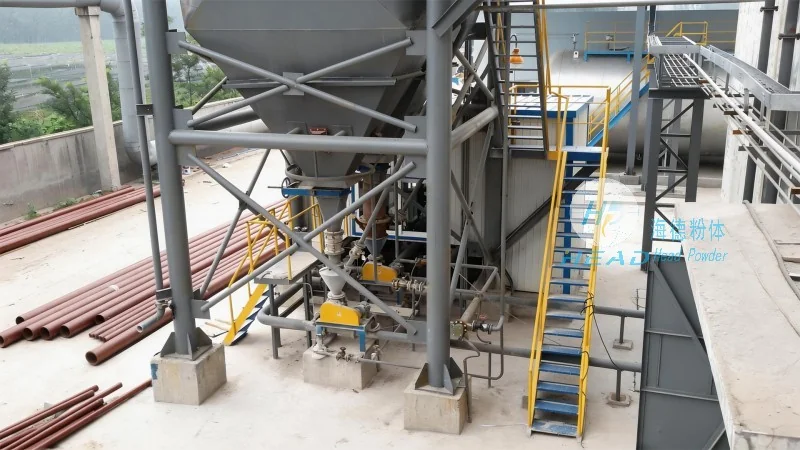
There are several advantages to using industrial salt pneumatic conveying systems in material handling operations. Firstly, these systems offer a dust-free and clean environment, which is particularly important for industrial salt applications where dust can affect product quality or pose health hazards. Secondly, the systems are highly efficient, with minimal material loss and reduced labor requirements compared to traditional methods like manual handling or mechanical conveyors. Thirdly, the flexibility of pneumatic conveying allows for easy integration into existing production lines, and the system can be adjusted to handle varying material loads and flow rates. Lastly, the equipment is relatively low-maintenance, with fewer moving parts compared to mechanical systems, leading to lower operational costs over time.
Industrial salt pneumatic conveying systems are widely used in various industries that require the transport of bulk materials. In the chemical industry, these systems are used to transport raw materials like salt to reactors or storage tanks. In the food processing industry, they are employed to move salt for seasoning or preservation processes. The mining industry also utilizes pneumatic conveying systems to transport salt from mines to processing facilities. Additionally, in the pharmaceutical and cosmetics industries, where material purity is critical, these systems provide a clean and efficient means of material transfer.
In conclusion, industrial salt pneumatic conveying systems are essential equipment for efficient and safe material handling in various industrial applications. The system's design, which includes components like the hopper, feeder, air compressor, conveying line, and receiver, works together to ensure the smooth and controlled transport of industrial salt. The working principle, which relies on air pressure to move the material, offers several advantages including dust-free operation, high efficiency, and low maintenance. By understanding the structure and principles of these systems, industries can optimize their material handling processes and enhance overall operational performance. Shandong HeadPowder Engineering Co., Ltd. specializes in providing such engineering solutions, helping companies achieve their material transport needs effectively and reliably.

 Shandong Headpowder Engineering Co., Ltd.
 156-6277-7102(Manager Zhang)
  0531-83386006
  Zhangqiu District, Jinan City, Shandong Province, China
telephone
WeChatconsult
top