With more than 10‑year industry experience, Shandong Headpowder delivers full‑service pneumatic‑conveying systems and blowers, undertaking nationwide turn‑key powder‑handling projects.
Coagulant dry powder pneumatic conveying equipment is a critical component in modern industrial processes, particularly in the water treatment and chemical sectors where the efficient and safe transportation of coagulant powders is essential. This equipment ensures that coagulants, which are vital for clarifying and purifying water, can be moved from storage to processing points with minimal loss and maximum efficiency. The following overview details the structure and working principle of such equipment, highlighting its design and operational mechanics.
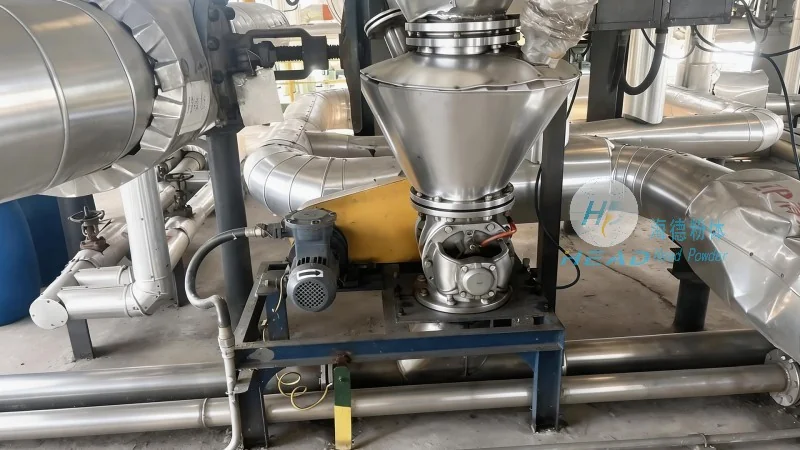
HeadPowder, a leading manufacturer based in Shandong, China, specializes in the design and production of advanced pneumatic conveying systems. With a strong commitment to innovation and quality, the company has established itself as a trusted provider of solutions tailored to the unique needs of the coagulant industry. The equipment discussed here is a product of their expertise, combining robust engineering with practical application to meet the demands of various industrial environments.
The coagulant dry powder pneumatic conveying system is engineered to handle dry powders such as alum, ferric chloride, and other chemical coagulants. It operates on the principle of pneumatic transport, using air or other gases to move the material through a network of pipes. This method is preferred over traditional methods like bucket elevators or belt conveyors because it minimizes product contamination, reduces maintenance, and allows for flexible layout configurations.
The system consists of several key components, each playing a crucial role in the overall operation:
1. Feed Hopper and Metering Device: The feed hopper is the initial point where the coagulant powder is stored. It is designed to hold a sufficient quantity of material to ensure continuous operation. The metering device, often a rotary valve or a screw feeder, controls the flow rate of the powder into the conveying line, ensuring a consistent and controlled feed.
2. Air Supply System: This component generates the necessary air pressure and volume to move the powder. It typically includes a blower or a compressor, along with air filtration and regulation equipment to maintain clean and dry air, preventing contamination of the coagulant and ensuring efficient operation.
3. Conveying Pipeline: The pipeline network is made of materials resistant to chemical corrosion, such as stainless steel or special plastics, to withstand the acidic or alkaline nature of the coagulants. The pipeline is equipped with bends, elbows, and straight sections to guide the powder along the desired path. The design of the pipeline, including the size and angle of bends, is optimized to minimize pressure drop and prevent particle separation or clogging.
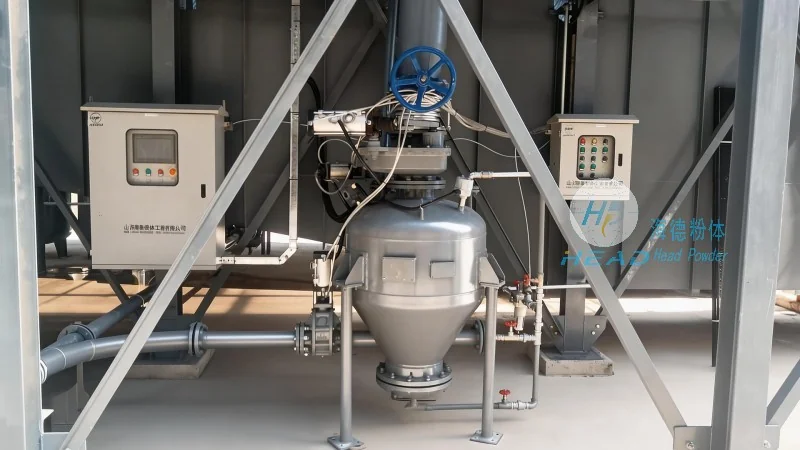
4. Dust Collection and Filtration System: To maintain air quality and comply with environmental regulations, the system includes a dust collection unit. This typically consists of a cyclone separator or a bag filter that captures any fine particles before the air is released back into the environment. This step is critical for both safety and environmental compliance.
5. Control Panel and Monitoring System: The control panel houses the electrical and pneumatic controls that manage the operation of the entire system. It allows operators to adjust parameters such as air pressure, feed rate, and system speed. Modern systems may also include sensors and monitoring devices to track performance, detect faults, and provide real-time data for maintenance and optimization.
The operation of the coagulant dry powder pneumatic conveying system follows a sequence of steps that ensure the efficient transport of the material:
1. Material Loading: The coagulant powder is fed from the storage hopper into the metering device. The metering device regulates the flow, ensuring a steady supply of powder into the conveying line.
2. Air Injection: The air supply system generates a high-pressure air stream that is introduced into the conveying pipeline at the feed point. The air velocity is sufficient to entrain the powder particles and carry them along the pipeline.
3. Particle Suspension and Transport: As the air flows through the pipeline, it creates a turbulent flow that suspends the powder particles. The combination of air velocity and particle size ensures that the powder is carried as a dense or dilute phase, depending on the system design. The pipeline's design, including bends and changes in direction, is optimized to maintain particle suspension and prevent deposition.
4. Delivery to the Destination: The powder-air mixture is transported to the destination point, such as a mixing tank or a storage silo. At the end of the pipeline, the air is separated from the powder using a separator (e.g., cyclone or filter). The separated powder is collected and discharged, while the air is either recirculated or vented.
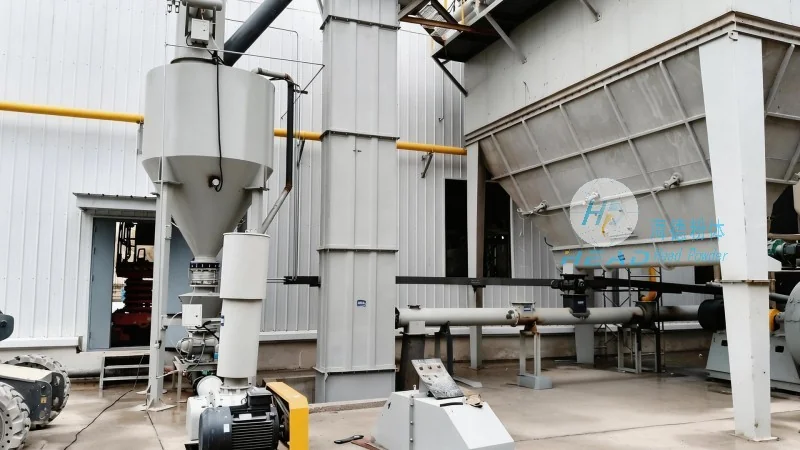
The coagulant dry powder pneumatic conveying equipment offers several advantages over traditional methods, making it a preferred choice in many industrial applications:
1. High Efficiency and Reliability: The system provides a continuous and reliable flow of coagulant powder, reducing downtime and ensuring consistent process performance. The pneumatic transport minimizes the risk of product degradation due to exposure to air or moisture.
2. Minimal Product Loss and Contamination: Unlike bulk handling methods, the enclosed pipeline system prevents product loss and contamination from external sources. The design also minimizes the risk of dust emissions, enhancing workplace safety.
3. Flexible Layout and Scalability: The modular design of the system allows for easy integration into existing facilities and can be scaled up or down to accommodate varying production needs. The flexible pipeline layout enables the equipment to be adapted to different plant layouts and operational requirements.
4. Low Maintenance and Operating Costs: With fewer moving parts compared to mechanical conveyors, the pneumatic system requires less maintenance. The use of durable materials and efficient air management reduces long-term operating costs, making it a cost-effective solution for coagulant transport.
Applications of this equipment are widespread in industries such as water treatment, chemical manufacturing, and wastewater treatment. In water treatment plants, it is used to transport coagulants from storage to the clarification tanks, ensuring efficient water purification. In chemical plants, it facilitates the transport of various dry chemicals, supporting production processes. The versatility and reliability of the coagulant dry powder pneumatic conveying system make it an indispensable tool for modern industrial operations.

 Shandong Headpowder Engineering Co., Ltd.
 156-6277-7102(Manager Zhang)
  0531-83386006
  Zhangqiu District, Jinan City, Shandong Province, China
telephone
WeChatconsult
top