With more than 10‑year industry experience, Shandong Headpowder delivers full‑service pneumatic‑conveying systems and blowers, undertaking nationwide turn‑key powder‑handling projects.
HeadPowder, a leading manufacturer based in Shandong, China, specializes in providing advanced pneumatic conveying systems tailored for the handling of synthetic rubber materials. This equipment is designed to efficiently transport rubber particles, granules, or powders from one location to another within industrial settings, ensuring minimal product degradation and optimal operational efficiency.
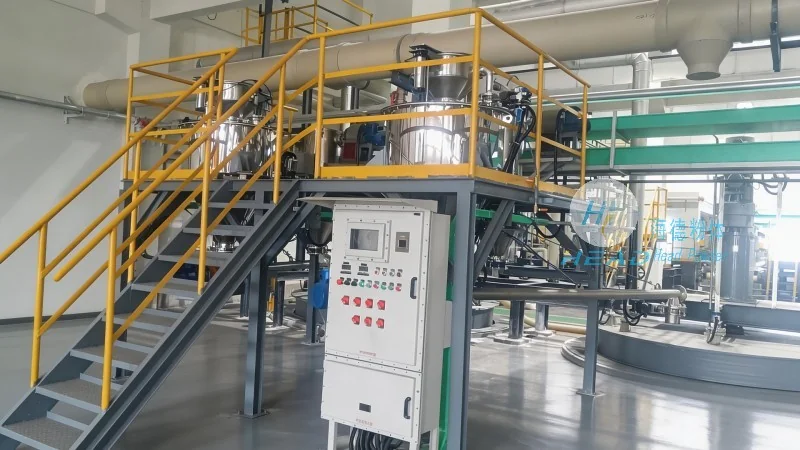
At the core of the operation is a pneumatic conveying system engineered specifically for synthetic rubber. These systems utilize air or gas as the primary medium to move material through a pipeline network. The design incorporates components such as feeders, air movers, and separation units, all optimized to handle the unique properties of synthetic rubber, including its density, flow characteristics, and potential for dust generation.
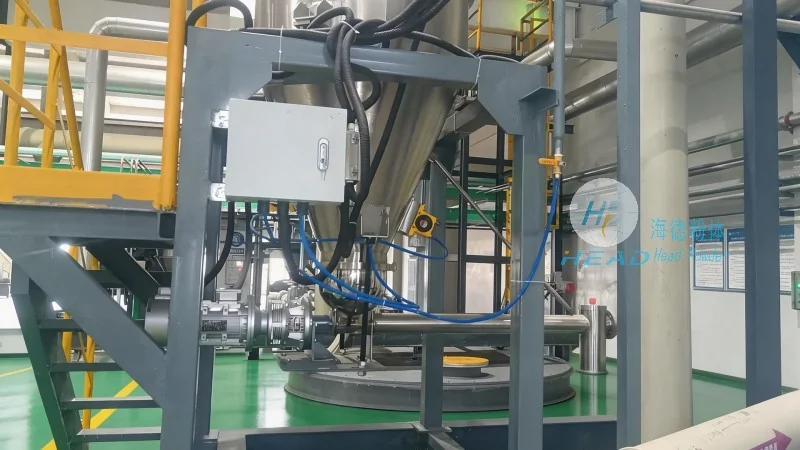
The operation of the pneumatic conveying machine for synthetic rubber involves several key stages. Initially, the synthetic rubber material is fed into the system via a hopper or feeder. This material is then introduced into a pipeline where it is mixed with compressed air or gas. The air flow creates a fluidized state, allowing the rubber particles to be carried through the system under pressure. As the material travels, it passes through various sections, including expansion or contraction zones, which help maintain consistent flow rates and prevent blockages. The conveying process continues until the material reaches the discharge point, where it is collected in a receiving hopper or storage container.
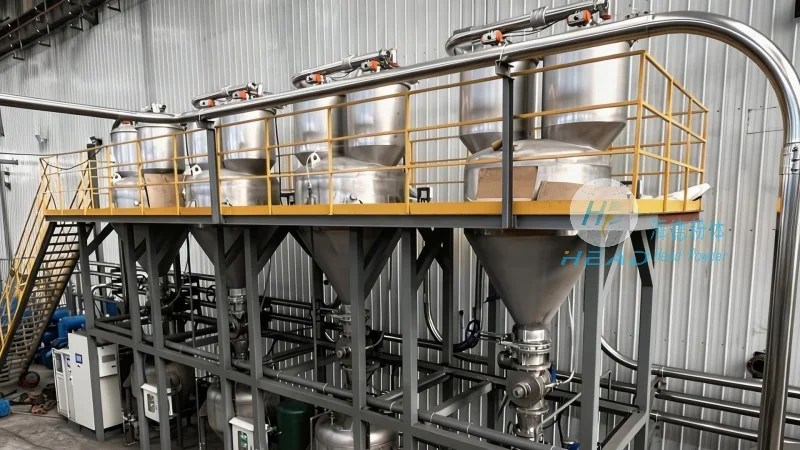
The working principle of the pneumatic conveying equipment relies on the principles of fluid dynamics and material handling. The system operates by creating a pressure differential between the inlet and outlet of the pipeline. Compressed air is supplied by a blower or fan, generating the necessary force to move the rubber particles. The air and material mixture flows through the pipeline, with the air providing the kinetic energy required for transport. Separation mechanisms, such as cyclones or filters, are integrated into the system to separate the rubber from the air stream, ensuring that the material is delivered in a clean, dry state. This separation process is critical for maintaining product quality and preventing contamination.
Several critical components contribute to the effective operation of the pneumatic conveying system. The feeder is responsible for controlling the flow rate of the synthetic rubber, ensuring a consistent feed into the system. The air mover, typically a positive displacement blower or centrifugal fan, generates the required air pressure and volume. The pipeline network, constructed from materials resistant to rubber abrasion and corrosion, provides the path for material transport. Additionally, separation units, such as cyclone separators or bag filters, are essential for removing air from the rubber stream, allowing for proper discharge and collection.
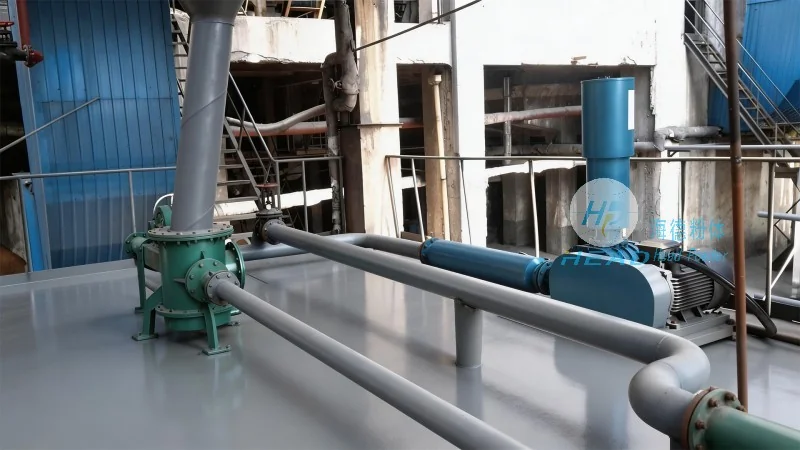
Utilizing a pneumatic conveying system for synthetic rubber offers numerous advantages. The process minimizes material handling losses and reduces the risk of contamination, which is vital for maintaining product purity in industrial applications. The equipment is also capable of handling a wide range of rubber types, including different grades of synthetic rubber, without requiring significant modifications. This versatility makes it suitable for various industries, such as tire manufacturing, rubber products production, and chemical processing, where efficient material transport is essential for production efficiency.

 Shandong Headpowder Engineering Co., Ltd.
 156-6277-7102(Manager Zhang)
  0531-83386006
  Zhangqiu District, Jinan City, Shandong Province, China
telephone
WeChatconsult
top