With more than 10‑year industry experience, Shandong Headpowder delivers full‑service pneumatic‑conveying systems and blowers, undertaking nationwide turn‑key powder‑handling projects.
The operation of a pneumatic conveying line for grain and bulk particle materials typically involves several sequential steps, each designed to ensure efficient and reliable material transport. The process begins with the feeding of the material into the system. This is usually achieved through a feeder, such as a rotary valve or a screw feeder, which controls the flow rate of the material into the conveying line. The feeder is crucial as it maintains a consistent material supply, preventing blockages and ensuring smooth operation.
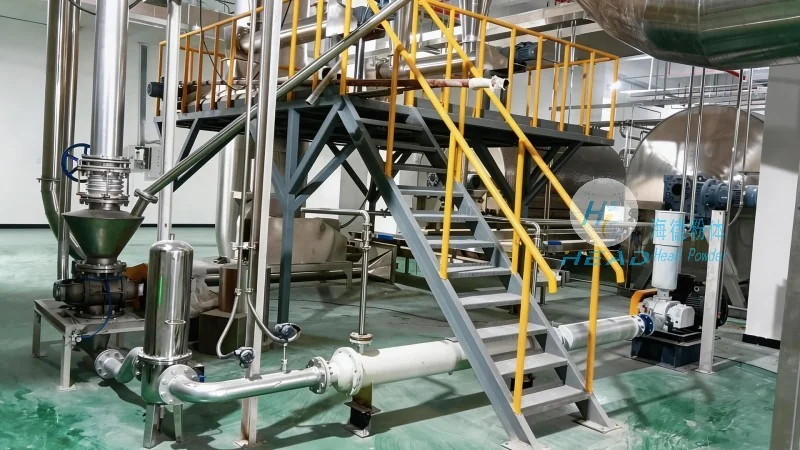
Once the material is fed into the system, it enters the conveying line. The conveying line is a network of pipes through which a gas, usually air, is introduced. The type of pneumatic conveying system—either positive pressure or negative pressure—determines how the gas is introduced and how the material is transported. In a positive pressure system, compressed air is used to push the material through the pipes. In a negative pressure system, the air is drawn out of the line, creating a vacuum that pulls the material along. The choice between these systems depends on factors such as the distance to be covered, the material's properties, and the desired level of dust control.
As the material travels through the conveying line, it is suspended and transported by the moving air. The air velocity within the pipes must be sufficient to keep the material particles in suspension, preventing them from settling and causing blockages. The design of the conveying line, including the pipe diameter and the angle of the pipes, is critical to maintaining the correct air velocity and ensuring efficient transport. For longer distances or higher material loads, larger pipe diameters and higher air velocities may be required to maintain the material in suspension.
At the receiving end of the conveying line, the material is separated from the air. This is typically done using a separator or a cyclone. The separator uses centrifugal force to separate the material from the air, allowing the material to be collected in a hopper or storage bin. The air, now free of material particles, is then discharged to the atmosphere or recirculated back into the system, depending on the system design and environmental requirements.
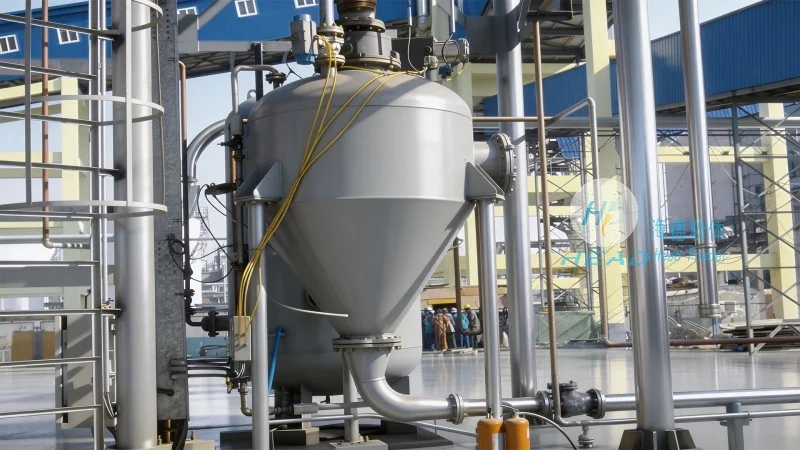
After separation, the material is collected and stored. The receiving hopper or storage bin is designed to accommodate the volume of material being transported and to provide a smooth discharge for downstream processes. The discharge of the material from the hopper may be controlled by a valve or a gate, ensuring that the material is released at a controlled rate, preventing overfilling or underfilling of the storage bin.
The working principle of a pneumatic conveying system for grain and bulk particle materials is based on the use of air to transport the material. The system operates by creating a flow of air through a pipe network, which carries the material particles along with it. The key components of the system include the feeder, the conveying line, the separator, and the air source equipment.
The feeder is responsible for introducing the material into the system at a controlled rate. It ensures that the material is fed continuously and uniformly, preventing overloading or underloading of the conveying line. The feeder can be designed to handle various types of materials, including granular, powdery, or even lumpy materials, depending on the specific application.
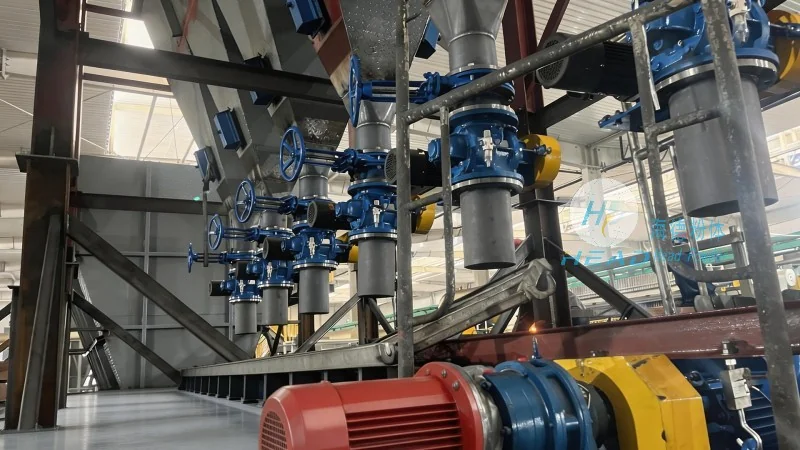
The conveying line is the main component of the system, responsible for transporting the material from the feeder to the separator. The line is typically made of stainless steel or other corrosion-resistant materials, suitable for handling various types of materials and ensuring durability and longevity. The diameter of the pipe is determined based on the material's properties, such as particle size, density, and flowability, as well as the required conveying capacity.
The separator is a critical component that separates the material from the air at the end of the conveying line. It uses a combination of centrifugal force and gravity to separate the material particles from the air stream. The separator is designed to handle high volumes of material and to minimize the amount of material that is lost or contaminated during the separation process. The separated material is collected in a hopper or storage bin, while the air is discharged to the atmosphere or recirculated back into the system.
The air source equipment provides the necessary air pressure or vacuum to operate the system. This can include a compressor for positive pressure systems or a vacuum pump for negative pressure systems. The air source equipment is typically equipped with filters and regulators to ensure that the air is clean and at the correct pressure or vacuum level. The air is then introduced into the conveying line through a blower or a fan, which maintains the required air velocity to keep the material in suspension.
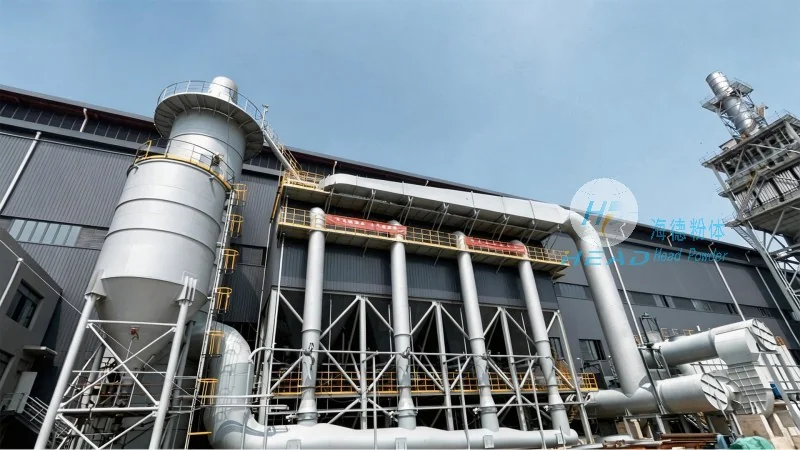
Shandong HeadPowder Engineering Co., Ltd., commonly known as HeadPowder, is a leading manufacturer and supplier of industrial material handling equipment, specializing in the design and production of pneumatic conveying lines for grain and bulk particle materials. With its headquarters in Shandong, China, HeadPowder has established itself as a trusted partner for businesses seeking efficient and reliable material transport solutions.
HeadPowder's expertise lies in the custom design and manufacturing of pneumatic conveying systems tailored to the specific needs of each client. The company's team of engineers and technicians works closely with clients to understand their material handling requirements, process constraints, and operational goals. This collaborative approach ensures that the final system is optimized for performance, efficiency, and cost-effectiveness.
The company utilizes advanced design software and manufacturing techniques to ensure that its pneumatic conveying lines meet the highest standards of quality and durability. The materials used in the construction of the systems are selected based on the specific application, ensuring resistance to corrosion, wear, and other environmental factors. HeadPowder's systems are designed to handle a wide range of materials, including grains, powders, and other bulk particles, with capacities ranging from small-scale applications to large industrial operations.

 Shandong Headpowder Engineering Co., Ltd.
 156-6277-7102(Manager Zhang)
  0531-83386006
  Zhangqiu District, Jinan City, Shandong Province, China
telephone
WeChatconsult
top