With more than 10‑year industry experience, Shandong Headpowder delivers full‑service pneumatic‑conveying systems and blowers, undertaking nationwide turn‑key powder‑handling projects.
HeadPowder, a leading provider in the field of material handling solutions, specializes in the design, manufacturing, and installation of pneumatic conveying systems. This article focuses on the operation process and working principle of a quicklime material pneumatic conveying line, a critical component in industrial applications where efficient and safe material transport is essential. The company, based in Shandong, China, leverages advanced engineering and technology to deliver reliable systems tailored to the unique demands of the quicklime industry.
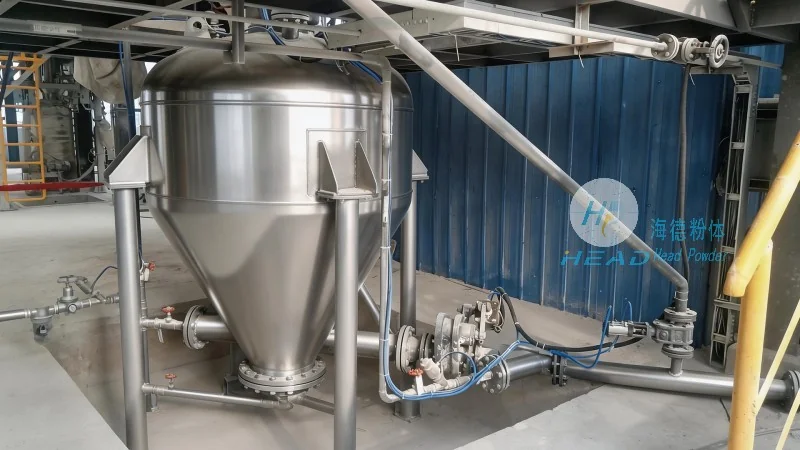
Quicklime, or calcium oxide (CaO), is a widely used industrial material in processes such as flue gas desulfurization, steelmaking, and chemical production. Transporting quicklime efficiently and safely is crucial to maintain operational efficiency and ensure product quality. Pneumatic conveying systems offer a solution by using air to transport dry bulk materials like quicklime, eliminating the need for mechanical components that may cause material degradation or contamination. The system combines a series of components, including a hopper, feeder, air compressor, conveying line, and receiver, to achieve seamless material transfer.
The operation of a quicklime material pneumatic conveying line relies on several key components, each playing a vital role in the overall process. The hopper serves as the storage vessel, holding the quicklime and providing a consistent feed to the system. The feeder, typically a rotary valve or screw feeder, regulates the flow of quicklime into the conveying line, ensuring a controlled and steady supply. The air compressor generates the necessary air pressure to move the material through the system. The conveying line, often made of stainless steel or other corrosion-resistant materials, is designed to withstand the abrasive nature of quicklime and maintain air pressure. The receiver collects the conveyed quicklime and discharges it into the next processing stage.
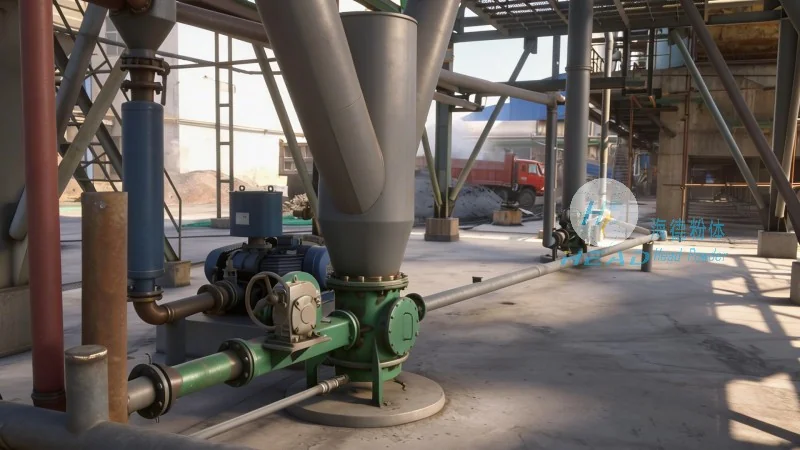
The working principle of the quicklime material pneumatic conveying line is based on the principle of air flow and pressure differentials. The process begins with the feeder releasing quicklime into the conveying line. Simultaneously, the air compressor supplies high-pressure air into the line. As the air flows through the line, it creates a low-pressure zone that draws the quicklime particles into the air stream. The combination of air velocity and particle size allows the quicklime to be transported efficiently over long distances. The system maintains a consistent air pressure and flow rate to ensure smooth material transport, minimizing the risk of blockages or material degradation.
The operation process of the quicklime material pneumatic conveying line involves several sequential steps. First, the quicklime is stored in the hopper and fed into the system via the feeder. The air compressor then activates, generating the required air pressure. The feeder releases the quicklime into the conveying line, where it is entrained by the high-velocity air stream. The material travels through the line to the receiver, where it is collected and discharged. The system continuously monitors air pressure, flow rate, and material level to ensure optimal performance. Regular maintenance, such as cleaning the conveying line and checking the air compressor, is essential to maintain the system's efficiency and longevity.
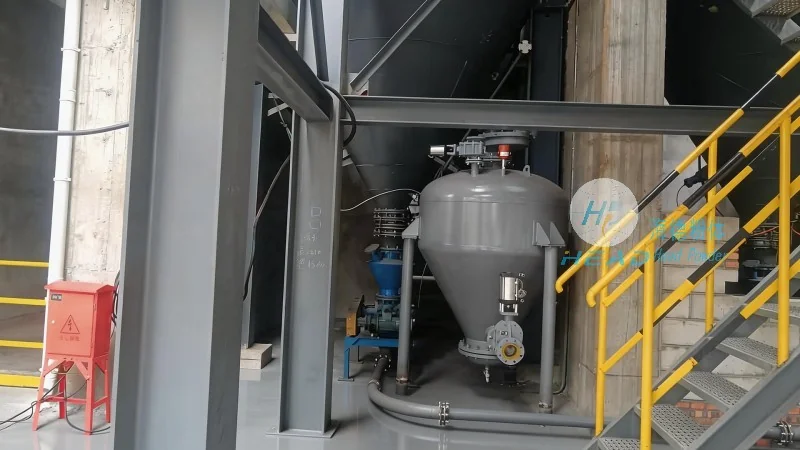
Implementing a quicklime material pneumatic conveying line offers several advantages over traditional mechanical conveying methods. The system eliminates the need for conveyor belts or buckets, reducing the risk of material contamination and degradation. It also minimizes labor costs and operational downtime, as the system can operate continuously without the need for manual intervention. Additionally, the pneumatic conveying line is highly flexible, allowing for changes in material flow rates and distances without significant modifications. The system's ability to handle abrasive materials like quicklime makes it a reliable choice for industrial applications, ensuring consistent product quality and operational efficiency.
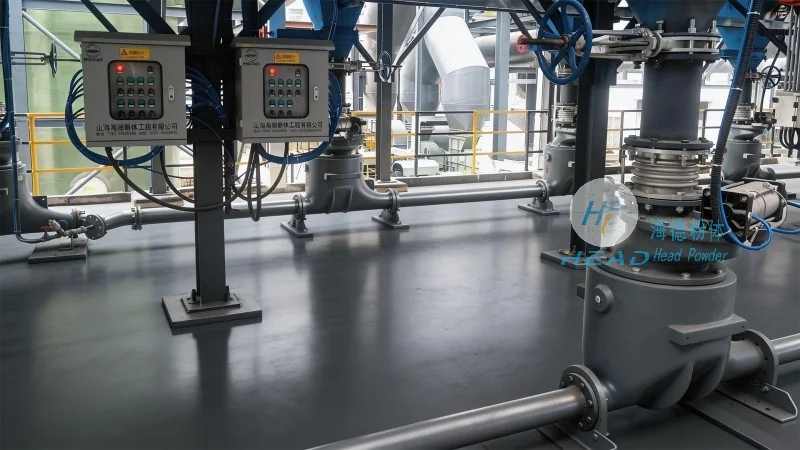
The quicklime material pneumatic conveying line is widely used in various industries, including chemical manufacturing, steel production, and environmental treatment. In chemical plants, the system is used to transport quicklime for flue gas desulfurization, where it reacts with sulfur dioxide to reduce emissions. In steel mills, quicklime is used as a flux to remove impurities from iron ore, and the pneumatic conveying line ensures efficient delivery to the blast furnace. Environmental treatment facilities also utilize the system to transport quicklime for wastewater treatment and air pollution control. The versatility of the pneumatic conveying line makes it suitable for a wide range of applications, providing a reliable solution for material handling in diverse industrial settings.
HeadPowder's quicklime material pneumatic conveying line is a sophisticated and efficient solution for industrial material transport. By leveraging advanced engineering and technology, the system ensures safe, reliable, and cost-effective transport of quicklime. The operation process, which involves the coordinated function of key components, maintains consistent performance and minimizes operational risks. The advantages of this system, including reduced contamination, lower labor costs, and flexibility, make it an ideal choice for industries requiring efficient material handling. As a leading provider in the field, HeadPowder continues to innovate and deliver high-quality pneumatic conveying systems that meet the evolving needs of the quicklime industry and beyond.

 Shandong Headpowder Engineering Co., Ltd.
 156-6277-7102(Manager Zhang)
  0531-83386006
  Zhangqiu District, Jinan City, Shandong Province, China
telephone
WeChatconsult
top