With more than 10‑year industry experience, Shandong Headpowder delivers full‑service pneumatic‑conveying systems and blowers, undertaking nationwide turn‑key powder‑handling projects.
Colored sand, also known as colored fine aggregate, is widely used in various construction and industrial applications. The efficient and reliable transportation of colored sand is crucial for ensuring smooth production processes and maintaining product quality. This article, presented by Shandong HeadPowder Engineering Co., Ltd. (headpowder), will explore the common methods used for colored sand conveying, focusing on the technical aspects and practical applications of each approach.
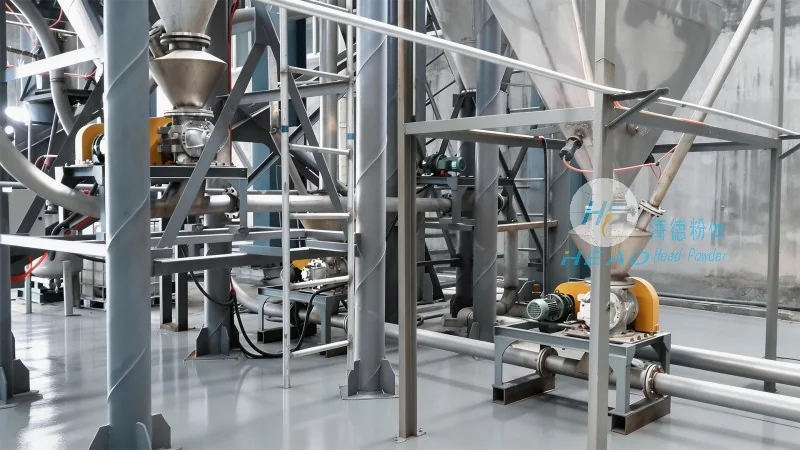
Colored sand conveying involves the movement of colored sand from its source to processing or storage locations. Several methods are commonly employed in the industry, each with its own advantages and suitability for different operational requirements. The primary methods include pneumatic conveying, mechanical conveying, and hybrid systems. These approaches are selected based on factors such as material characteristics, distance, volume, and environmental considerations.
Pneumatic conveying, or air-assisted transport, is a popular method for colored sand transportation. This technique utilizes compressed air to move the sand particles through a pipeline. The system typically consists of a hopper, a rotary valve, a conveyor line, and a receiver. The colored sand is fed into the hopper, and as the compressed air is introduced, it lifts and propels the sand through the pipeline. Pneumatic conveying offers advantages such as high efficiency, minimal material degradation, and the ability to transport materials over long distances without the need for multiple transfer points. However, it requires careful control of air pressure and flow rates to prevent clogging and ensure consistent performance. The system is particularly effective for handling fine or dusty colored sand, as the air helps to keep particles suspended and prevents them from settling in the pipeline.
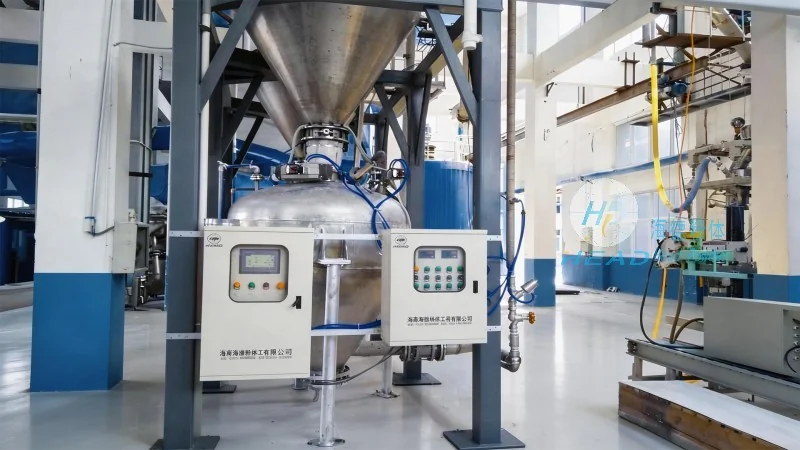
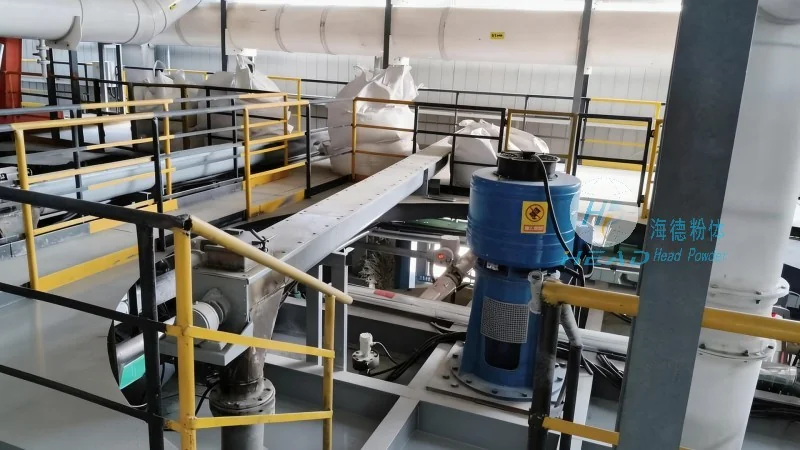
Mechanical conveying systems rely on mechanical components to move colored sand. Common types include belt conveyors, screw conveyors, and bucket elevators. Belt conveyors use a continuous belt to transport the sand horizontally or at a slight incline. The belt is driven by a motor, and the sand is loaded onto the belt at one end and discharged at the other. This method is suitable for transporting colored sand over moderate distances and is widely used in construction sites and industrial facilities. Screw conveyors, also known as auger conveyors, use a rotating screw to push the sand along a tube. The screw rotates within a closed housing, and the sand is moved from the inlet to the outlet. Screw conveyors are effective for handling bulk materials and can be used in both horizontal and inclined configurations. They are particularly useful for transporting colored sand in processing plants where a controlled flow is required. Bucket elevators, on the other hand, use a series of buckets attached to a chain or belt that moves vertically. The buckets scoop up the sand at the bottom and discharge it at the top. This method is ideal for vertical or inclined transport and is commonly used in applications where a large vertical lift is needed.
Hybrid conveying systems combine pneumatic and mechanical components to leverage the benefits of both approaches. For example, a system might use a pneumatic conveyor for the initial transport of colored sand from a storage silo to a processing area, followed by a mechanical conveyor for further handling within the facility. This combination allows for efficient transport over both short and long distances while maintaining control over the material flow. Hybrid systems are often used in complex industrial setups where multiple transport stages are required, such as in color sand production lines. They provide flexibility and adaptability, enabling the system to handle varying material volumes and operational conditions.
The choice of colored sand conveying method is influenced by several key factors. Material characteristics, such as particle size, density, and moisture content, play a significant role. For instance, fine or dusty colored sand may be better suited for pneumatic conveying due to its ability to remain suspended in air, while larger or bulkier particles might benefit from mechanical conveyors. The distance between the source and destination is another critical factor. Short distances may allow for the use of simple mechanical systems, whereas long distances often require pneumatic or hybrid systems to ensure efficient transport. Additionally, the volume of material to be transported and the required throughput rate influence the system design. High-volume applications may necessitate larger conveyor capacities, such as multiple belt conveyors or larger pneumatic lines. Environmental considerations, including dust control and noise levels, also impact the selection. Pneumatic systems can help minimize dust exposure, while mechanical systems may require additional dust suppression measures. Finally, cost and maintenance requirements are important considerations. Mechanical systems are generally more cost-effective and easier to maintain, whereas pneumatic systems may have higher initial costs but lower long-term maintenance needs.
In conclusion, the selection of a colored sand conveying method depends on a combination of technical, operational, and environmental factors. Pneumatic conveying offers high efficiency and minimal material degradation, making it suitable for fine or dusty colored sand. Mechanical conveying systems, such as belt, screw, and bucket elevators, provide reliable transport for bulk materials and are often more cost-effective. Hybrid systems combine the advantages of both approaches, offering flexibility for complex applications. By carefully evaluating material characteristics, transport distance, volume, and other relevant factors, industries can choose the most appropriate conveying method to ensure efficient and reliable colored sand transportation. This ensures smooth production processes and maintains the quality of colored sand products, which are essential for various construction and industrial applications. For more information on colored sand conveying solutions, please contact Shandong HeadPowder Engineering Co., Ltd. located in Shandong, China.

 Shandong Headpowder Engineering Co., Ltd.
 156-6277-7102(Manager Zhang)
  0531-83386006
  Zhangqiu District, Jinan City, Shandong Province, China
telephone
WeChatconsult
top