With more than 10‑year industry experience, Shandong Headpowder delivers full‑service pneumatic‑conveying systems and blowers, undertaking nationwide turn‑key powder‑handling projects.
For industries dealing with fine powders, efficient and reliable material handling is crucial. The fine powder conveying line, often referred to as a powder transport system, plays a vital role in ensuring smooth operations. This article delves into the operation process and working principle of such a system, highlighting its components, functions, and the technical aspects that enable seamless powder transfer. The system is typically engineered and supplied by companies like Shandong HeadPowder Engineering Co., Ltd., which specializes in providing tailored solutions for diverse industrial needs.
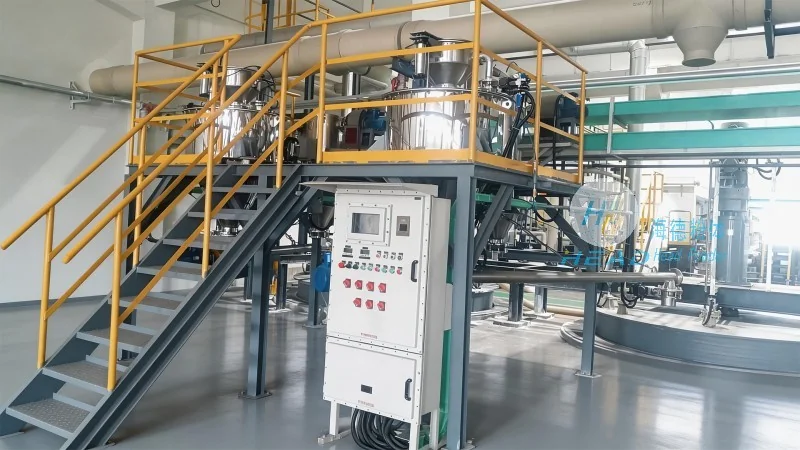
The fine powder conveying line is a specialized system designed to transport dry powders or granules from one location to another within industrial settings. These systems are commonly used in sectors like pharmaceuticals, food processing, chemical manufacturing, and more. The primary goal is to achieve consistent, controlled, and safe powder movement without compromising product quality or integrity. The system is often engineered and supplied by companies like Shandong HeadPowder Engineering Co., Ltd., which specializes in providing tailored solutions for diverse industrial needs.
At the core of a fine powder conveying line are several essential components that work in tandem to facilitate efficient operation. These include:
The operation of a fine powder conveying line is based on the principles of fluidization and pneumatic transport. The process typically begins with the powder being fed into the system via a feeding device. The powder then enters the conveying tube, where it is carried by a moving air stream. This air stream is generated by a blower or compressor, creating a pressure differential that propels the powder forward.
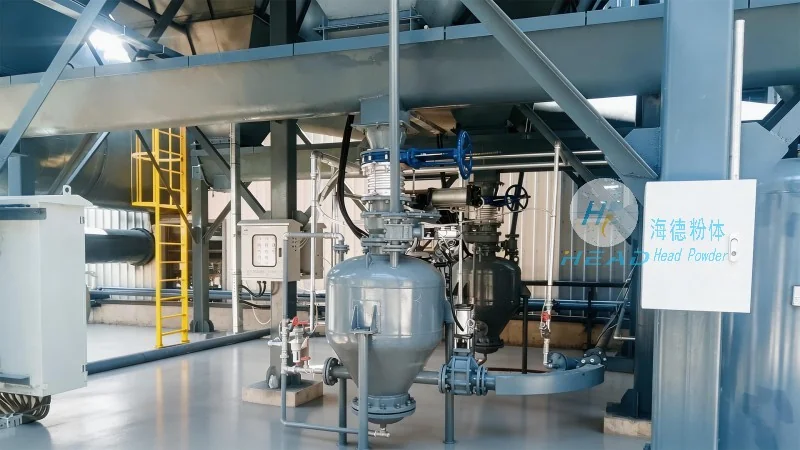
As the powder travels through the tube, it experiences a state of fluidization, where the air flow maintains the powder particles in a suspended state. This prevents the powder from settling or clogging the system. The conveying speed and pressure are carefully controlled to ensure optimal transport efficiency and minimal product degradation.
The operation of the fine powder conveying line can be broken down into several key steps, each contributing to the overall efficiency and reliability of the system:
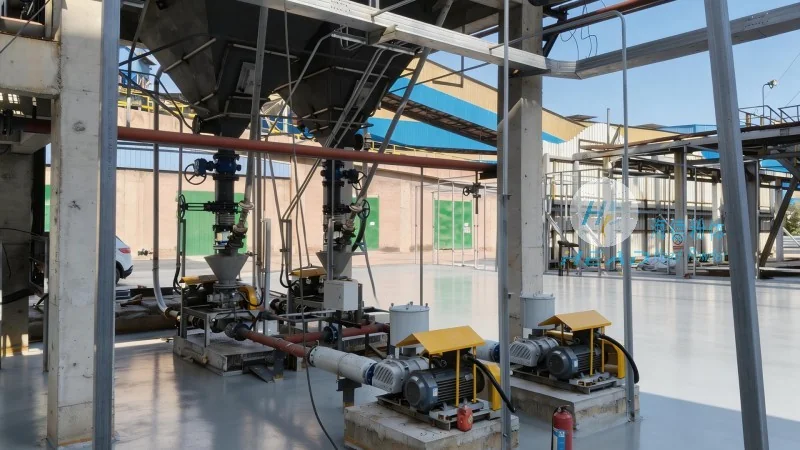
The fine powder conveying line offers numerous benefits for industrial applications. These include:
Applications of fine powder conveying lines span various industries. In pharmaceutical manufacturing, they are used to transport active pharmaceutical ingredients (APIs) and excipients. In food processing, they handle ingredients like flour, sugar, and spices. In chemical manufacturing, they convey raw materials and intermediates. The versatility of these systems makes them indispensable in modern industrial operations.
The fine powder conveying line is a sophisticated system that combines mechanical and pneumatic principles to achieve efficient and reliable powder transport. By understanding its components, working principles, and operation process, industries can optimize their material handling processes, enhance productivity, and ensure product quality. As a key component in material handling, this system continues to play a vital role in supporting various industrial applications. Companies like Shandong HeadPowder Engineering Co., Ltd. contribute to the advancement of such systems by providing innovative solutions tailored to specific industrial requirements.

 Shandong Headpowder Engineering Co., Ltd.
 156-6277-7102(Manager Zhang)
  0531-83386006
  Zhangqiu District, Jinan City, Shandong Province, China
telephone
WeChatconsult
top