With more than 10‑year industry experience, Shandong Headpowder delivers full‑service pneumatic‑conveying systems and blowers, undertaking nationwide turn‑key powder‑handling projects.
Carbon powder conveying systems are integral to the efficient handling and transportation of carbon-based powders in various industrial applications. These systems are designed to ensure safe, reliable, and efficient movement of materials like carbon black, graphite, and other carbon powders from storage to processing units. Understanding the operating process and working principle of such systems is crucial for optimizing performance and maintaining operational efficiency.
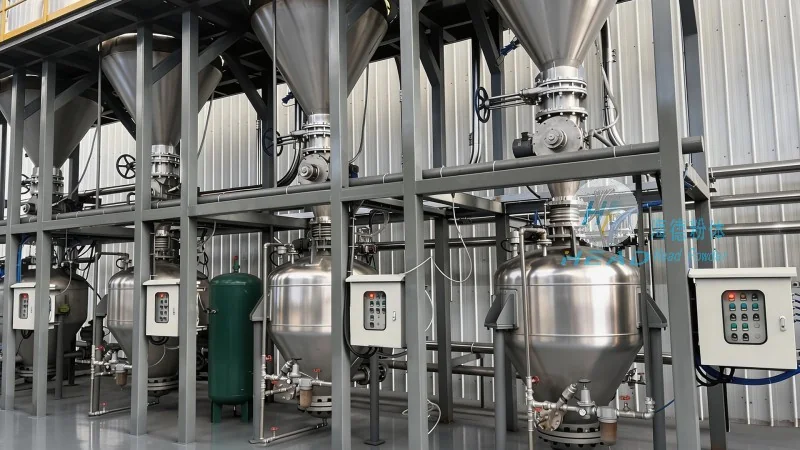
Carbon powder conveying systems utilize specialized equipment and techniques to transport fine carbon powders, which are often lightweight and can be prone to dust generation. The primary goal is to minimize material loss, prevent contamination, and ensure consistent flow rates. These systems are commonly employed in industries such as battery manufacturing, carbon fiber production, and graphite processing, where the quality and purity of carbon powders are paramount.
The effective operation of carbon powder conveying systems relies on several critical components, each playing a specific role in the overall process. These components include feed hoppers, conveyor belts or pipes, pneumatic or mechanical conveying mechanisms, dust collection systems, and control panels. Feed hoppers are used to store and feed the carbon powder into the system, ensuring a steady supply. Conveyor belts or pipes facilitate the movement of the powder, while pneumatic systems use air pressure to transport the material, often in closed pipelines to prevent dust dispersion. Dust collection systems are essential for maintaining air quality and preventing environmental contamination. Control panels allow operators to monitor and adjust the system parameters, ensuring optimal performance.
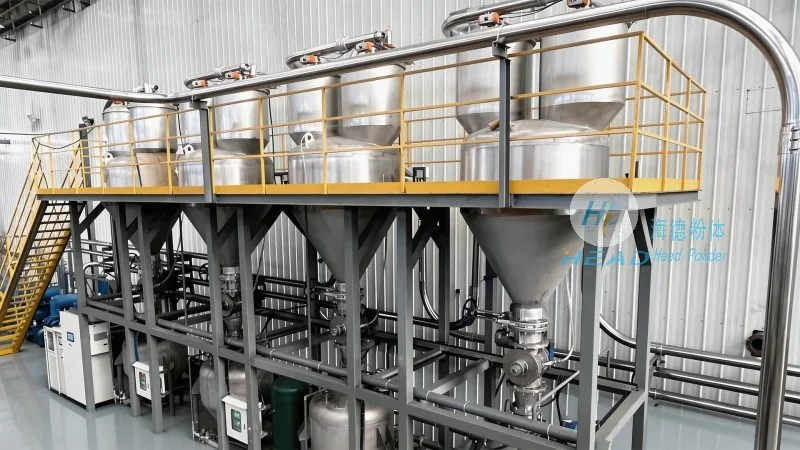
The operating process of carbon powder conveying typically involves several sequential steps. First, the carbon powder is loaded into the feed hopper from a storage silo or container. The hopper then regulates the flow of powder into the conveying line. Next, the conveying mechanism—whether pneumatic or mechanical—transports the powder through the system. Pneumatic conveying systems use compressed air to push the powder along, while mechanical systems may employ screw conveyors or belt conveyors. The powder is then directed to the processing unit or storage location. Throughout this process, the system monitors flow rates, pressure, and other parameters to ensure consistent and efficient operation. Regular maintenance and monitoring are essential to prevent blockages, ensure proper air flow, and maintain the integrity of the powder.
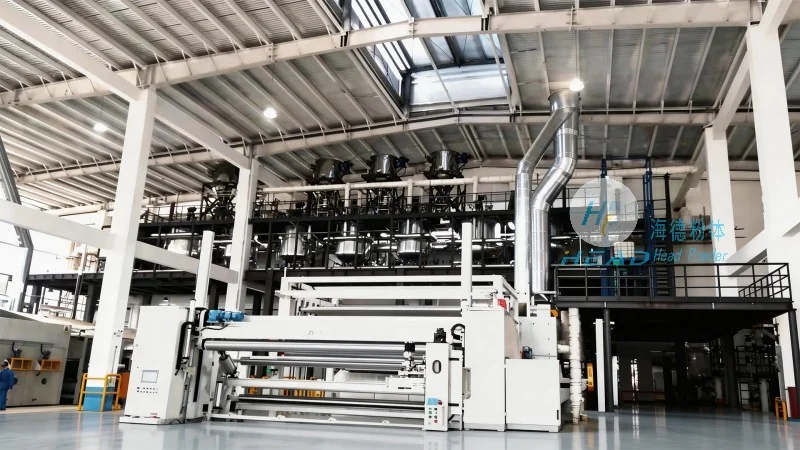
The working principle of carbon powder conveying systems can be categorized into pneumatic and mechanical types, each with distinct mechanisms. Pneumatic conveying systems operate on the principle of air pressure. Compressed air is introduced into the conveying line, creating a flow that carries the carbon powder particles. The air velocity is carefully controlled to ensure the powder is suspended and transported without settling or clogging. This method is particularly effective for fine powders and can handle long-distance transportation. Mechanical conveying systems, on the other hand, rely on mechanical forces such as gravity, screw rotation, or belt movement to move the powder. Screw conveyors, for example, use rotating screws to push the powder along a tube, while belt conveyors use moving belts to transport the material. These systems are often used for shorter distances or in environments where air pressure is not feasible.
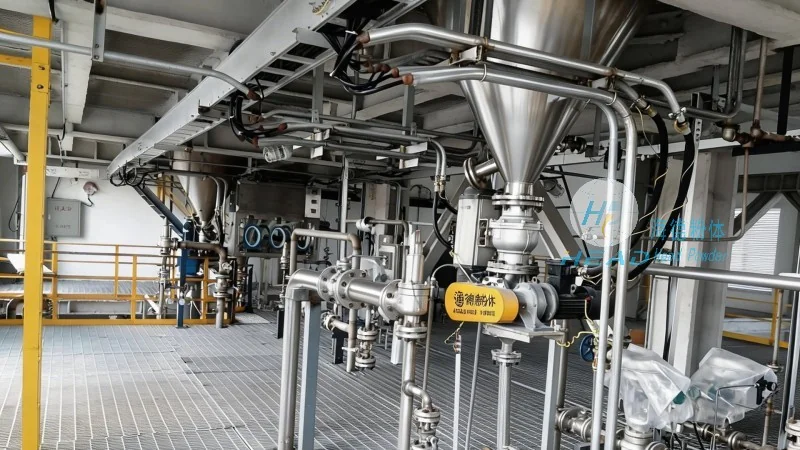
Carbon powder conveying systems find wide application across various industries due to their ability to handle fine, abrasive, and potentially hazardous materials. In the battery industry, these systems are used to transport carbon powders for anode and cathode production, ensuring consistent material quality and preventing contamination. In the carbon fiber industry, they facilitate the transport of graphite and other carbon powders used in the production of high-strength fibers. Additionally, in graphite processing plants, carbon powder conveying systems are crucial for moving raw materials to processing units, where they are converted into various graphite products. The efficiency of these systems directly impacts production throughput and product quality, making them indispensable in modern industrial operations.
Shandong HeadPowder Engineering Co., Ltd., operating under the brand name headpowder, is a leading provider of advanced carbon powder conveying solutions. Based in Shandong, China, the company specializes in designing, manufacturing, and supplying customized conveying systems tailored to the specific needs of carbon powder handling applications. With a strong focus on innovation and quality, headpowder has established itself as a trusted partner in the industry, delivering reliable and efficient solutions that enhance operational performance and reduce costs for clients worldwide. The company's expertise in material handling technology ensures that their systems are optimized for the unique challenges of carbon powder transportation, providing long-term value and sustainability for industrial operations.

 Shandong Headpowder Engineering Co., Ltd.
 156-6277-7102(Manager Zhang)
  0531-83386006
  Zhangqiu District, Jinan City, Shandong Province, China
telephone
WeChatconsult
top